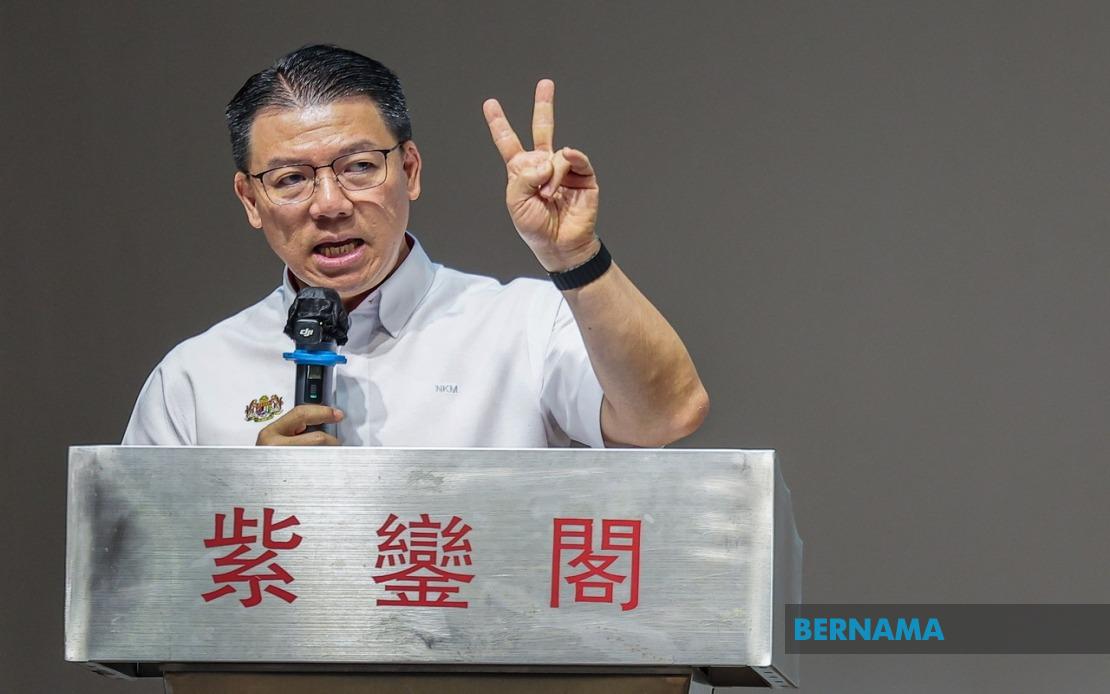
The Ministry of Housing and Local Government has deployed RM200 million over a four-year period beginning in 2023 to sustain and improve non-Muslim places of worship across Malaysia, demonstrating what officials frame as the MADANI administration's commitment to equitable treatment across all communities. The Non-Muslim Houses of Worship (RIBI) Maintenance Initiative encompasses renovation and upkeep of churches, gurdwaras, Hindu temples, Buddhist temples, and other religious meeting halls nationwide, representing a substantial investment in Malaysia's diverse spiritual landscape.
Minister Nga Kor Ming highlighted the programme during ceremonies in Kluang, Johor, underscoring its symbolic importance within the government's broader development philosophy. The initiative reflects a strategic decision to treat infrastructure support for religious communities as a matter of national cohesion rather than factional politics. By centralising maintenance funding through the Ministry of Housing and Local Government, the government has created a systematic approach to addressing what has historically been a fragmented funding challenge for minority faith communities.
The response to this initiative has exceeded initial expectations. Since launching the electronic RIBI System portal, authorities have received 1,478 applications with a combined value exceeding RM279 million, suggesting that identified maintenance needs substantially outpace current funding availability. This gap between demand and resources underscores the accumulated maintenance backlog affecting houses of worship across the country, particularly in older structures that require immediate attention to ensure safety and functionality.
Johor exemplifies the programme's reach and impact. The state has received total allocations worth RM18.75 million from 2023 through May 2026, directly supporting 154 religious institutions. In the current financial year, the state alone was allocated RM3.14 million earmarked specifically for 27 religious premises, funds designated for renovation work, structural maintenance, new construction where required, and emergency repairs. This targeted distribution model allows for prioritisation of urgent infrastructure needs while enabling planned improvements across the broader portfolio.
Nga framed the initiative within a larger narrative about Malaysian national identity and economic stability. He argued that inclusive governance—treating diverse communities fairly regardless of ethnicity or faith—strengthens investor confidence and creates employment opportunities that benefit all citizens. This articulation connects religious-community infrastructure spending to macroeconomic outcomes, positioning pluralism as economically rational rather than merely socially desirable. The metaphor of bridge-building versus wall-building served to contrast his government's approach with what he characterised as divisive alternatives.
The maintenance programme addresses a long-standing gap in government support structures. Non-Muslim places of worship had historically struggled to secure renovation funding through regular channels, often relying on community fundraising or facing extended periods of disrepair. By institutionalising support through a dedicated ministry budget and transparent digital application system, the RIBI initiative shifts from ad-hoc charitable distribution to structured entitlement. The e-RIBI System itself represents a modernisation of administrative processes, creating an auditable record of applications, approvals, and fund disbursements.
Transparency and accountability mechanisms embedded within the programme address concerns about preferential treatment or misallocation. The Ministry of Housing and Local Government committed to professional monitoring of approved projects, with emphasis on ensuring allocations reach genuinely deserving organisations. This administrative oversight responds to historical sensitivities around fairness in government resource distribution and aims to establish public confidence that funds serve their intended purpose rather than supporting affiliated parties or phantom projects.
The significance of this initiative extends beyond immediate infrastructure benefits. It signals a deliberate policy choice about what constitutes legitimate government spending across Malaysia's plural society. By treating maintenance of non-Muslim houses of worship as equivalent to other public infrastructure investments, the government implicitly affirms minority communities' equal standing as constituents deserving state support. This normalisation of cross-community government spending, if sustained consistently, could gradually shift expectations and practices regarding inclusive governance.
For Southeast Asian context, Malaysia's approach merits attention as a model for religiously diverse nations managing state relationships with multiple faith communities. The programme demonstrates how systematic funding mechanisms, coupled with transparent administration and anti-discrimination language, can operationalise pluralism beyond rhetorical commitment. The substantial budget allocation—RM200 million is not trivial—indicates resource commitment matching stated values, addressing the credibility gap that often undermines diversity initiatives in other contexts.
The initiative also reflects Malaysia's particular historical trajectory. Following periods of communal tensions and the constitutional settlement recognising Islam's special position while guaranteeing minority religious freedom, this maintenance funding represents practical reconciliation. It acknowledges that religious diversity is a permanent feature of Malaysian society requiring active government support for peaceful coexistence. Religious buildings themselves—their maintenance and dignity—become symbols of state commitment to pluralism.
Projecting forward, the programme's sustainability and expansion warrant observation. Current allocations, while substantial, fall short of identified needs by roughly RM80 million based on application data. This suggests either a need for budget increases or difficult prioritisation decisions about which maintenance requests proceed. Johor's experience, receiving roughly 11 per cent of total allocations despite housing significant religious-minority populations, raises questions about equitable distribution across states and whether more developed areas receive disproportionate shares due to higher application rates.
The RIBI Maintenance Initiative ultimately represents an attempt to ground national unity claims in tangible resource distribution. Rather than purely rhetorical appeals to harmony, the government invests in physical infrastructure serving minority communities. Whether this approach effectively builds inter-community trust or becomes overshadowed by other divisive political developments remains to be observed. Nevertheless, the programme demonstrates one approach to translating pluralistic principles into administrative practice within Southeast Asia's largest Muslim-majority nation.

