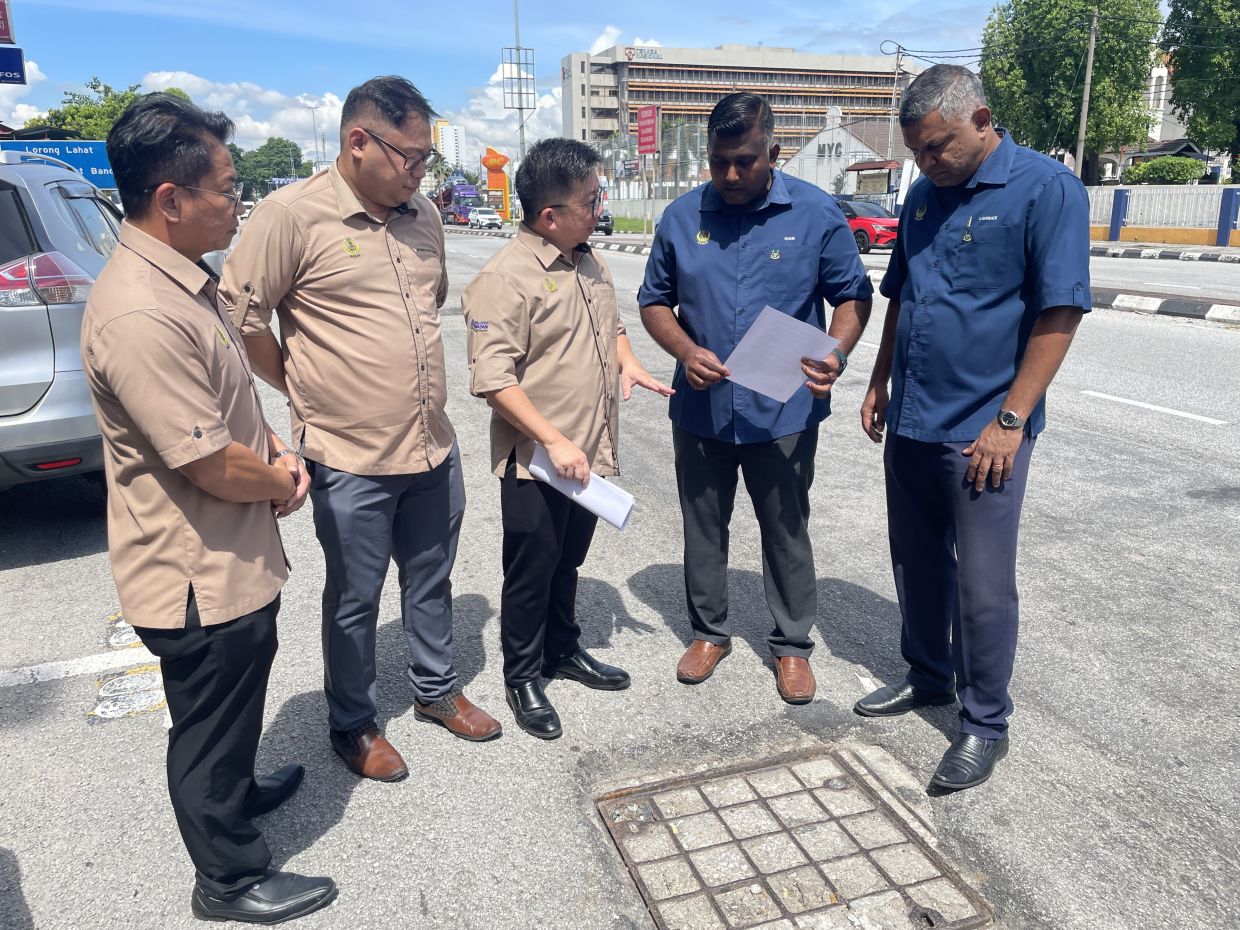
Motorists navigating Ipoh's congested Jalan Lahat will finally get relief from the road's deteriorating conditions, with authorities preparing to launch a RM2.6mil resurfacing initiative beginning in July. The ambitious undertaking will address nearly 4 kilometres of the thoroughfare, which has earned an unfortunate reputation for its network of dangerous potholes and uneven surfaces that have caused significant frustration among regular commuters. The project represents a substantial investment in road infrastructure aimed at restoring safety and functionality to one of the northern city's busier arterial routes.
Jalan Lahat functions as a vital connective route, linking three state constituencies—Buntong, Tebing Tinggi and Menglembu—and serving as a critical artery for residential, commercial and institutional traffic. The targeted section extends from the Falim traffic lights through to the Jalan Leong Boon Swee junction in the Little India vicinity, encompassing approximately 1.9 kilometres in each direction. Menglembu assemblyman Chaw Kam Foon confirmed that the resurfacing work would focus on this particular stretch, which despite forming only a fraction of Jalan Lahat's total 10-11 kilometre length, represents the most deteriorated and problematic section requiring immediate intervention.
The financial commitment, channelled through the Malaysian Road Records Information System (Marris) funding mechanism, underscores growing acknowledgment at municipal and state levels that temporary patching measures have proven insufficient for addressing the road's structural deficiencies. Chaw disclosed that approximately 20 vehicles suffered tyre punctures along the affected corridor within a single month, illustrating the acute safety hazards facing daily users. The severity of road conditions escalated public concern after social media campaigns brought attention to a particularly dangerous pothole on the flyover section, sparking immediate though ultimately inadequate remedial action.
The deterioration of Jalan Lahat cannot be attributed solely to normal wear and tear. Councillor K. Sivam identified systemic problems stemming from poorly executed utility excavation projects, particularly sewerage pipeline installation works that failed to meet restoration standards. These past interventions left roads insufficiently reinstated, creating weak points vulnerable to traffic stress and weather damage. The compounding effect of heavy vehicle usage—the stretch accommodates substantial lorry traffic servicing industrial and commercial zones—has accelerated surface degradation beyond what conventional patching could manage. Sivam emphasised that previous repair attempts remained ineffective precisely because they addressed symptoms rather than underlying structural issues exacerbated by environmental conditions and continuous heavy loading.
Both Chaw and Sivam acknowledged that securing approval for comprehensive resurfacing had involved persistent advocacy, with requests for intervention dating back to 2024. The eventual green light represents vindication of local representatives' efforts to elevate the issue through both conventional channels and emerging digital platforms where residents had increasingly documented road conditions. The transition from reactive patching to proactive full resurfacing reflects an understanding that Jalan Lahat's critical role in serving schools, residential communities and commercial establishments justified more substantial remedial investment than routine maintenance protocols provided.
Currently, the tender process is proceeding on schedule, with construction anticipated to commence in July and completion targeted within approximately three weeks. This compressed timeline reflects the relatively straightforward nature of resurfacing work compared to major reconstruction projects, though completion dates remain contingent on weather conditions and the absence of unforeseen complications. The resurfacing scope extends beyond simple asphalt replacement to encompassing levelling of manhole covers, elimination of road undulations that create dangerous washboard patterns, and repainting of lane markings to enhance visibility and traffic flow organisation.
Looking forward, authorities have implemented safeguards intended to prevent recurrence of the utility-related damage that previously compromised road integrity. The Corridor Utiliti Darul Ridzuan (KUDR) has been tasked with overseeing future excavation activities, armed with enforcement mechanisms including financial penalties, compounding notices, and mandatory remedial requirements for companies failing to restore roads according to approved specifications. This regulatory framework represents a meaningful shift toward accountability, imposing consequences on utility operators whose substandard restoration work shifts burden onto municipal budgets and public safety.
For Malaysian road users more broadly, the Jalan Lahat initiative reflects an encouraging pattern of responsiveness to infrastructure complaints, particularly when amplified through social media documentation. The project demonstrates that persistent advocacy from local representatives, combined with public engagement, can translate deteriorating conditions into funding approvals and implementation timelines. However, the experience also highlights systemic vulnerabilities in utility coordination and road maintenance frameworks that allow conditions to deteriorate to crisis levels before triggering comprehensive intervention.
The implications extend beyond Ipoh's boundaries. Similar road conditions plague arterial routes throughout Malaysia's major urban centres, often reflecting identical patterns of inadequate utility restoration oversight and deferred maintenance accumulating into substantial deficits. The RM2.6mil commitment to Jalan Lahat, while substantial, represents targeted investment in a specific problem area rather than systematic enhancement of broader road management practices. As Malaysian cities expand and traffic volumes increase, the question becomes whether municipalities and state authorities will implement preventative maintenance systems and utility regulation frameworks that address issues before they reach the severity evident on Jalan Lahat.
The July commencement marks the beginning of what authorities characterise as a straightforward resurfacing operation, though execution quality will ultimately determine whether the investment achieves durable improvements or merely postpones recurrence of similar problems. For Ipoh residents and regular commuters, the project represents tangible progress toward safer, more reliable road conditions on a crucial transportation corridor.