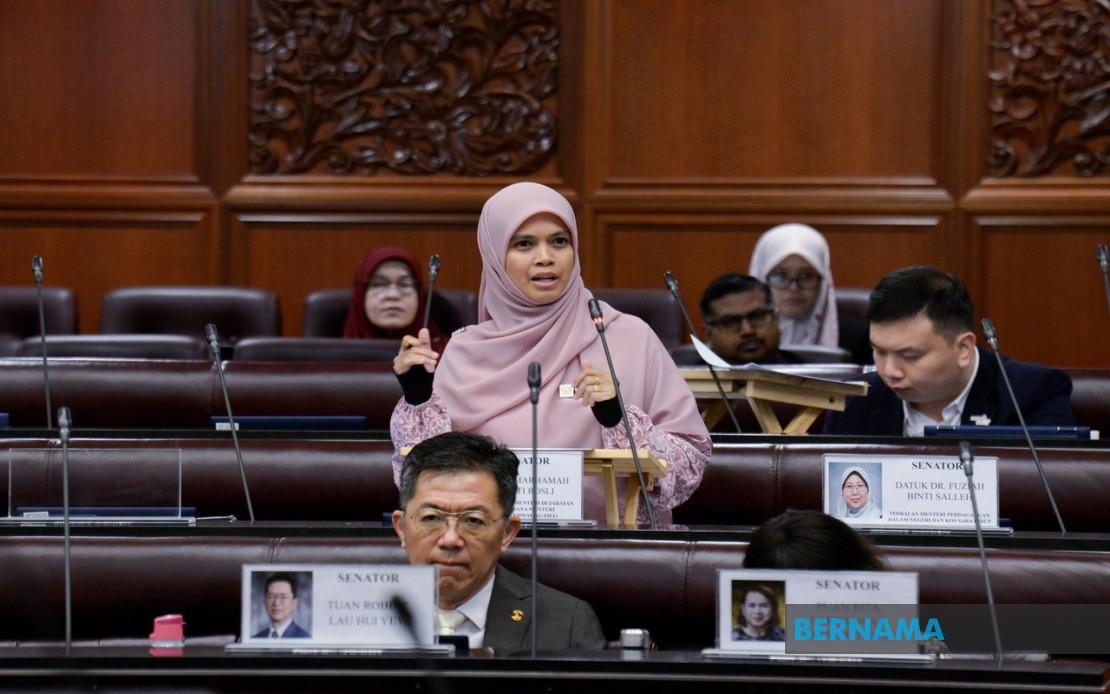
The MADANI government has approved funding for 92 mosque construction projects worth RM160.82 million across the country, reflecting a concerted effort to address religious infrastructure needs in expanding Muslim communities. Speaking in the Dewan Negara on August 3, Deputy Minister in the Prime Minister's Department (Religious Affairs) Senator Marhamah Rosli disclosed the scope and progress of the initiative, which has been rolled out since 2023 through June 2024. The programme represents a significant investment in expanding places of worship to serve the nation's growing and increasingly dispersed Muslim population, particularly in urban areas experiencing demographic shifts.
As of the latest update, the portfolio shows tangible progress with 54 projects already completed and another 16 actively under construction across various states. The remaining 22 projects have not yet broken ground, remaining at the pre-implementation stage or navigating the procurement process—a common bottleneck in large-scale government infrastructure initiatives. The varying pace of project completion reflects the complexity of coordinating between federal and state authorities, securing suitable land, and managing construction timelines across different regional contexts. This staggered completion rate underscores the logistical challenges inherent in rolling out a nationwide religious infrastructure programme involving multiple stakeholders and diverse local conditions.
The approval mechanism for new mosque construction is deliberately selective and evidence-based rather than ad hoc. Marhamah emphasized that all decisions flow from recommendations and formal confirmation issued by state religious authorities, ensuring that proposals align with genuine community demand. Several critical factors guide these determinations: population trends among Muslims in specific areas, the demographic density that justifies additional facilities, the existing capacity and geographic coverage of current mosques, the viability and suitability of proposed sites, the legal status of land parcels, and crucially, financial commitments from state governments. This multi-layered vetting process aims to prevent wasteful duplication while prioritizing regions where worship infrastructure genuinely lags behind community needs.
A pivotal decision shaping this initiative emerged from the 139th Meeting of Menteri Besar and Chief Ministers held on June 28, 2022. That gathering established an important cost-sharing framework: the development of mosques would henceforth be jointly financed by both the federal government and state governments. This arrangement represents a deliberate shift toward collaborative federalism in religious infrastructure, distributing both financial responsibility and administrative burden across levels of government. For Malaysia, where religious affairs nominally fall under state purview while the federal centre commands greater revenue capacity, the partnership model acknowledges practical realities while strengthening coordination between Putrajaya and state capitals. The RM160.82 million commitment thus reflects federal-state cooperation on a substantial scale.
Beyond their fundamental role as places of prayer and spiritual congregation, mosques have increasingly become platforms for welfare provision and community outreach, particularly toward vulnerable populations. When questioned about mosques' potential to serve the homeless, urban poor, and economically disadvantaged groups, Marhamah outlined an expansive ecosystem of charitable initiatives operationalized through mosque networks. The Department of Islamic Development Malaysia (JAKIM), state Islamic religious departments and councils, registered NGOs, and other community organizations collaborate to deliver services that extend far beyond ritual functions. These programmes demonstrate how mosque infrastructure, when adequately distributed and resourced, can become nodes in a broader social safety net.
The welfare initiatives administered through mosque channels address immediate material needs as well as structural vulnerabilities. Distributions of aid to asnaf groups—the eight categories of persons eligible for zakat according to Islamic law—form a traditional core of mosque-based charity. More contemporary additions include provision of food baskets and community kitchen programmes that offer nutritious meals to low-income households and address food insecurity in urban districts. Educational assistance schemes help disadvantaged students remain in school, while emergency financial support provides buffers against sudden economic shocks. Counselling services address psychological and social challenges, funeral management assistance removes financial barriers to dignified death rites, and temporary shelter facilities serve transient populations including the unhoused.
These welfare functions carry particular significance in Malaysia's urban centres, where rapid development and migration have created pockets of poverty and social dislocation despite overall national prosperity. As cities expand and informal housing proliferates in areas like the Klang Valley and greater Kuala Lumpur, the spatial distribution of mosques directly influences whether low-income residents can access zakat distributions, community meals, and counselling services without prohibitive travel distances. The MADANI government's investment in expanding mosque infrastructure therefore carries implicit welfare dimensions that extend these initiatives' reach into previously underserved neighbourhoods. The geographic spread of the 92 approved projects suggests a deliberate attempt to ensure equitable distribution rather than concentrating facilities in already well-served areas.
Malaysia's approach reflects broader regional trends in how Muslim-majority nations integrate religious infrastructure with social welfare provision. Unlike some countries where such functions remain siloed, the Malaysian model deliberately leverages mosque networks as community anchors capable of addressing multidimensional poverty. This integration became increasingly important during the COVID-19 pandemic, when mosques transitioned rapidly into relief centres distributing aid to workers displaced by lockdowns. The persistence of these programmes post-pandemic indicates their institutionalization within governance structures. For readers across Southeast Asia, the Malaysian example illustrates how religious facilities can be strategically positioned as instruments of inclusive development rather than serving exclusively devotional purposes.
The RM160.82 million investment sits within Malaysia's broader religious governance framework, which allocates significant resources to Islamic institutional development annually. Federal allocations to JAKIM and related agencies typically exceed RM1 billion annually, of which mosque infrastructure constitutes one visible component. The 92-project portfolio, whilst substantial, represents targeted expansion addressing specific demographic and geographic gaps rather than wholesale infrastructure renewal. The pace of completion—54 finished in roughly 18 months—suggests a sustainable trajectory capable of maintaining momentum without overwhelming procurement and construction management capacity. For state governments contributing matching funds, these projects also represent competitive investment opportunities in religious infrastructure that strengthens their standing within Muslim-majority constituencies.
The interconnection between mosque expansion and welfare service provision carries implications for Malaysia's social cohesion strategy. By ensuring that growing urban Muslim populations have adequate access to both spiritual facilities and welfare programmes, the government attempts to prevent alienation and marginalization in rapidly urbanizing areas. This preventative approach to social integration differs fundamentally from reactive approaches that address social problems only after they crystallize into visible crises. Whether the current expansion pace proves sufficient to meet actual demand—particularly as migration patterns continue shifting and Muslim populations concentrate in specific urban corridors—will shape perceptions of government responsiveness. The 22 projects still in pre-implementation stages thus warrant monitoring as indicators of whether the approval pipeline remains adequate or whether backlogs are accumulating.
Looking forward, the success of the MADANI mosque programme will partly depend on ensuring that completed facilities secure adequate operational funding and trained personnel to deliver both spiritual leadership and coordinated welfare services. A beautifully constructed mosque with insufficient budget for an imam, maintenance staff, or welfare programme coordinators may ultimately disappoint communities expecting both worship spaces and social support systems. The structural arrangement whereby states share financing burdens theoretically distributes this responsibility, though fiscal capacity varies substantially across Malaysian states. Wealthier states like Selangor and Penang may operate comprehensive mosque-based welfare systems, while economically constrained states might struggle to maintain equivalent service levels. How the federal government addresses these disparities in implementation capacity will determine whether the investment translates equitably into improved community outcomes across different regions.

