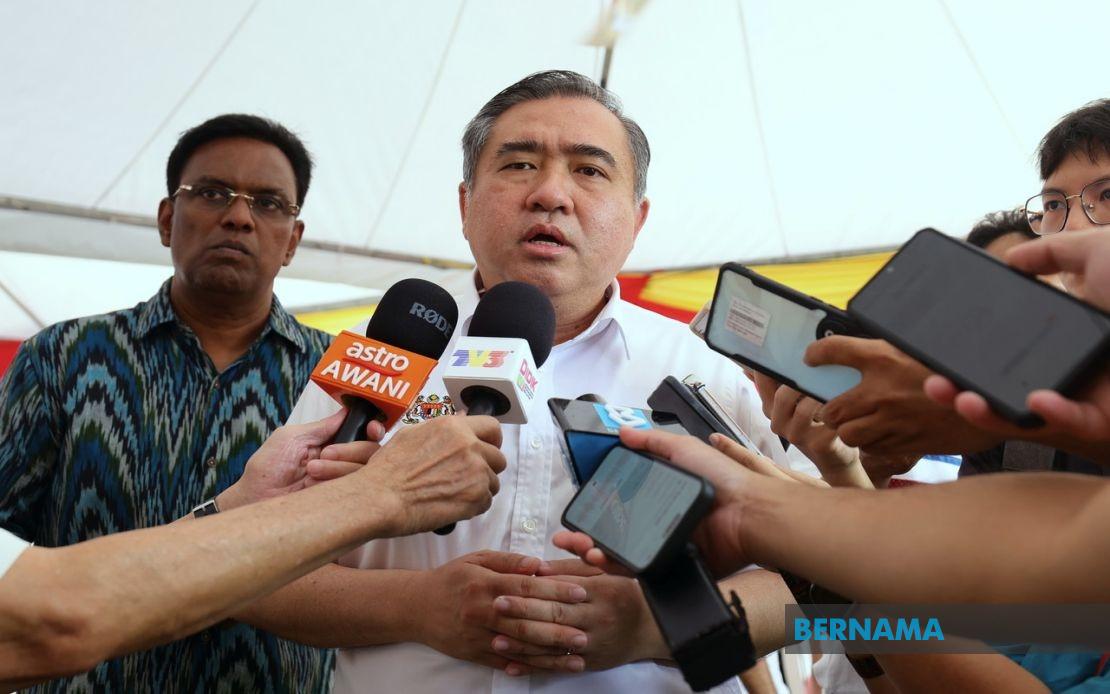
Transport Minister Anthony Loke has pledged RM100,000 in development funds to Kampung Bukit Temiang in Seremban as part of the government's MADANI Adopted Village Programme, signalling renewed efforts to direct ministerial resources toward grassroots community needs. The initiative represents a shift in approach towards how federal agencies engage with rural settlements, moving away from top-down planning toward community-driven identification of priorities.
The funding package combines two sources: RM50,000 channelled through the Railway Assets Corporation, a statutory body operating under the Transport Ministry's purview, and a matching RM50,000 drawn from Loke's parliamentary allocation as the Seremban MP. This dual-funding mechanism reflects a deliberate strategy to leverage multiple government revenue streams for village-level infrastructure, creating greater financial flexibility and demonstrating commitment at both ministerial and constituency levels.
According to Loke, the Federal Village Development and Security Committee (JPKK) will serve as the implementing agency, with work conducted in phases rather than as a single concentrated effort. This phased approach allows communities to monitor progress, adjust priorities if circumstances change, and manage disruptions to daily activities more effectively. The proposed projects emerging from community consultations include restoration of the community hall, roof repairs for residential structures, enhanced drainage infrastructure, and other facilities identified as pressing by residents themselves.
The methodology underlying the programme emphasises participatory planning. Rather than imposing predetermined infrastructure agendas, officials conduct structured engagement sessions with residents to understand their specific circumstances and preferences. Once priorities are established, implementation options remain flexible: the Railway Assets Corporation can undertake works directly, while the JPKK may coordinate collective community labour through gotong-royong arrangements or engage local contractors for specialised repairs such as roofing. This flexibility encourages local economic participation and reduces dependency on external resources.
Loke characterised the MADANI Adopted Village Programme as emblematic of the government's broader philosophy regarding ministerial accountability and local governance. By requiring each ministry to establish direct working relationships with adopted communities, the initiative aims to dissolve bureaucratic distance and foster genuine understanding of ground-level challenges. This decentralised engagement model potentially strengthens feedback loops between federal policymakers and rural constituents, enabling more responsive governance.
Beyond village infrastructure, Loke simultaneously announced developments in the National MADANI Taxi Renewal Programme, revealing that the government has allocated an additional RM10 million to accelerate uptake among taxi and hire car operators. This complementary initiative underscores the administration's multi-sectoral approach to addressing livelihood concerns across different demographic and occupational groups. The additional funding, announced by Prime Minister Datuk Seri Anwar Ibrahim on July 3, follows positive early response to the initial RM10 million allocation provided under Budget 2026.
The taxi modernisation programme extends considerably beyond simple vehicle replacement subsidies. Framed as a comprehensive initiative aligning with Prime Minister Anwar Ibrahim's broader MADANI aspirations, the scheme integrates driver welfare improvements, road safety enhancements, and industry sustainability considerations. Participating taxi and hire car operators receive structured briefings covering driver-friendly financing arrangements, income-boosting opportunities, social protection schemes, permit application procedures, and modernisation incentives designed to ease the transition to newer vehicle standards.
A particularly significant dimension of the taxi programme involves repositioning the relationship between traditional taxi services and e-hailing platforms. Rather than viewing ride-sharing companies as disruptive competitors threatening taxi livelihoods, the government characterises them as strategic partners capable of complementing conventional taxi services. This framing acknowledges market realities while creating space for collaborative arrangements that could expand driver earning potential through multi-platform operations and technology integration.
Implementation coordination involves multiple stakeholders including the Transport Ministry, the Land Public Transport Agency (APAD), taxi associations, financial institutions, automotive manufacturers, and e-hailing operators. Loke emphasised that meaningful progress requires genuine cooperation across these diverse interests, acknowledging that institutional silos and sectoral conflicts have historically hindered transport policy effectiveness. The willingness to solicit private sector participation, particularly from technology platforms, suggests pragmatic acceptance of market evolution rather than nostalgic attempts to restore pre-disruption industry conditions.
For Malaysian readers, particularly those in rural constituencies like Seremban or engaged in transportation services, these initiatives carry tangible implications. The MADANI Adopted Village Programme offers a replicable model through which other constituencies might secure infrastructure investment, provided residents effectively mobilise during consultation phases to articulate priorities. The programme's success depends substantially on quality of community engagement and subsequent execution reliability.
The taxi modernisation programme presents immediate financial opportunities for existing drivers struggling with aging vehicle fleets, though long-term sustainability remains conditional on operators successfully adapting to technology integration and competitive pressure from ride-sharing platforms. Government financing support addresses immediate cash-flow constraints but cannot guarantee individual driver profitability in an increasingly contested market.
Southeast Asian policymakers observing Malaysia's approach may note the administrative innovation embedded in the MADANI framework. By requiring ministerial adoption of specific communities and mandating direct engagement, the programme creates accountability mechanisms beyond standard electoral cycles. Whether this model generates sustained improvement in rural service delivery, or merely creates temporary visibility boosts around announced initiatives, will likely determine its relevance for regional governance discussions in coming years.

