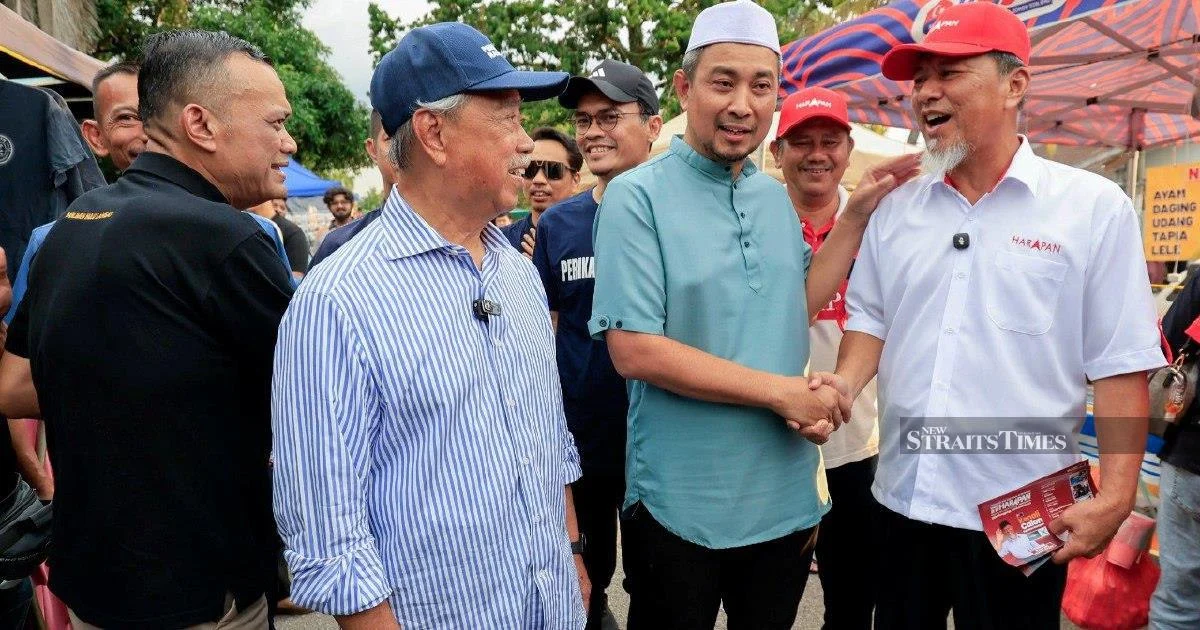
Shoppers and traders at Taman Sri Pagoh night market found themselves witnessing an unexpected moment of political theatre on the third day of campaigning for the Johor state election, when representatives from competing coalitions found themselves in close proximity while courting the same voters.
The incident underscores the intensity of the electoral contest unfolding across Johor, where both Pakatan Harapan and Perikatan Nasional are making sustained efforts to secure ground support ahead of polling day. The night market setting proves particularly significant, as such venues remain vital touchpoints for reaching working-class and middle-income voters who form the backbone of electoral contests in Malaysia's second-largest state by population.
Night markets occupy a unique position in Malaysian political campaigning. These informal gathering spaces attract diverse demographics across age groups and economic backgrounds, making them premium locations for candidates seeking to demonstrate accessibility and understanding of grassroots concerns. The Taman Sri Pagoh market, serving the Pagoh constituency, represents exactly the type of venue where electoral races are often won or lost through direct voter engagement rather than formal political machinery.
The crossing of paths between competing candidates reflects the increasingly compressed nature of Malaysian election campaigns, where multiple contenders operate simultaneously across the same constituencies. Unlike in some democracies where campaigns occur sequentially, Malaysian elections see all parties blanket target areas concurrently, creating frequent situations where rival representatives encounter one another while pursuing identical strategic objectives.
Such moments, while potentially awkward, often reveal the professional conduct expected of political candidates in Malaysia. Rather than confrontation, these encounters typically demonstrate courtesy and acknowledgement of competitors, reinforcing the democratic norms that govern electoral competition despite the high stakes involved. For voters observing these interactions, they offer unscripted insights into how candidates comport themselves under pressure and unexpected circumstances.
The Johor election carries substantial political significance beyond the state level. As a traditionally significant electoral battleground and economic powerhouse in the nation, Johor's results often foreshadow broader national trends. The coalition that secures stronger performance here gains considerable momentum heading into any subsequent national parliamentary elections. This elevated importance means both Pakatan Harapan and Perikatan Nasional are deploying substantial campaign resources across the state, justifying the intensive ground presence reflected in night market encounters.
For Pakatan Harapan, the campaign represents an opportunity to consolidate support following their previous electoral performances in Johor. Meanwhile, Perikatan Nasional seeks to expand its foothold in a state where it holds significant presence but faces determined opposition. The competing strategies mean candidates from both coalitions maintain relentless schedules of community engagement, increasing the statistical likelihood of such chance encounters occurring across various constituencies throughout the campaign period.
The night market setting particularly rewards candidates demonstrating genuine interest in constituent concerns rather than merely seeking photo opportunities. Voters gathered to shop or socialise prove receptive to candidates who engage authentically with their daily experiences, acknowledge their economic circumstances, and address issues affecting their families and livelihoods. This explains why both major coalitions invest heavily in market visits, despite the challenging environment of crowds, background noise, and competing demands for attention.
Such encounters also provide campaign momentum for competing teams. While the candidates themselves may move quickly past one another with professional acknowledgement, campaign supporters observing the interaction represent thousands of potential voters who may discuss the moment among their social networks. In an era where organic word-of-mouth and informal discussion networks remain powerful forces shaping electoral perception, these unscripted moments ripple across communities far beyond the immediate location.
The incident reflects broader patterns emerging in Malaysian electoral competition, where the intensity of campaign activity creates frequent opportunities for rival representatives to encounter one another. Rather than viewing such moments as conflicts, political observers increasingly recognise them as natural consequences of competitive democracy operating at grassroots level. The composure and professionalism with which candidates navigate these situations ultimately contributes to the overall health and credibility of the electoral process.
As campaigning continues across Johor's constituencies, similar encounters will inevitably occur across night markets, shopping centres, religious institutions, and community gatherings. These unplanned moments, far from detracting from the democratic process, represent democracy functioning in its most authentic form—with competing visions being simultaneously presented to voters in the same spaces where communities gather and decisions are ultimately formed.

