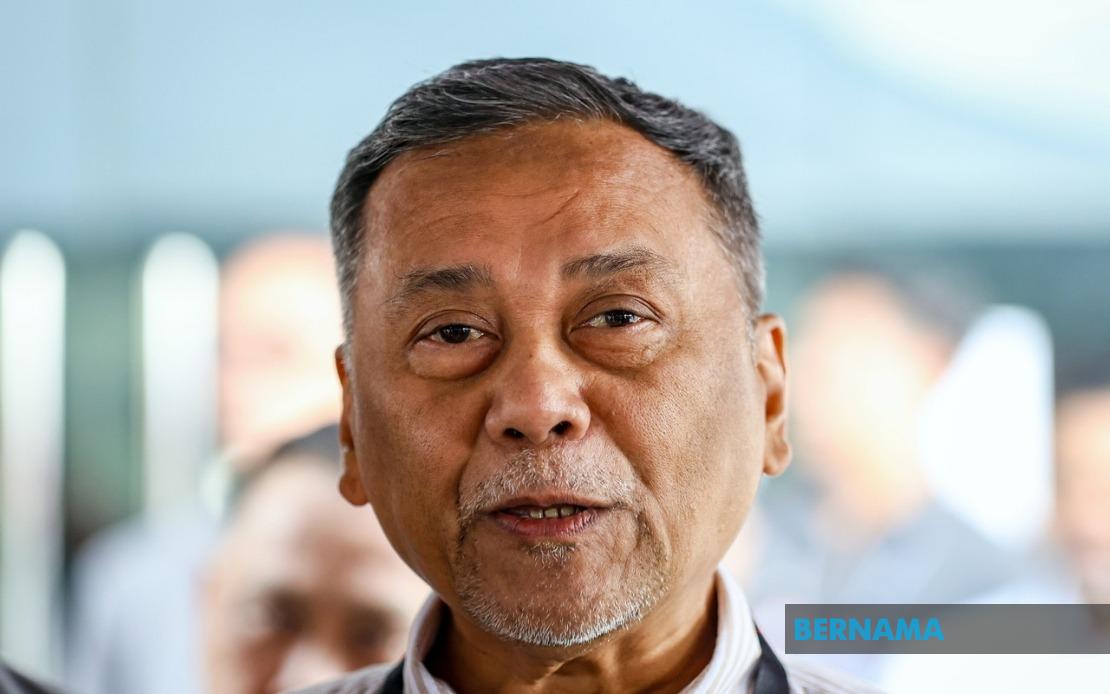
With the Johor state election set to conclude tomorrow as 2.7 million voters prepare to elect 56 assemblymen across the state, the Election Commission has issued clear guidance on how the public should handle inappropriate campaign content appearing on digital platforms. EC Chairman Datuk Seri Ramlan Harun emphasised that online campaign materials fall outside the commission's remit, requiring citizens to escalate such complaints directly to the MCMC for investigation and removal.
Ramlan made these remarks during an inspection visit to ballot box checking centres in Pontian, visiting both Dewan Jubli Intan Sultan Ibrahim and the Permas Multi-purpose Hall in Kukup. His statement came as the election enters its final stretch, with the 16th Johor state election now just hours away from polling day. The clarification addresses a gap in public understanding about which government body holds responsibility for different categories of electoral violations.
The distinction between physical and digital campaign materials has become increasingly important in Malaysian elections. While the EC's enforcement apparatus has already removed printed posters and banners from various locations following public complaints, the chairman acknowledged that this traditional enforcement approach does not extend to social media platforms, messaging applications, and other online spaces where campaign content now routinely circulates. This jurisdictional boundary reflects the evolving nature of electoral campaigns in a digitally connected Malaysia.
The timing of the EC's guidance appears linked to recent controversy surrounding campaign materials featuring non-candidates. Datuk Seri Shahaniza Shamsuddin, an UMNO Supreme Council member and Pahang UMNO information chief, had publicly criticised the use of images depicting former Prime Minister Datuk Seri Najib Razak and his wife, Datin Seri Rosmah Mansor, in campaign posters and banners. Shahaniza characterised such imagery as extreme and potentially designed to manipulate voter sentiment through association with political figures not actually contesting the election.
This complaint highlights a growing grey area in electoral practice across Southeast Asia. When political figures use images of popular or prominent personalities to influence voter perception, questions emerge about whether such tactics violate the spirit of fair electoral competition. The involvement of non-candidates in campaign visual material raises concerns about indirect campaigning and the artificial amplification of particular political messages through borrowed credibility or emotional appeal.
The EC's response reveals the complexity of modern election administration in Malaysia. Digital platforms operate according to their own terms of service and legal frameworks that often transcend national boundaries, making traditional electoral regulation difficult to enforce. By directing complaints to the MCMC, the EC acknowledges that digital content removal requires different expertise and authority than managing physical campaign infrastructure. This represents a pragmatic recognition of technical reality rather than a failure of oversight.
For Malaysian voters, the implication is clear: awareness and active reporting mechanisms matter. Citizens encountering questionable online campaign content now have a specific pathway for lodging complaints, though they must take the initiative to contact the appropriate regulatory body. This places responsibility partly on the public to monitor their own digital spaces and escalate concerns through proper channels rather than relying solely on electoral authorities to police all campaign activity.
The MCMC's jurisdiction over online campaign materials reflects broader patterns of media regulation in Malaysia, where the commission oversees telecommunications, broadcasting, and increasingly, digital content. However, the effectiveness of this arrangement depends on resource allocation and processing speed, particularly during election periods when campaign activity typically intensifies. Complaints lodged in the final days before voting must be acted upon swiftly for removal to have any meaningful impact on voter decision-making.
This election cycle in Johor serves as a case study for understanding how Malaysian electoral institutions adapt to technological change. The separation of responsibilities between the EC and MCMC suggests institutional acknowledgment that online spaces require different regulatory approaches than traditional campaign spaces. Yet questions remain about whether this division of labour actually protects electoral integrity or creates loopholes that sophisticated campaigners might exploit.
The broader context matters for regional observers. As Southeast Asian democracies grapple with digital campaign practices, Malaysia's approach—combining traditional enforcement with specialist digital regulation—may offer insights or cautionary lessons for other countries. The Johor election's final hours will test whether this jurisdictional framework actually works to prevent manipulation through online campaign materials, or whether technological speed outpaces regulatory response.
Voters heading to polls tomorrow in Johor should understand that they too play a role in maintaining electoral standards. Rather than passively consuming campaign content online, citizens aware of questionable materials can escalate concerns to the MCMC, creating a reporting mechanism that supplements official oversight. This public participation may ultimately prove as important as institutional structures in determining whether electoral competition remains fair.

