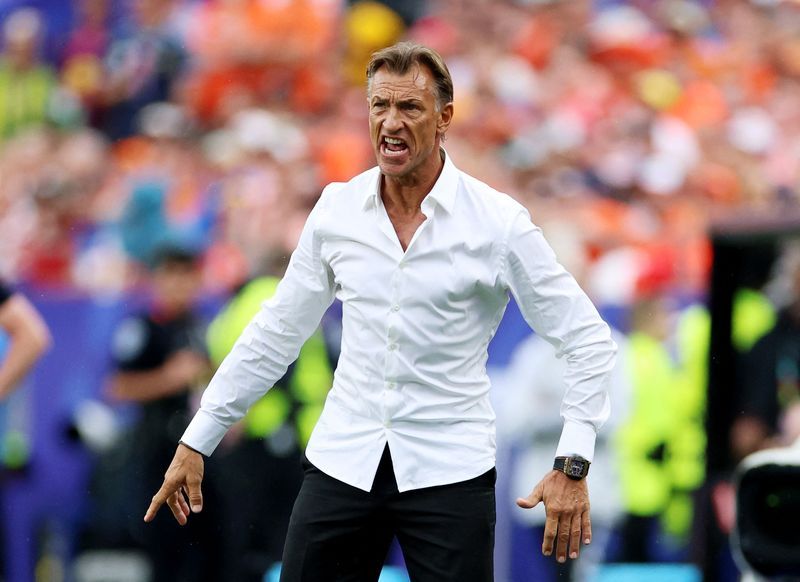
French football manager Herve Renard has stepped down from his position leading Tunisia's national team, concluding a short-lived tenure that began with World Cup hopes but ended in early tournament elimination. The 57-year-old confirmed his departure through a statement posted on Instagram on Saturday, expressing gratitude to the Tunisian Football Federation for entrusting him with the responsibility of coaching the North African squad at the world's premier football competition. Renard reflected on his time with the team as meaningful, characterising the opportunity to represent Tunisia as deeply honourable and an experience that would remain permanently etched in his memory.
Tunisia's World Cup campaign in Qatar proved far more turbulent than the qualifiers suggested was possible. The team had arrived at the tournament riding considerable optimism after completing their qualification path without conceding a single goal—a remarkable defensive record that promised stability at the back when facing elite opposition. However, this solid preparation could not have contrasted more sharply with what unfolded on the tournament's largest stage, where fundamental shortcomings in defensive organisation emerged immediately and proved insurmountable.
The North African side's collapse became evident within days of the tournament's opening whistle. Tunisia's opening match against Sweden descended into chaos, with the Swedes overwhelming their opponents in a devastating 5-1 victory that exposed severe tactical vulnerabilities and raised immediate questions about the coaching setup. The scale of the defeat triggered an emergency managerial change, with the Tunisian Football Federation moving swiftly to remove Sabri Lamouchi after just a single match, hoping that a different tactical approach might salvage the campaign. This mid-tournament coaching change represented a dramatic admission that the original strategy had fundamentally miscalculated how to approach the competition.
Renard's appointment came with the explicit mission of restoring stability and salvaging Tunisia's tournament hopes. However, his tenure unfolded in almost identical fashion to his predecessor's, suggesting the problems ran deeper than tactical adjustments alone could address. In his second match, Tunisia faced Japan and suffered a crushing 4-0 defeat that compounded the earlier disaster. Renard later acknowledged the profound disappointment of this performance, openly admitting he felt ashamed by the manner in which his team had capitulated. The emotional toll of witnessing such a comprehensive collapse appeared to influence his decision to depart the role.
Tunisia's final group-stage match against the Netherlands resulted in a 3-1 loss that confirmed their elimination without recording a single victory across their three matches. This winless campaign marked a catastrophic failure of preparation and execution that will haunt the programme's leadership for years to come. The team's inability to convert their exceptional qualifying form into competitive performances at the World Cup highlights the substantial gap between competitive continental football and the heightened intensity of global competition.
Perhaps most alarming for Tunisian football administrators was the statistical damage sustained during the group stage. Tunisia conceded an astonishing 12 goals across their three matches, establishing a new unwanted World Cup record in the expanded 48-team format. This defensive record surpassed the previous benchmark set by Costa Rica at the 2022 World Cup, when the Central Americans conceded 11 goals during their own group-stage elimination. The magnitude of this defensive collapse raises serious questions about player selection, tactical preparation, physical conditioning, and overall strategic direction heading into the tournament.
The contrast between Tunisia's qualification credentials and their World Cup performance underscores one of international football's persistent puzzles: how a team can demonstrate genuine tactical discipline and defensive solidity over an entire qualifying campaign, only to unravel completely when facing stronger opposition. Analysts will scrutinise whether Tunisia simply lacked the individual quality to compete against strong European and Asian sides, or whether the coaching and preparation structures failed fundamentally to adapt players to the tournament environment. The rapid succession of managerial changes suggests confusion and panic rather than a coherent long-term strategic vision.
Renard's departure closes a brief chapter in Tunisian football history, one defined more by disappointment than achievement. His admission of shame following the Japan defeat and his subsequent decision to resign indicated an individual taking responsibility for outcomes, even if circumstances beyond his control—such as inheriting a squad already demoralised by the Sweden match—contributed to the poor results. For Tunisia, the immediate challenge involves identifying a coaching leader capable of restoring confidence and implementing a systematic rebuild of the defensive structures that collapsed so dramatically in Qatar.
The implications for Tunisian football extend beyond this single tournament cycle. The programme must now undertake serious internal evaluation to understand how a qualifying campaign showed such promise while the tournament itself exposed such fundamental weaknesses. Future preparation for major competitions will need to emphasise not just tactical familiarity but also psychological resilience and the capacity to absorb early setbacks. For Malaysian and Southeast Asian observers, Tunisia's experience serves as a reminder that even nations with strong continental credentials require meticulous World Cup preparation to avoid similar early eliminations that leave players, coaches, and fans devastated.

