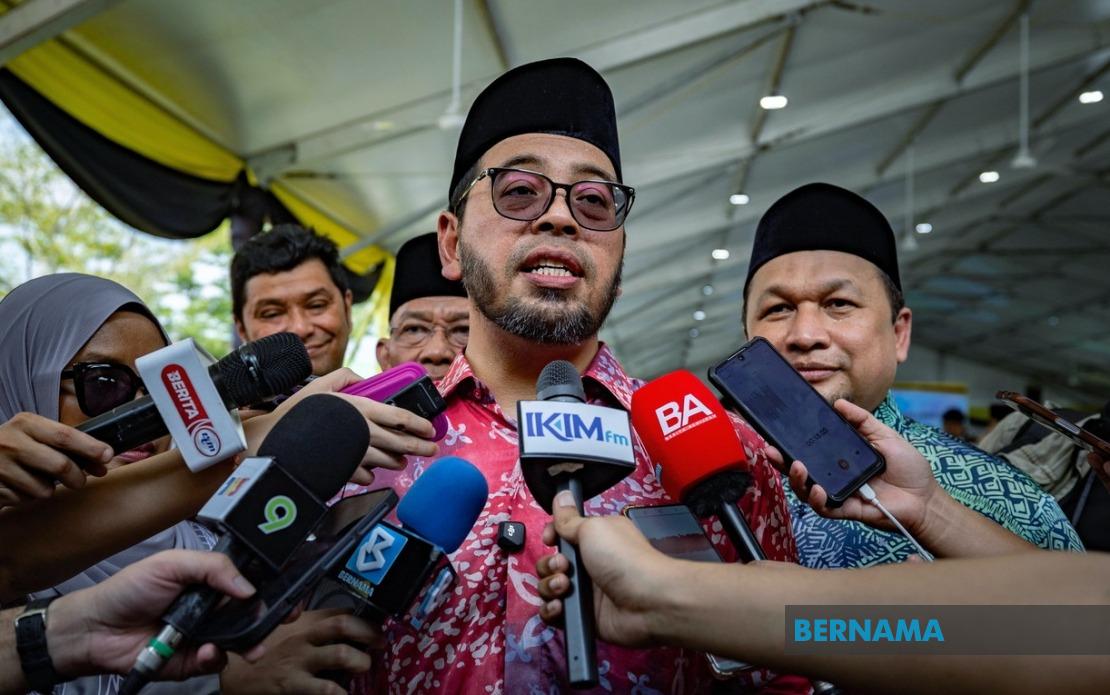
The Malaysian government views pondok institutions, madrasahs and religious schools as essential partners in creating a nation where material progress and moral development advance together, according to Minister in the Prime Minister's Department (Religious Affairs) Dr Zulkifli Hasan. The acknowledgement comes as the government deepens its engagement with Islamic educational institutions across the country, signalling a recognition that these organisations play a foundational role in shaping the country's social and spiritual fabric.
Speaking at the 2026 Perak Pondok and Religious Schools Gathering (HIPSA) in Chemor today, attended by Prime Minister Datuk Seri Anwar Ibrahim and Perak Menteri Besar Datuk Seri Saarani Mohamad, Zulkifli articulated a philosophy that national advancement cannot be measured by economic metrics and infrastructure alone. The broader vision extends to cultivating citizens grounded in values—a perspective that underscores the government's policy shift toward integrating religious education more explicitly into Malaysia's development narrative. This framing reflects growing political recognition that stability and social cohesion depend on the quality of citizens produced by the education system, rather than solely on GDP growth or constructed assets.
The government's strategic partnership encompasses coordination across multiple layers of administration, including state governments, State Islamic Religious Departments, State Islamic Religious Councils, religious authorities and Islamic institutions nationwide. This multi-layered approach aims to ensure that Islamic education develops in a structured, quality-assured and responsive manner, aligned with contemporary challenges and opportunities. The emphasis on coordination suggests the government recognises that religious education cannot operate in isolation from broader national development frameworks, and that aligning these institutions with state-level initiatives strengthens their sustainability and reach.
The HIPSA 2026 gathering itself drew approximately 3,000 attendees, including members of pondok institutions and religious schools, KAFA teachers, NGO representatives and community members. The attendance figures underscore the grassroots appeal and institutional depth of this educational ecosystem. Beyond symbolic gestures, the programme featured substantive discussions through a forum titled "The Role of Religious Scholars and Leaders in Nation Building," featuring prominent speakers including Kelantan scholar Sheikh Wazir Che Awang Al-Makki, former Perak mufti Datuk Seri Wan Zahidi Wan Teh and preacher Ustaz Mohamad Saifuddin Abdul Latiff. Such forums signal the government's intent to position religious scholars as active contributors to policy discourse, rather than as peripheral figures in civil society.
Material support has accompanied this rhetorical endorsement. Zulkifli distributed MADANI Aid Baskets to 12 representatives symbolising 250 community beneficiaries, providing direct assistance to economically vulnerable families. More broadly, the event facilitated distribution of essential food items to needy families and presented mock cheques supporting pondok institutions and religious schools across Perak. These initiatives address the financial constraints that have long challenged the sector, particularly in rural areas where pondok institutions operate with minimal state funding despite their educational reach.
The government has additionally structured support through the Fast Track Sijil Pelajaran Malaysia programme and student fee sponsorships, demonstrating an effort to integrate religious education with national qualification frameworks. This integration matters significantly for Malaysia's educational ecosystem, as it potentially creates clearer pathways for religious school graduates into formal employment and higher education, reducing historical barriers between Islamic and secular education tracks. For Malaysian policymakers, bridging this divide has long been identified as essential to reducing social fragmentation.
Yayasan Dakwah Islamiah Malaysia (YADIM), the organisation implementing these initiatives, framed the programme as part of the Malaysia MADANI vision, which prioritises people's well-being and human capital development. The MADANI framework has become the government's articulated development philosophy under Prime Minister Anwar Ibrahim, emphasising inclusive prosperity and spiritual grounding. By explicitly linking religious education support to this broader national aspiration, the government positions Islamic institutions not as separate from the mainstream development agenda but as integral to achieving MADANI's objectives.
For Southeast Asia more broadly, Malaysia's approach offers a case study in how governments can engage religious educational institutions within modernising states. Unlike some neighbouring countries where tensions between secular and religious education remain pronounced, Malaysia's strategy involves active state partnership and resource allocation to the Islamic education sector. This approach reflects both Malaysia's Muslim-majority demographics and a political calculation that stability requires addressing the aspirations and institutional needs of communities invested in religious education.
The emphasis on supporting pondok communities and KAFA teachers, characterised as "the backbone of Islamic education," acknowledges that sustainability depends on adequate compensation and recognition for educators operating outside the formal civil service structure. Many pondok teachers have historically worked with minimal remuneration, motivated primarily by religious commitment. Government support, therefore, addresses a structural vulnerability that threatened the sector's long-term viability and quality.
Critically, the government's framing avoids portraying support for religious education as conceding territory to sectarian or ideologically extreme interpretations. Instead, the narrative emphasises alignment with Malaysia MADANI values—social welfare, institutional coordination, and human capital development. This positioning suggests the government is attempting to assert control over the religious education narrative while providing material support, aiming to integrate these institutions more firmly into the national development framework rather than allowing them to operate entirely autonomously.
For Malaysian readers and policymakers, the gathering signals intensifying government engagement with an educational sector that educates hundreds of thousands of students outside the formal national school system. Whether this partnership translates into sustained funding, curriculum alignment, and teacher training improvements will determine whether religious schools can maintain relevance while addressing contemporary skill and knowledge demands. The challenge remains balancing preservation of these institutions' distinctive character with integration into a modernising nation-state.
The event also illustrates how government recognition can translate into institutional legitimacy and resource access for organisations historically operating with minimal state support. As Malaysia grapples with questions about inclusive development and social cohesion, the government's strategic partnership with religious educational institutions represents a deliberate effort to channel these influential organisations toward alignment with national development priorities while maintaining their distinctive educational mission.

