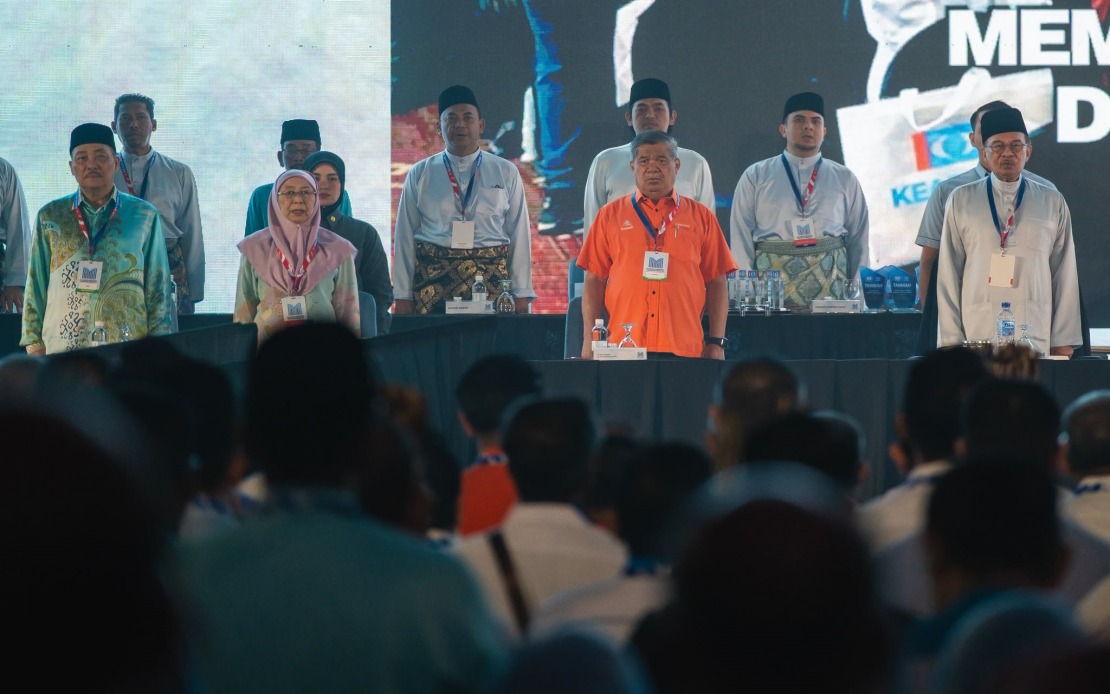
Datuk Seri Mohamad Sabu, president of Parti Amanah Negara (Amanah), has declared that Malaysia's reform agenda cannot be shelved once a political coalition assumes control, emphasising instead that the government must demonstrate concrete progress through sustained action against graft and institutional strengthening. Speaking in Melaka during the 2026 Parti Keadilan Rakyat (PKR) National Congress at the Melaka International Trade Centre (MITC) in Ayer Keroh, the Agriculture and Food Security Minister underscored that the reform platform represents far more than electoral rhetoric but rather a binding commitment to citizens who entrusted their mandate to the current administration.
In his remarks shared on social media, Mohamad Sabu articulated a vision of governance where anti-corruption measures transcend partisan boundaries and apply uniformly regardless of an individual's political affiliation or bureaucratic standing. This framing addresses a persistent challenge in Malaysian politics where accusations of selective enforcement have historically undermined public confidence in reform initiatives. The minister's emphasis on uniform accountability signals an attempt to distinguish Amanah's positioning within the ruling coalition from past administrations where patronage and factional interests allegedly compromised anti-graft efforts. By stressing that his party will confront money siphoning and malfeasance irrespective of the perpetrator's identity, Mohamad Sabu seeks to establish credibility for principles-based governance rather than personalised leadership.
The minister's comments gain significance within the broader context of Malaysia's political landscape, where coalition governments often navigate competing interests between member parties and factional leadership within Pakatan Harapan. Amanah's insistence on continuing structural reforms reflects its positioning as a reform-oriented party within a coalition that has faced criticism for not fully delivering on pre-2018 promises. The repetition of reform messaging at successive party congresses suggests that sustaining public support requires demonstrable commitment to anti-corruption measures and institutional improvement, particularly as voter sentiment toward the current administration shows signs of fatigue following recent electoral setbacks and cost-of-living grievances.
Monitor's attendance at Datuk Seri Anwar Ibrahim's address at the PKR congress, where the Prime Minister also emphasised continuity of the reform agenda, indicates coordinated messaging across the ruling coalition on this pivotal theme. This synchronisation matters considerably for Malaysian voters who have grown sceptical of promised systemic change, particularly given the selective prosecution records and ongoing corruption allegations against figures within the government's ranks. The deliberate emphasis on reform persistence suggests coalition leaders understand that legitimacy depends upon visible, sustained action rather than rhetorical commitment, especially as public patience with incremental progress appears limited.
Beyond anti-corruption frameworks, Mohamad Sabu highlighted the government's dedication to honouring constitutional obligations toward Sabah and Sarawak through rigorous implementation of the Malaysia Agreement 1963 (MA63). This positioning reflects recognition that East Malaysian support remains crucial for coalition stability, particularly given regional sensitivities regarding federal resource distribution and autonomy protections. The minister's explicit commitment to MA63 principles addresses longstanding grievances in Sabah and Sarawak where voter bases have expressed frustration with perceived marginalisation in national development priorities and revenue sharing arrangements. By linking reform agenda to MA63 implementation, Amanah signals that constitutional reform encompasses federal-state relations and indigenous rights protections alongside anti-graft measures.
The minister's discussion of economic performance reveals a nuanced understanding that gross domestic product growth statistics alone insufficient to sustain political support unless accompanied by tangible improvements in household purchasing power and reduced inflationary pressures. This perspective directly addresses a key vulnerability facing the current administration, where official economic data often contrasts sharply with public perception of economic distress and deteriorating living standards. Mohamad Sabu's emphasis that growth figures must translate into improved quality of life acknowledges the growing disconnect between macroeconomic indicators and individual household experiences, a gap that has historically driven electoral punishment of incumbent governments in Southeast Asia.
Cost-of-living pressures represent one of the most potent political challenges confronting the administration, with inflation in essential goods and services consistently ranking as the primary concern among Malaysian voters across income and demographic categories. The minister's explicit commitment to addressing these pressures suggests the government recognises that sustaining coalition coherence and public support requires tangible interventions beyond monetary policy adjustments. This messaging may foreshadow forthcoming initiatives targeting targeted subsidies, price controls, or wage adjustments designed to demonstrate responsiveness to citizen anxieties while maintaining fiscal responsibility.
Mohamad Sabu's welcome for the planned repeal of the Universities and University Colleges Act 1971 (AUKU) provides a concrete example of promised reform deliverables, as student activism and academic freedom restrictions have remained contentious issues within Malaysian progressive constituencies. The AUKU's repeal represents a politically significant symbolic victory for constituencies that prioritise democratic freedoms and civil liberties, constituencies whose support remains essential for coalition electoral performance. By publicly endorsing AUKU repeal, Amanah reinforces its identity as a party committed to expanding democratic space and protecting fundamental freedoms, differentiating itself from more establishment-oriented coalition partners.
The cumulative thrust of Mohamad Sabu's remarks reflects an understanding that Malaysian political cycles increasingly hinge upon demonstrable delivery against corruption, institutional strengthening, and improved economic outcomes for ordinary citizens rather than upon leadership personality cults or distributional patronage networks. Amanah's positioning within this framework emphasises party-level commitment to principles transcending factional or personal interests, an appeal designed to attract voters fatigued by conventional politics. Whether sustained action on these fronts materialises will substantially determine not merely Amanah's trajectory but also broader coalition electoral prospects as Malaysia approaches the next general election cycle.

