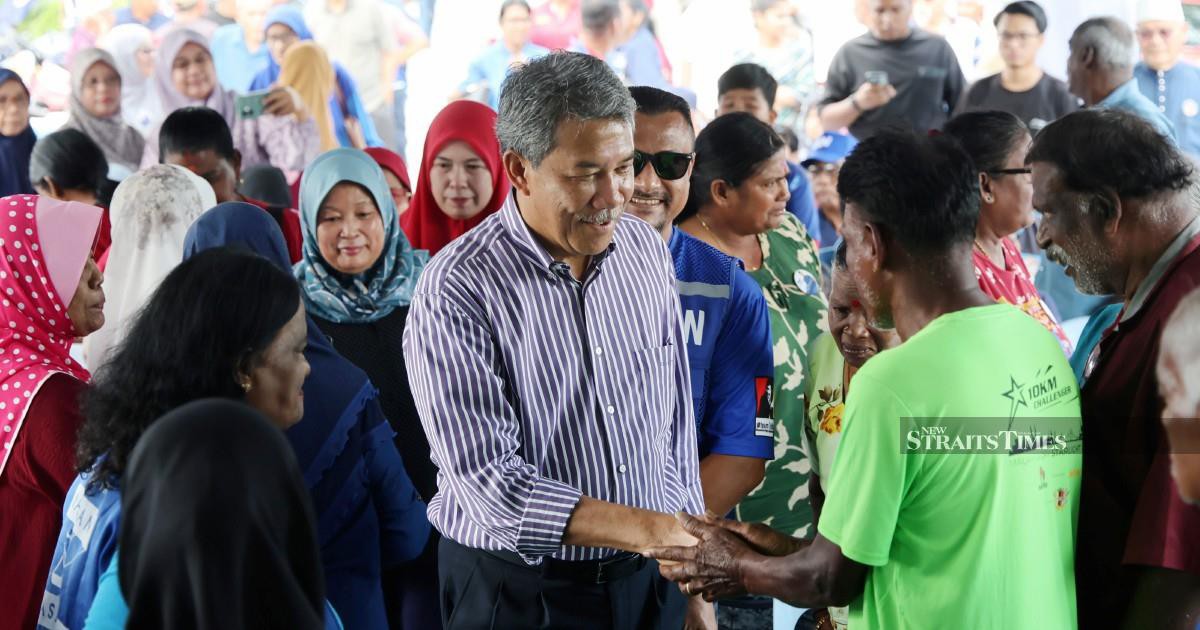
Malaysia's Foreign Minister Datuk Seri Mohamad Hasan has declared himself ready to surrender his portfolio whenever Prime Minister Datuk Seri Anwar Ibrahim deems it necessary, signalling a posture of complete deference to his political leader's authority. Speaking in his Rembau constituency, Hasan made the statement in response to questions about the stability of his position within government, underlining his acceptance of the hierarchical decision-making structure within Malaysia's cabinet system.
The declaration represents a reaffirmation of the customary practice within Malaysian governance where ministers serve at the pleasure of the Prime Minister, who retains the constitutional authority to dismiss or reassign cabinet members at will. Such public pronouncements of loyalty, whilst routine at one level, also carry significance in Malaysia's volatile political landscape where ministerial appointments have frequently undergone reshuffles and realignments, particularly during periods of coalition government uncertainty.
Modern Malaysian politics has witnessed recurring instances of ministerial instability, often reflecting broader shifts in coalition dynamics or internal party power struggles. Hasan's statement arrives at a juncture when Malaysia's government continues to navigate complex political relationships among its constituent parties within the Pakatan Harapan coalition framework. The Foreign Ministry portfolio carries particular weight, managing diplomatic relationships across Southeast Asia and the broader international stage during a period marked by significant regional geopolitical complexity.
As Foreign Minister, Hasan oversees Malaysia's engagement with neighbouring nations and global powers at a time when regional tensions remain elevated and Malaysia's maritime interests require careful diplomatic management. The Southeast Asian region continues to grapple with competing claims in the South China Sea, tensions with neighbouring countries, and the need to maintain balanced relationships with major powers including China, the United States, and India. The ministry's role in shaping Malaysia's response to these challenges makes continuity in leadership advantageous for policy implementation and international relationship-building.
The Foreign Minister's willingness to step aside also reflects broader patterns within Malaysian coalition governance, where the balance of power between component parties and factions within parties remains subject to electoral and political calculations. Recent years have demonstrated how coalition dynamics can shift rapidly, necessitating leadership adjustments at various governmental levels. Hasan's measured response suggests an understanding of these realities and an acceptance of the conditional nature of ministerial authority in Malaysia's political system.
Within Umno, the party that Hasan represents, hierarchical relationships and party discipline traditionally carry significant weight in determining ministerial positions and their tenure. His statement aligns with expectations of party loyalty and acceptance of leadership directives. The Umno party, as the largest component of the current coalition government, maintains substantial influence over cabinet composition, yet remains subject to the Prime Minister's ultimate authority in ministerial appointments.
The timing of Hasan's remarks may also reflect underlying calculations about political stability and the need for public reassurance regarding the continuity of Malaysia's foreign policy direction. By signalling his acceptance of the Prime Minister's authority, Hasan simultaneously reinforces the notion that Malaysia's international engagement remains stable and subject to clear leadership control. For Malaysia's diplomatic partners, such statements provide reassurance that policy decisions flow from established hierarchical structures rather than from internal ministerial conflicts or personal ambitions.
The Foreign Ministry faces substantial responsibilities in Malaysia's ongoing relationships with regional organisations including ASEAN, with which Malaysia maintains significant collaborative interests. The ministry also manages Malaysia's position on critical issues including maritime security, trade negotiations, and cultural diplomacy. Consistent leadership within the ministry supports the continuity required for these complex diplomatic undertakings to proceed effectively.
Hasan's background prior to assuming the Foreign Ministry portfolio included substantial tenure in other ministerial positions, indicating an experienced hand in Malaysia's government machinery. His readiness to relinquish office when directed also suggests confidence in his political standing and future prospects, even if his current position were to be vacated. Malaysian politics frequently witnesses ministers moving between portfolios or returning to prominence after periods outside government.
The statement further underscores the distinction between ministerial tenure based on merit and performance versus appointment structures fundamentally rooted in political relationships and coalition dynamics. In Malaysia's Westminster-influenced system adapted to local conditions, ministerial appointments ultimately derive from the Prime Minister's political judgment rather than from independent professional criteria alone. Hasan's acceptance of this reality represents a pragmatic acknowledgment of how Malaysian governance operates in practice.
Looking forward, the Foreign Minister's declaration establishes parameters for his continued service contingent upon the Prime Minister's satisfaction with his performance and political utility within the broader government framework. Should significant shifts occur in coalition dynamics or in the Prime Minister's political calculations, Hasan's statement effectively removes any ambiguity regarding his willingness to accommodate such changes. This approach contrasts with ministerial stances characterised by defensiveness or attempts to entrench positions against potential removal.

