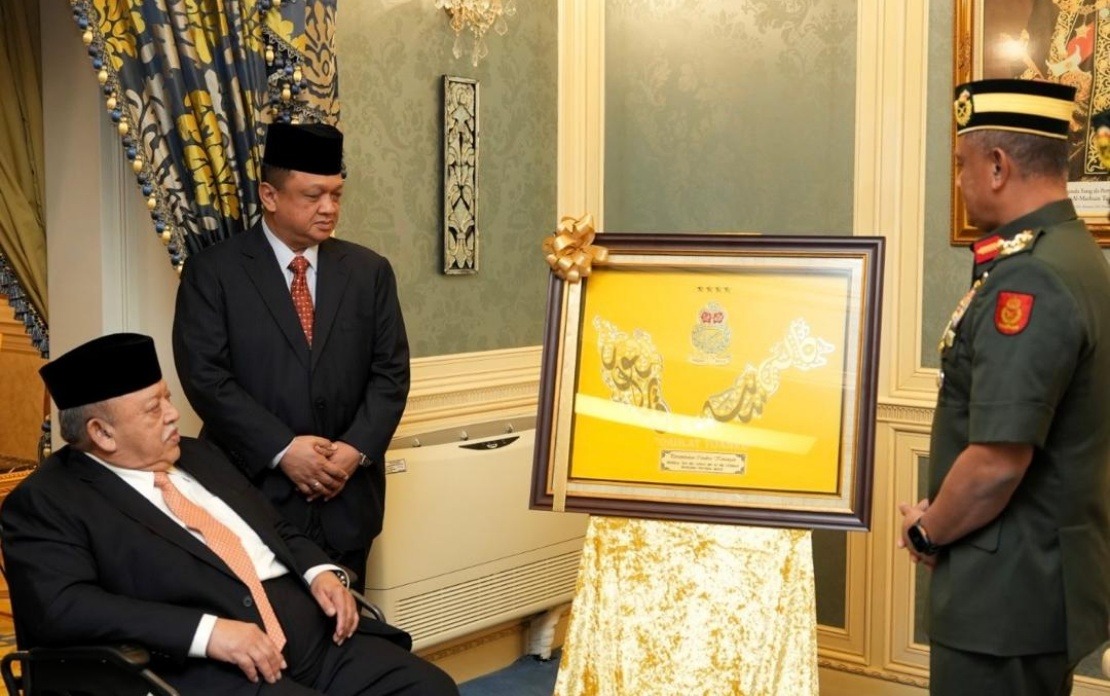
The Raja of Perlis, Tuanku Syed Sirajuddin Jamalullail, received Malaysia's top military officer in a formal ceremony at Istana Arau on July 29, marking another significant engagement between the nation's royal institution and defence establishment. General Tan Sri Azhan Md Othman, in his capacity as Chief of Defence Force, was granted the ceremonial audience at the Balai Menghadap Biru, the royal audience chamber, reflecting the diplomatic protocols that govern interactions between constitutional monarchies and military leadership in Southeast Asia.
The Raja Muda of Perlis, Brigadier General Tuanku Syed Faizuddin Putra Jamalullail, attended the proceedings alongside his father, bringing considerable symbolic weight to the gathering. The Raja Muda holds active military responsibility as Commander of the 504th Territorial Army Regiment stationed at Kem Bukit Keteri near Padang Besar, blending traditional royal authority with contemporary defence operations. This dual representation—combining both reigning and heir apparent royalty with serving military command—underscored the institutional importance Perlis places on its relationship with the armed forces.
Official statements from Istana Arau characterised the encounter as instrumental in deepening institutional bonds between Malaysia's monarchy and its defence sector. The palace noted that such audiences serve purposes extending beyond ceremonial formality, functioning instead as platforms where shared strategic objectives and mutual commitments can be reaffirmed. In the Malaysian context, where the constitutional monarchy plays a defined role in national security frameworks, such meetings carry particular significance in demonstrating cohesion across key power structures.
The Raja's position as Colonel-in-Chief of both the Royal Ranger Regiment and the Royal Military Police Corps provided additional context for the engagement. These ceremonial military appointments, while often viewed as largely symbolic in contemporary democracies, remain substantive expressions of royal stewardship over national defence institutions in Malaysia. The audience thus represented not merely a courtesy call but a formal recognition of overlapping responsibilities in safeguarding national interests.
Official commentary emphasised how the gathering reflected alignment on several interconnected priorities: sovereignty protection, public security, and broader national development objectives. Malaysian state leaders and military command structures regularly coordinate on security matters ranging from border management to internal stability, with Perlis's northern location making such coordination particularly relevant. The state faces unique challenges given its proximity to the Thai border and its role in regional security architecture.
The emphasis on "close cooperation between the defence institution and the royal institution" in palace statements signals institutional awareness of potential friction points that can emerge between military and civilian authority structures. Malaysia's constitutional framework vests defence responsibilities across multiple entities—the monarchy, parliament, and appointed military command—creating complex governance relationships. Public affirmation of harmonious relations helps reinforce democratic norms and civilian-military balance.
For Malaysian defence observers and regional security analysts, such official meetings offer insights into how the nation's leadership coordinates on security matters. The involvement of the Raja Muda, an active-duty military officer, suggests that Perlis takes seriously the integration of traditional authority with modern defence administration. This contrasts with some regional neighbours where such roles have become purely ceremonial, indicating Malaysia's distinctive approach to blending constitutional monarchy with contemporary governance.
The timing and formality of the audience also merit consideration within broader patterns of civil-military relations across Southeast Asia. Nations in the region with robust monarchical institutions—Thailand, Malaysia, and Brunei—tend to leverage such ceremonial frameworks to reinforce institutional stability and demonstrate alignment between key power centres. In Malaysia's case, regular royal-military engagement helps counterbalance concerns about military influence that periodically surface in regional discourse.
From a practical standpoint, such audiences often precede or follow substantive policy discussions on defence spending, strategic priorities, and operational matters. The formal setting provides cover for serious strategic conversations while maintaining the dignified tone appropriate to interactions involving heads of state and senior military command. For Perlis specifically, coordinated defence and development initiatives likely featured in conversations, given the state's ongoing needs for infrastructure investment and security sector modernisation.
The palace's explicit reference to the audience strengthening "peace, stability and prosperity" through institutional cooperation reflects official commitment to messaging that portrays Malaysia's governance structures as fundamentally aligned on core national interests. This messaging matters both domestically and internationally, particularly given increased attention to civil-military dynamics and governance resilience across developing democracies. Regular, public demonstrations of harmonious relations between traditional authority and defence institutions help sustain confidence in Malaysia's institutional stability.
Looking forward, such ceremonial engagements typically establish frameworks for more routine cooperation on specific matters—border security patrols, disaster response coordination, and defence infrastructure development within Perlis. The formality of July's audience suggests that senior leadership views the relationship between state royalty and military command as requiring periodic high-level reaffirmation, even within the context of ongoing institutional partnership. For Malaysian readers and regional observers, such ceremonies ultimately reflect how sophisticated governance systems maintain institutional coherence across potentially competing power centres.

