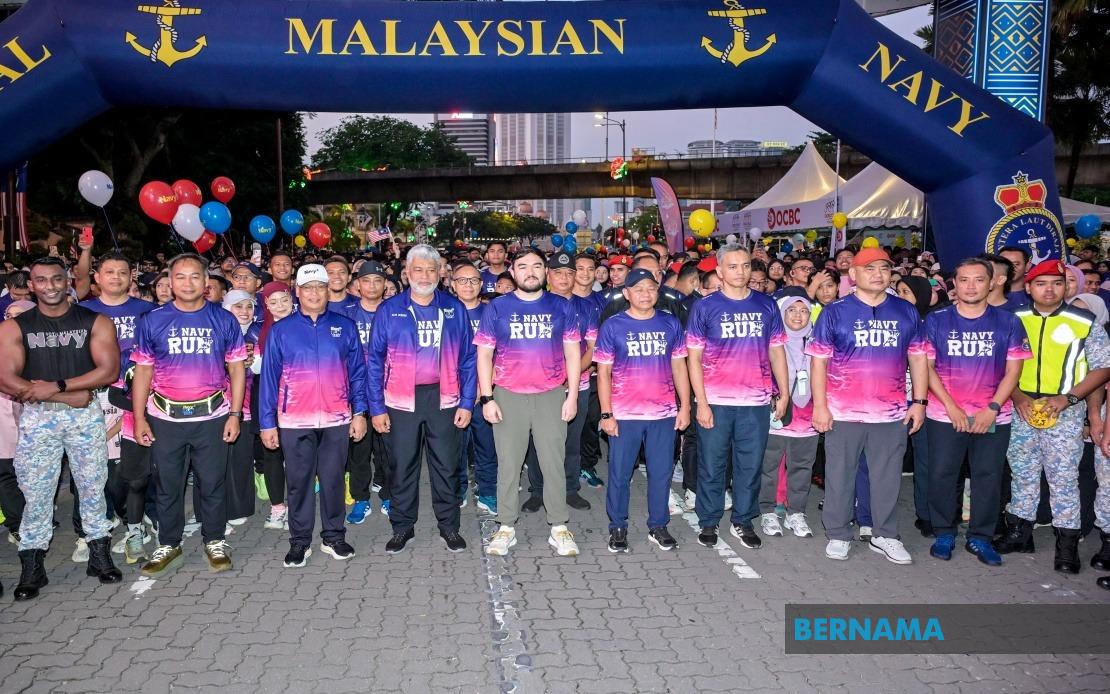
The Raja Muda of Selangor, Tengku Amir Shah Sultan Sharafuddin Idris Shah, officially launched Navy Run 2026 at Dataran DBKL on August 2, marking a significant milestone for the annual public engagement initiative. The fourth edition of the seven-kilometre fun run attracted a record 15,000 participants, demonstrating growing public interest in the event since its inaugural staging in 2023. The scale of this year's turnout underscores the Royal Malaysian Navy's expanding reach in connecting with Malaysian communities and reinforcing its public image beyond traditional military circles.
In a notable show of personal commitment, Tengku Amir Shah not only presided over the flagging-off ceremony but actively participated in the race himself, completing the seven-kilometre course alongside other runners. His presence and participation elevated the ceremonial significance of the event, sending a signal of royal endorsement for public health initiatives and military-community engagement. The symbolic importance of his involvement extends beyond the immediate event, as members of the royal family participating directly in public activities continue to strengthen the monarchy's connection with ordinary Malaysians across various social initiatives.
The gathering brought together prominent figures from military and civilian leadership. Admiral Tan Sri Dr Zulhelmy Ithnain, who heads the Royal Malaysian Navy, attended alongside Kuala Lumpur mayor Datuk Fadlun Mak Ujud and Azhar Jumaat, chief executive of Lumut Naval Shipyard Sdn Bhd. This constellation of officials reflected the multi-layered institutional support for the event, bridging defence establishment interests, local municipal governance, and defence industrial participation. The presence of these figures demonstrated how Navy Run has evolved from a simple athletic event into a platform for institutional collaboration and public diplomacy.
The event extended far beyond the physical gathering in central Kuala Lumpur through technological connectivity. Navy Run 2026 was streamed live and simultaneously participated in by Royal Malaysian Navy personnel stationed at bases in Lumut, Kuantan, and Kota Kinabalu. This distributed participation model allowed personnel unable to travel to the capital to join their colleagues in a unified show of organisational cohesion, while also broadening the symbolic reach of the event across Malaysia's key naval installations. The simultaneous national participation underscored how modern military institutions leverage technology to foster internal unity and present a coordinated public front.
The Royal Malaysian Navy articulated its vision for the event in an official statement, framing Navy Run as transcending mere athletic participation. According to the statement, the initiative serves as a tangible symbol of unity between the RMN and the Malaysian public, functioning as a platform for civilian-military understanding. The Navy emphasised that when ordinary Malaysians interact directly with naval personnel and institutions in informal settings, it cultivates trust, amplifies public support, and nurtures patriotic sentiment—all factors the institution views as foundational to national strength and security consciousness.
Beyond the running competition itself, Navy Run 2026 featured a comprehensive programme designed to maximise public engagement and entertainment. The schedule included an aerobics session that encouraged broader participation for those uninterested in the seven-kilometre race, performances by the RMN Central Band providing musical entertainment, and a silent drill display showcasing the precision and discipline characteristic of military training. These complementary activities transformed the event from a single-purpose running race into a multi-faceted festival celebrating military tradition and public wellness.
The inclusion of an RMN career exhibition reflected the Navy's interest in using the occasion for strategic recruitment and visibility. By presenting career opportunities to thousands of attendees in an accessible, informal environment, the military branch leveraged the event's recreational setting to interest potential volunteers or career-switchers who might not otherwise visit official recruitment offices. The lucky draw component added an element of chance-based excitement that maintained crowd engagement throughout the day and created memorable positive associations with the RMN brand.
The exponential growth in participation since Navy Run's introduction in 2023 reveals shifting attitudes toward military-community interaction in Malaysia. The progression from the inaugural event to this year's record 15,000 runners suggests that Malaysians increasingly view military institutions not as distant bureaucratic entities but as active participants in public life and wellness initiatives. This trend aligns with global patterns where armed forces invest heavily in community engagement and soft power strategies, recognising that positive public perception strengthens recruitment prospects and institutional legitimacy.
For Malaysian readers and the Southeast Asian context, Navy Run 2026 exemplifies how regional defence establishments are adapting engagement strategies to contemporary preferences. Rather than relying solely on formal public relations, militaries increasingly organise participatory events that position them as modern, inclusive institutions invested in civilian welfare. The Selangor royal connection adds a layer of legitimacy and prestige that resonates particularly in Malaysia's constitutional monarchy framework, where royal patronage of public initiatives carries significant cultural weight and institutional endorsement.

