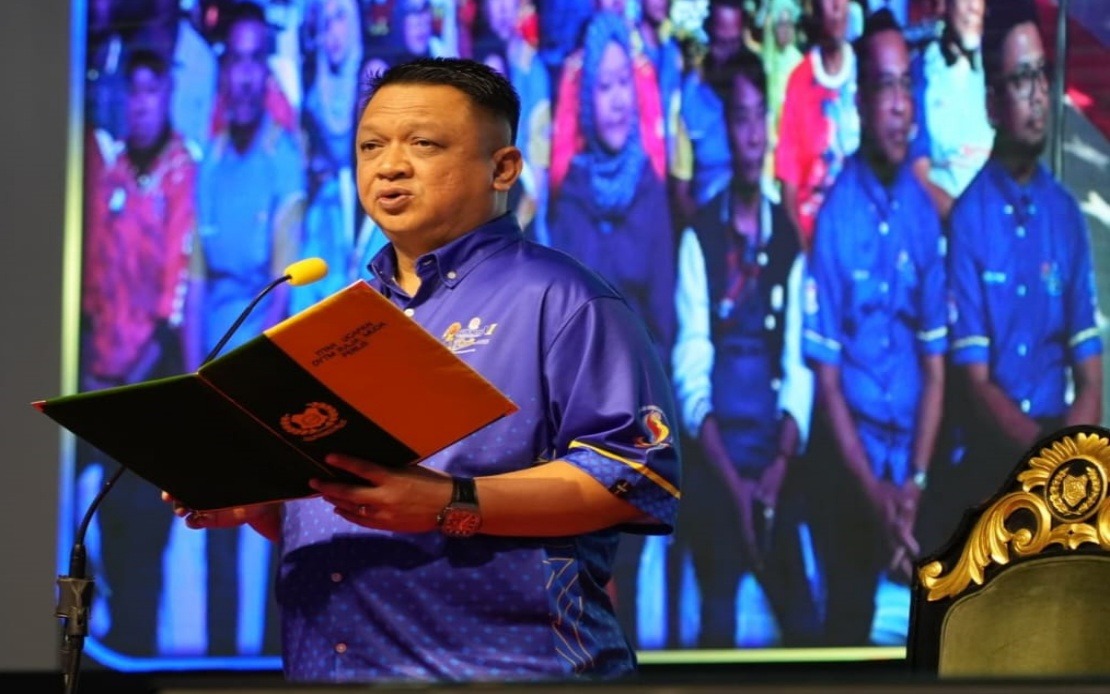
Tuanku Syed Faizuddin Putra, the Raja Muda of Perlis, has articulated a comprehensive vision for steering Majlis Amanah Rakyat (MARA) into the coming decades, presenting three interconnected strategic priorities that reflect Malaysia's broader economic transformation imperatives. Speaking at the official opening of SUKMAS 11—the biennial national sports championships—in Kangar on Friday, the royal addressed a gathering of MARA personnel and officials, emphasising that the institution must transcend reactive adaptation and instead position itself as an architect of future possibilities.
The first pillar of the Raja Muda's vision centres on technological innovation, with particular emphasis on artificial intelligence as a catalyst for institutional modernisation. This call represents a significant articulation of royal support for digital transformation within government-linked entities, signalling acceptance that agencies such as MARA cannot afford to lag behind the AI revolution reshaping global competitiveness. By urging MARA personnel to be "bold in exploring and leveraging new technologies," Tuanku Syed Faizuddin Putra has essentially endorsed a culture shift away from cautious, incremental change towards embracing cutting-edge solutions. The implications are substantial: MARA, which traditionally functions as Malaysia's premier institution for Bumiputera entrepreneurship development, stands to enhance its capacity to identify emerging market opportunities, streamline administrative processes, and deliver more personalised advisory services to its client base.
Beyond operational efficiency, the strategic deployment of AI within MARA's ecosystem could strengthen its analytical capabilities when assessing business viability and identifying sectors poised for growth. For Malaysian entrepreneurs, particularly those in the Bumiputera segment, this technological pivot promises more sophisticated mentorship and market intelligence. The royal's insistence that MARA must "not merely adapt to change, but must be at the forefront of shaping the future" carries a deeper message: institutions cannot be passive respondents to technological disruption but must instead drive the adoption agenda itself.
The second thrust addresses entrepreneurship with a decidedly internationalised perspective. Rather than supporting ventures designed primarily for domestic consumption, the Raja Muda's vision emphasises cultivating entrepreneurs whose ambitions and capabilities extend to global markets. This recalibration reflects acknowledgment that Malaysia's economic future increasingly depends on generating companies capable of competing internationally, not merely serving local demand. For MARA, this translates into a reorientation of training programmes, funding priorities, and mentorship structures towards identifying and nurturing ventures with genuine export potential or scalability across Southeast Asian markets. The emphasis on resilience and innovation underscores that future MARA-supported entrepreneurs must operate in volatile, competitive environments where traditional business models face constant disruption.
This focus on international competitiveness carries particular relevance for Malaysian Bumiputeras seeking to transition from small-scale local enterprises to regional players. Many Southeast Asian economies are witnessing the emergence of increasingly sophisticated Bumiputera-led businesses in sectors ranging from technology to creative industries, yet institutional support mechanisms often lag behind entrepreneurial ambition. By championing the cultivation of "local companies capable of competing and making their mark on the world stage," Tuanku Syed Faizuddin Putra is essentially validating the aspirations of Malaysian entrepreneurs to achieve parity with their regional counterparts.
The third element focuses on developing leadership qualities that extend beyond management competence to encompass strategic foresight and catalytic influence. The Raja Muda's characterisation of future leaders as those "bold in leadership, quick to make decisions and strategic in their thinking" suggests recognition that MARA's institutional effectiveness depends not merely on technical expertise but on cultivating administrators who can navigate complexity, make timely calls amid uncertainty, and drive organisational transformation. This is particularly significant given Malaysia's broader governance discourse, where institutions often struggle with bureaucratic inertia and risk-averse decision-making cultures.
During the ceremony, MARA director-general Datuk Seri Zulfikri Osman provided practical context regarding SUKMAS 11, which runs through September 3 and encompasses 15 sporting disciplines. The tournament mobilises approximately 3,000 athletes and officials from 14 MARA teams nationwide, serving multiple institutional functions simultaneously. Beyond obvious sporting competition, the event operates as a cohesion-building mechanism that binds MARA personnel across geographic and functional silos, fostering the collective identity essential for any large organisation. The Raja Muda's observation that sports represent a "common language that strengthens bonds" reflects understanding that institutional effectiveness emerges not solely from strategic frameworks but from cultural alignment and shared purpose.
From a broader Malaysian context, the Raja Muda's pronouncements carry significance for how Bumiputera economic policies evolve. MARA stands at the intersection of affirmative action objectives and market-driven competitiveness imperatives—a tension that previous policy iterations have not always reconciled successfully. By endorsing technological adoption, international ambition, and transformational leadership, Tuanku Syed Faizuddin Putra is effectively signalling that contemporary Bumiputera empowerment cannot remain confined to protected markets or domestic-scale enterprises. Instead, it must equip beneficiaries with globally competitive capabilities and mindsets.
The Raja Puan Muda of Perlis, Tuanku Dr Hajah Lailatul Shahreen Akashah Khalil, also attended the SUKMAS opening, lending royal presence and emphasis to the occasion. The attendance of both senior royalty underscores the Perlis palace's ongoing engagement with institutional development and national economic priorities, positioning the state as an active participant in Malaysia's economic transformation discourse.
Looking forward, the crystallisation of these three strategic thrusts within MARA's operational framework will determine whether the institution can fulfil the ambitions articulated by the Raja Muda. Implementation will require sustained commitment to curriculum reform within entrepreneurship programmes, substantial investment in digital infrastructure and AI capability development, and cultivation of a leadership culture that incentivises innovation over risk minimisation. For Malaysian entrepreneurs and policymakers monitoring MARA's evolution, the royal's intervention provides a clear directional signal: institutions serving the Bumiputera community must themselves become change agents rather than administrators of static privilege.

