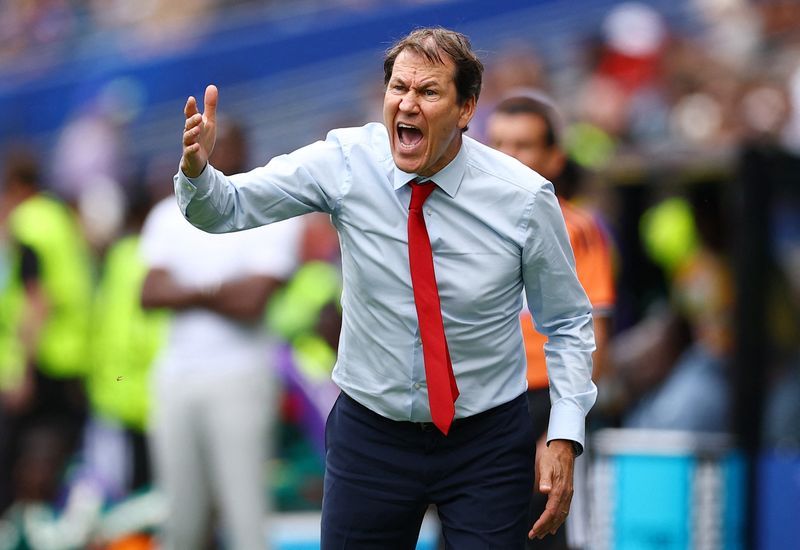
Belgium coach Rudi Garcia's characterisation of Senegal as one of "those teams" prone to losing tactical discipline in the latter stages of matches has triggered fresh examination of how racial bias infiltrates supposedly neutral sports analysis. The remarks, made following Belgium's dramatic late comeback against Senegal, underscore a persistent pattern whereby commentary about African football teams and Black players frequently relies on language that carries historical racial connotations, even when presented in ostensibly technical terms.
Garcia subsequently clarified through social media that his observations concerned teams unfamiliar with managing leads in elite World Cup contexts, arguing his analysis could apply to squads from any continent. Yet critics contend such framing misses the fundamental issue: the terminology itself echoes longstanding stereotypes portraying African athletes and teams as physically gifted but tactically simplistic, emotionally volatile, and incapable of managing high-pressure scenarios. This pattern reflects centuries-old colonial narratives that attributed supposed "natural" instinct to Black populations while denying them intellectual capacity or strategic sophistication.
Academic researchers have systematically documented these disparities in sports commentary. A 2018 World Cup analysis conducted by scholars at Leicester and Coventry universities revealed striking asymmetries in how praise was distributed. When Black players received commendation, seventy percent emphasised physical characteristics including athleticism, velocity, and raw power. By contrast, only eighteen percent of praise directed at white players focused on such attributes. The inverse pattern held for intellectual and learned dimensions: less than twenty percent of accolades for Black players centred on tactical acumen, technical mastery, or cognitive decision-making, compared with seventy-three percent for white counterparts. These statistics suggest that commentary systematically attributes success among Black athletes to inherent physical superiority whilst crediting white players with strategic intelligence and developed expertise.
Matthew Hughey, a University of Connecticut sociology professor specialising in race and athletics, attributes such patterns to two interconnected fallacies: racial essentialism—the misguided notion that race constitutes a biologically meaningful category with inherent traits—and biological determinism, whereby supposedly innate characteristics are presumed to determine outcomes. These frameworks emerged during the early twentieth century as Black athletes began achieving athletic prominence, with commentators retroactively constructing pseudo-scientific justifications for achievement that contradicted prevailing racist hierarchies. Contemporary sports discourse, Hughey argues, perpetuates these historical frameworks, often unconsciously, through vocabulary selections that continue encoding racial assumptions within purportedly objective technical analysis.
The World Cup has witnessed multiple instances of such commentary beyond Garcia's remarks. German pundit Bastian Schweinsteiger described Ivory Coast's style as "African football"—characterised as "unorthodox" and "wild" with deficient tactical sophistication—prior to Germany's match against the West African nation. Ivory Coast coach Emerse Fae identified these descriptions as racist, though Schweinsteiger maintained he was merely analysing contrasting playing philosophies. Similarly, Serbian commentator Rade Bogdanovic apologised after questioning the focus and stamina of Belgium's Black players during a match against Iran, demonstrating how such stereotypes extend beyond African teams to describe Black athletes universally.
For scholars including Ben Carrington at USC Annenberg, these controversies illuminate how contemporary media narratives reproduce racialized frameworks rooted in colonial ideology. Language portraying teams as unable to control matches or themselves projects animalistic, uncontrolled characteristics onto Black populations—a rhetorical strategy with deep historical precedent. Peter Alegi, a Michigan State historian of African football, emphasises that such narratives risk undoing decades of progress whereby African teams have systematically dismantled stereotypes about continental footballing capacity. He notes that South Africa's successful 2010 World Cup hosting demonstrated African institutional sophistication, yet a single match's narrative can resurrect familiar dismissive assumptions if commentators attribute African teams' shortcomings to inherent limitations rather than contextual factors.
The implications extend far beyond football commentary. Leon Mann, founder of Black Collective Media in Sports, underscores how stereotypical language—particularly terms like "wild" and "unsophisticated"—directly impacts employment and advancement opportunities for Black professionals across industries. Such characterisations function not merely as descriptive choices but as gatekeeping mechanisms that restrict leadership positions and professional pathways for underrepresented populations. When commentators systematically deny Black athletes credit for intelligence and technical mastery, they reinforce organisational cultures that reserve decision-making authority for white employees, thereby perpetuating systemic inequality extending far beyond sports broadcasting.
Briana Scurry, goalkeeper whose penalty save secured the United States' 1999 Women's World Cup victory, now serves on FIFA's Players' Voice Panel addressing racism. She reflects that 1990s media coverage of her performances consistently emphasised physical strength and athleticism whilst neglecting tactical intelligence or technical goalkeeping expertise. Decades later, Scurry observes parallel patterns in current Black players' coverage, suggesting that systemic bias in sports media has proven remarkably resilient to change. Her jersey's permanent placement in the Smithsonian's National Museum of African American History and Culture represents her individual achievement, yet she recognises how contemporary Black athletes continue experiencing the same reductive characterisations that limited recognition of her intellectual contributions during her career.
FIFA has implemented various anti-racism initiatives including diversity advisory panels and disciplinary mechanisms against racist conduct. However, scholars emphasise that organisational policy adjustments remain insufficient without sustained educational campaigns and deliberate shifts in broadcasting norms. Ben Carrington advocates for continuous anti-racism training and consciousness-raising within sports media, arguing that football's marketing slogan as "the beautiful game" rings hollow unless accompanied by genuine commitment to equitable representation and respect. The World Cup controversies, rather than representing aberrations, exemplify how entrenched racial frameworks persist within ostensibly meritocratic professional spaces, perpetuated through language choices that appear technical yet encode historical prejudice.
For Southeast Asian audiences, these dynamics merit particular attention given the region's emerging football prominence and the global expansion of sports media platforms. As Malaysian, Thai, Vietnamese and other regional leagues attract increased international broadcasting attention, the commentary frameworks established at major tournaments establish precedents for how Asian and African teams will be described. By examining how racial bias operates in elite sports discourse, regional stakeholders can work proactively to ensure that local football development occurs within media environments committed to equitable coverage that acknowledges tactical sophistication and intellectual dimension of all athletes regardless of ethnicity. The World Cup controversies ultimately demonstrate that challenging systemic racism in sports requires addressing not merely explicit discrimination but the subtle linguistic and analytical frameworks through which bias perpetuates itself.

