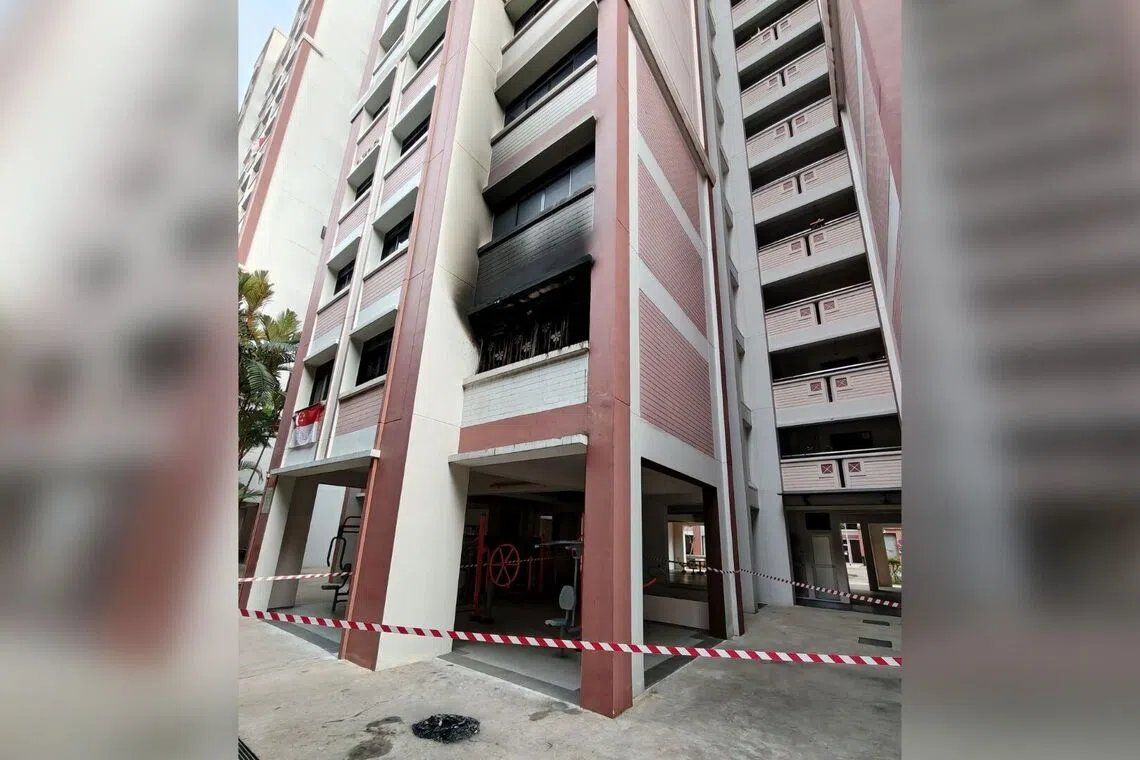
The Singapore Civil Defence Force responded to an urgent call shortly after midnight on Thursday, August 20, when flames broke out in a bedroom on the second floor of Block 979B Buangkok Crescent in Ang Mo Kio. The alert came through at approximately 12.25am, prompting SCDF personnel to mobilize quickly to the residential block. Fire crews deployed a water jet to suppress the blaze, which was confined to the contents of the affected bedroom, preventing it from spreading to adjacent units or other areas of the flat.
One occupant of the flat required medical attention and was conveyed to Sengkang General Hospital by emergency responders. According to Ang Mo Kio GRC Member of Parliament Victor Lye, who provided updates through a Facebook post around 1pm that same day, the elderly resident sustained cuts to his feet during the incident. Lye confirmed that the individual was subsequently discharged from hospital, suggesting the injuries were not severe enough to warrant extended hospitalization.
What distinguished this incident from a routine fire response was the intervention of a young resident from the neighbouring unit. An ITE student living next door demonstrated exceptional presence of mind and civic responsibility by taking immediate action when the fire broke out. The student deployed a fire extinguisher to help contain the initial flames, then took charge of guiding three residents out of the affected flat to safety. This rapid response likely prevented the situation from escalating and may have made the difference between a controlled evacuation and a more chaotic emergency.
In his public address, MP Lye commended the ITE student's bravery and quick thinking, recognizing the critical role this young person played in protecting their neighbours. Such instances highlight the value of community awareness and the willingness of residents to help one another during moments of crisis. The student's actions underscore how ordinary individuals, when faced with an emergency, can rise to the occasion and demonstrate leadership without formal training or official authority.
Following the fire, local authorities and community support mechanisms swung into action to assist the affected residents. The Residents' Network centre, a community facility designed to provide temporary accommodation and support services during emergencies, was activated and made available to the displaced family. However, the residents opted to remain with their neighbours rather than relocate to the centre, suggesting that community ties and proximity to familiar faces provided them greater comfort during the aftermath of the frightening event.
MP Lye personally visited the flat to express concern and offer support to the affected family, demonstrating the responsiveness of elected representatives to crisis situations in their constituencies. This kind of direct engagement serves both a practical purpose—ensuring residents have access to available assistance—and a symbolic one, reinforcing that the community and its leadership stand with residents during times of hardship. The visit also allowed Lye to gather firsthand information about the incident and the needs of those affected.
The cause of the fire remains under investigation by the relevant authorities. Understanding what triggered the blaze will be important not only for the affected residents but also for the broader HDB community, as it may inform safety recommendations or highlight potential hazards that other residents should be aware of. Fire safety in high-density residential blocks is a matter of public concern, and transparent communication about incident causes contributes to public understanding and vigilance.
This event carries particular significance for Southeast Asian readers, as many cities in the region house large populations in high-rise residential complexes similar to Singapore's HDB blocks. The incident demonstrates both the risks inherent in close-quarters urban living and the protective measures—including rapid emergency response times, community engagement, and neighbour-to-neighbour solidarity—that can mitigate these dangers. The quick containment of the fire reflected well on SCDF's operational efficiency and the effectiveness of standard firefighting protocols.
The role of the ITE student also offers a broader lesson about the importance of fire safety education and community resilience. Many countries in the region have undertaken public education campaigns to improve fire awareness, yet incidents like this remind us that the most effective safety net often consists of informed, courageous individuals willing to act. The fact that a young student possessed both the knowledge to use a fire extinguisher and the composure to lead people to safety reflects positively on whatever fire safety instruction he had received.
For residents of HDB blocks and similar public housing throughout Singapore and the region, this incident reinforces the value of knowing emergency exit routes, maintaining awareness of fire safety equipment locations, and cultivating relationships with neighbours who may assist in times of crisis. The psychological dimension matters too; the elderly resident's ultimate discharge from hospital and the family's decision to stay with neighbours rather than move to an official assistance centre suggests that rapid community support can be as important as emergency medical care in helping people recover from traumatic events.

