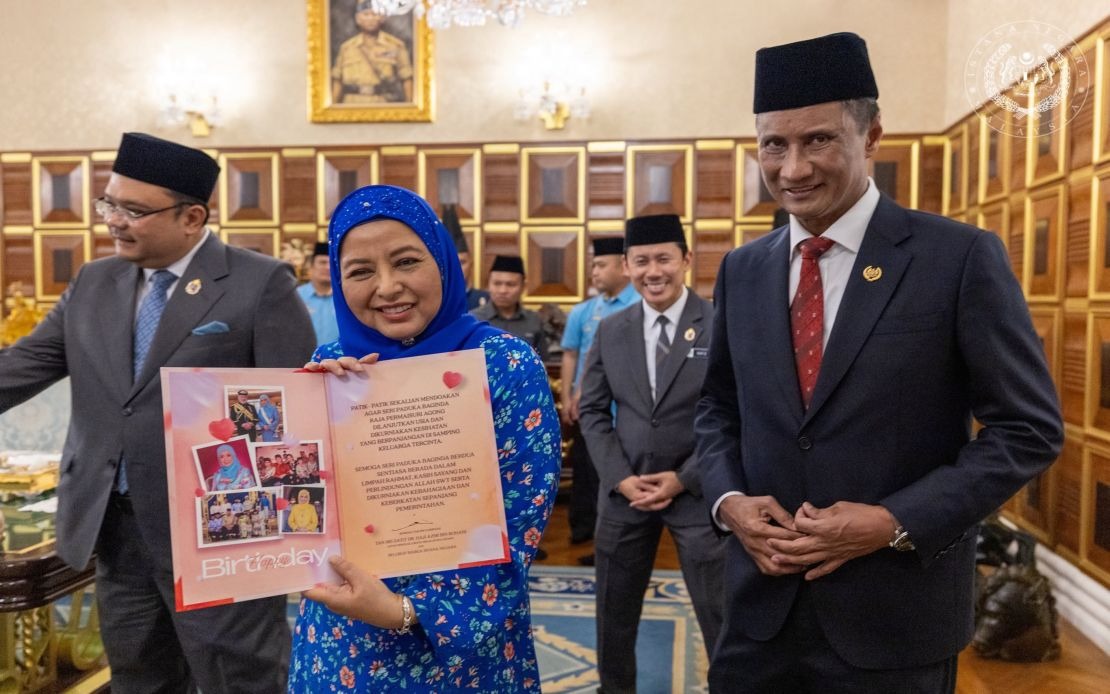
Her Majesty Queen Raja Zarith Sofiah of Malaysia received a ceremonial courtesy visit from senior officials of the royal household on her birthday, marking a traditional observance within Malaysia's constitutional monarchy. The gathering took place at Istana Bukit Serene in Johor, with the occasion documented on the official Facebook page of Yang di-Pertuan Agong Sultan Ibrahim Sultan Iskandar, underscoring its significance within the formal calendar of royal engagements.
Tan Sri Dr Azmi Rohani, who serves as Comptroller of the Royal Household at Istana Negara, led the delegation alongside Datuk Azuan Effendy Zairakithnaini, the Grand Chamberlain. Their presence reflected the structured protocol that governs interactions between the palace administration and the reigning Queen, a practice deeply embedded in Malaysia's constitutional framework. Such courtesy calls represent more than ceremonial formality; they embody the institutional respect and continuity that characterise the relationship between the monarchy and its supporting bureaucratic apparatus.
The visiting delegation was accompanied by Puan Sri Dr Noor Azizah Abdul Latif, wife of the Comptroller, whose presence added a personal dimension to what might otherwise be purely official proceedings. This pattern of including family members in state visits demonstrates how Malaysian royal protocols blend formal hierarchy with elements of personal connection, reflecting broader cultural values around respect and relationship-building within institutional contexts.
During the meeting, Her Majesty graciously accepted gifts presented by the senior management and staff of Istana Negara, including a cake and yellow glutinous rice. The choice of these particular offerings carries cultural resonance; yellow holds significance in Malay-Muslim tradition as a colour associated with royalty and spirituality, while glutinous rice represents a staple comfort food across Malaysian culture. Such thoughtful selection of gifts demonstrates how the palace administration integrates cultural sensitivity into ceremonial practice.
On behalf of the entire Istana Negara workforce, Azmi conveyed formal prayers and heartfelt wishes for Her Majesty's continued good health, well-being and happiness. This expression of collective regard from palace staff represents an important dimension of royal life in Malaysia—the acknowledgement that the Queen's wellbeing is intertwined with the institutional and personal stakes of those who serve the monarchy. Such gestures reinforce the bonds between the royal family and the dedicated professionals who manage the complex operations of the palace.
The location of the meeting at Istana Bukit Serene in Johor rather than Kuala Lumpur reflects the geographical distribution of royal residences across Malaysia. Johor holds particular constitutional significance as the home state of the current Yang di-Pertuan Agong, Sultan Ibrahim Sultan Iskandar, and maintaining an active royal presence in the state through formal engagements strengthens the monarchy's connection to its regional constituencies. This pattern of rotating official activities across different palaces helps ensure that the institution maintains visibility and relevance throughout the federation.
The public documentation of this birthday courtesy call through official social media channels serves an important communicative function in contemporary Malaysian governance. By sharing such occasions, the palace administration ensures transparency and allows citizens to participate vicariously in the institutional life of the monarchy. This represents a shift from earlier periods when royal activities remained largely private affairs, reflecting broader democratisation of information in the digital age whilst maintaining appropriate boundaries around privacy and security.
For observers of Malaysian constitutional affairs, such birthday observances underscore the continuing vitality of the institution of the Queen consort within Malaysia's system of governance. Whilst the Yang di-Pertuan Agong holds executive and ceremonial authority as constitutional head of state, the Queen consort occupies an important complementary role, particularly in cultural and social dimensions of royal duty. Birthday celebrations and formal courtesies therefore affirm both the personal status of the Queen and her institutional significance within the broader framework of Malaysia's monarchy.
The involvement of Istana Negara's administrative hierarchy in organising and participating in such ceremonies reflects the palace's commitment to maintaining structured protocols and institutional memory. The Comptroller and Grand Chamberlain, as senior custodians of royal household operations, carry responsibility for ensuring that observances proceed with appropriate dignity and that the Queen's preferences and comfort are prioritised. Their active participation signals to palace staff the importance the institution places on recognising significant personal occasions for members of the royal family.
Beyond the immediate occasion, such courtesies contribute to the broader narrative of institutional stability that Malaysia's monarchy represents. In a region experiencing various political and social uncertainties, the regular observance of formal royal rituals provides continuity and a sense of enduring institutional order. For Malaysian citizens who view the monarchy as a unifying national symbol, seeing such occasions documented and celebrated reinforces confidence in the institution's ongoing relevance and vitality in contemporary Malaysian society.

