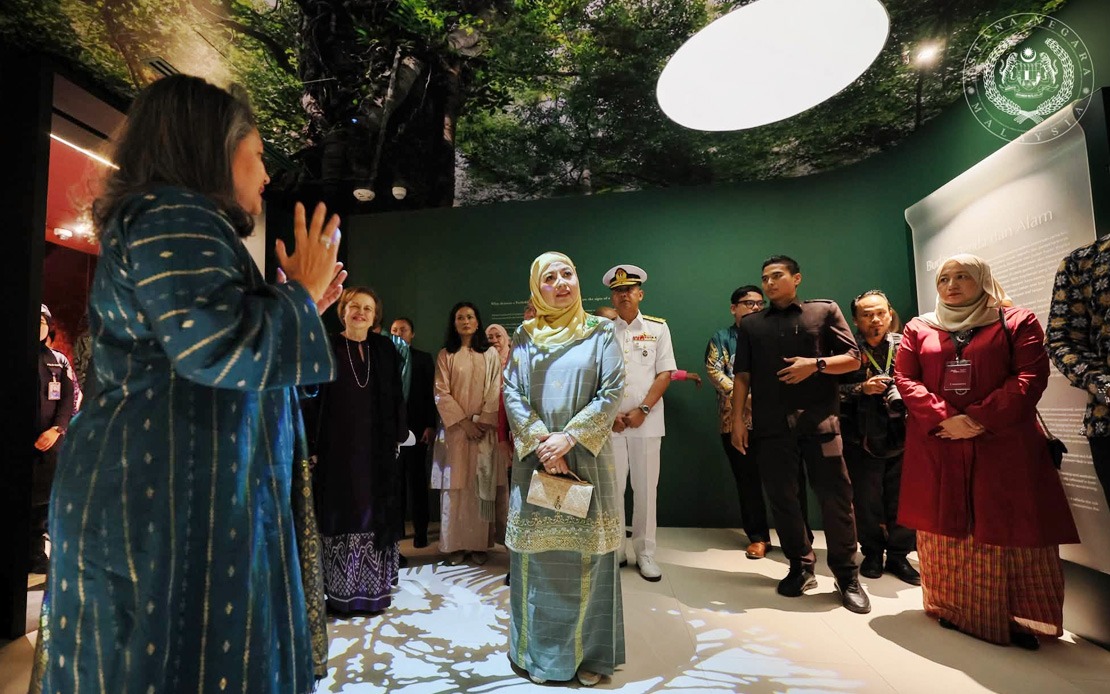
Malaysia's cultural landscape gained a significant landmark on Wednesday when Her Majesty Raja Zarith Sofiah, Queen of Malaysia, formally opened the Merdeka Textile Museum at the Menara Merdeka Maybank compound in Kuala Lumpur. The institution represents an ambitious undertaking by PNB Merdeka Ventures Sdn Bhd, a wholly-owned subsidiary of the state investment fund Permodalan Nasional Berhad, to establish a dedicated space for documenting and celebrating the textile traditions that have defined Malay and Malaysian cultural identity for generations.
In her opening remarks, the Queen emphasised the broader significance of preserving national heritage, noting that every country bears the responsibility of recognising, protecting, and transmitting its cultural legacy to younger generations. Her Majesty underscored that cultural practices and artistic traditions serve as tangible expressions of a nation's values and identity, functioning as mirrors that reflect the character of Malaysian society. These comments resonate deeply amid growing concerns in Southeast Asia about the erosion of traditional knowledge and craft practices due to modernisation and urbanisation.
The Queen expressed particular hope that the museum would function as a learning hub capable of inspiring contemporary Malaysian women and future generations to maintain interest in their heritage. Her message, conveyed through a social media post, carried an implicit warning about the gradual disappearance of cultural practices when they are no longer actively studied and appreciated. This concern aligns with regional conversations about safeguarding intangible cultural assets in an era of rapid globalisation.
The museum's foundation rests upon an exceptional private collection assembled by the late Sharifah Azah Syed Mohammed Alsagoff, known professionally as Azah Aziz. The donor was the spouse of the late Ungku Abdul Aziz Abdul Hamid, a distinguished academic, and mother of Tan Sri Dr Ungku Zeti Akhtar Aziz, the former governor of Bank Negara Malaysia. This genealogical connection demonstrates how the institution bridges Malaysia's financial and cultural spheres, drawing from a family deeply embedded in the nation's intellectual and institutional history.
The collection itself comprises 240 garments and 69 pieces of traditional jewellery, donated in their entirety by the Azah Aziz family. The items represent diverse textile traditions, including songket sarongs, which remain prized for ceremonial occasions, as well as baju kurung with Limar designs and garments embellished with tekat emas—intricate gold thread embroidery techniques that require specialised artisanal knowledge. These acquisitions form the substantive core of the museum's permanent exhibitions and provide researchers with authentic examples of pre-modern and mid-century textile craftsmanship.
Architecturally, the museum occupies eight distinct gallery spaces, allowing for thematic organisation and graduated presentation of textile traditions. Beyond exhibition halls, the institution has been designed to function as a working research and conservation facility. The integrated infrastructure includes a dedicated conservation laboratory where specialists can undertake restoration work and materials analysis, a comprehensive fabric library cataloguing textile types and production methods, and a textile knowledge centre serving as a reference resource for students, designers, and scholars. This model reflects contemporary museum practice, which emphasises active engagement with collections rather than passive display.
The Merdeka Textile Museum's establishment occurs within a broader Asian context of cultural institutions competing for attention and resources. Malaysia's move to establish a dedicated textile museum demonstrates governmental and private-sector commitment to distinguishing the nation's cultural offerings in the regional museum landscape. The partnership between PNB, a major institutional investor, and the royal family signals that heritage preservation enjoys support from both public and private power structures in Malaysia.
The museum carries implications for Malaysia's creative industries and tourism sectors. Textile heritage sites across Asia—including museums in Indonesia, Thailand, and Vietnam—have demonstrated capacity to attract international visitors and generate revenue while simultaneously employing local artisans and craft practitioners. The Merdeka Textile Museum potentially creates opportunities for Malaysian textile designers and manufacturers to access documented historical patterns and techniques, potentially informing contemporary production and elevating the commercial value of Malaysian textile goods in global markets.
Several high-ranking government officials attended the ceremony, including Hannah Yeoh, the Minister in the Prime Minister's Department overseeing Federal Territories, alongside Chief Secretary Tan Sri Shamsul Azri Abu Bakar and PNB group chairman Raja Tan Sri Arshad Raja Tun Uda. This official presence underscores the project's status as a government-endorsed cultural initiative rather than a purely private endeavour, suggesting that heritage preservation remains a policy priority within Malaysia's institutional hierarchy.
The museum's positioning within Menara Merdeka—itself a landmark symbolising Malaysian independence and national identity—creates symbolic resonance. Locating a textile museum at this site frames traditional textile craftsmanship as integral to Malaysia's foundational national narrative. For Malaysian audiences and regional visitors, the museum offers opportunities to engage with material culture in ways that move beyond textbook descriptions toward tactile, visual, and contextualised understanding of how textiles functioned within historical social structures and continue shaping contemporary cultural practices.
Moving forward, the institution's success will likely depend on programming that extends beyond static exhibitions. Interactive experiences mentioned in the founding documents suggest the museum intends to offer workshops, demonstrations of traditional techniques, and educational programmes that could attract school groups and tourists. Such initiatives would align the Merdeka Textile Museum with contemporary museological trends across Southeast Asia, where institutions increasingly serve as nodes within broader cultural economies rather than mere repositories of objects.
The museum's establishment also reflects Malaysia's investment in cultural soft power. As ASEAN nations position themselves within global cultural hierarchies and tourism markets, dedicated heritage institutions increasingly function as instruments of national branding and cultural diplomacy. By preserving and showcasing textile traditions through a professionally managed facility, Malaysia projects an image of cultural sophistication and historical awareness that may enhance its standing within regional and international cultural conversations.

