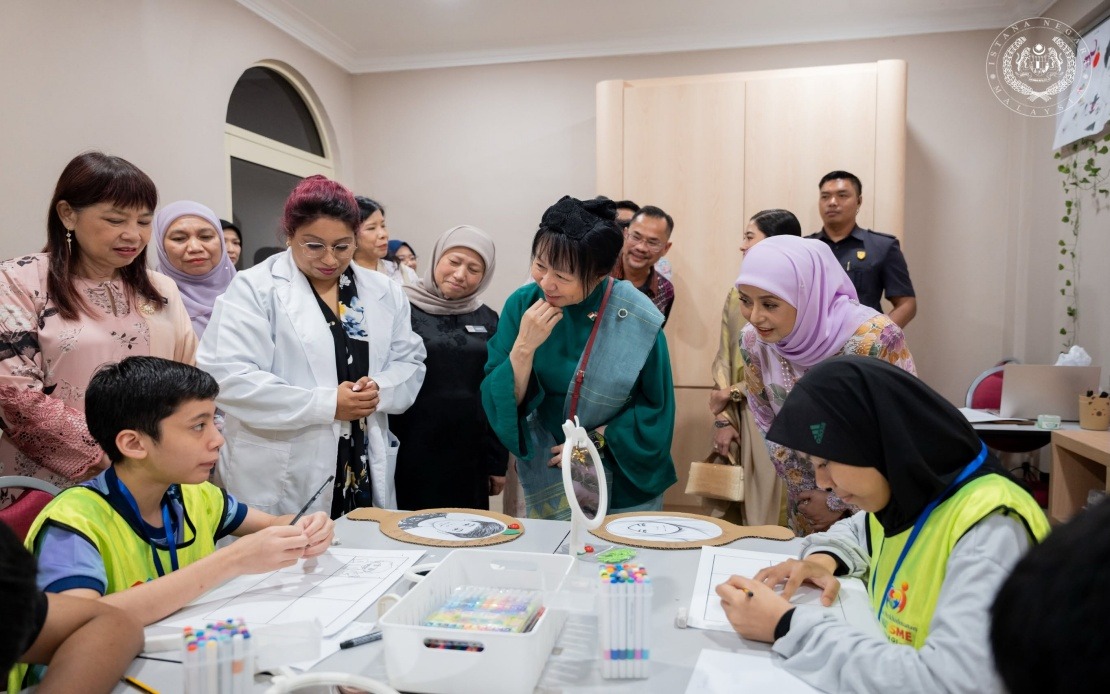
The visit of Singapore First Lady Jane Ittogi Shanmugaratnam to the Bangi Autism Service Centre on July 14, held alongside her husband President Tharman Shanmugaratnam's state visit to Malaysia, underscores the growing emphasis both nations place on inclusive social development and cross-border knowledge sharing in disability services. Her Majesty Raja Zarith Sofiah led the tour, joined by Tunku Tun Aminah Sultan Ibrahim, demonstrating the Malaysian royal family's active engagement with welfare initiatives addressing neurodevelopmental conditions affecting thousands of citizens.
The delegation present at the Bangi facility reflected the high-level institutional support channelled toward autism spectrum disorder interventions. Prime Minister's wife Datuk Seri Dr Wan Azizah Wan Ismail attended alongside Women, Family and Community Development Minister Datuk Seri Nancy Shukri, whose portfolio directly oversees the policy framework for supporting individuals with autism. The presence of deputy and senior officials from the ministry, including secretary-general Datuk Dr Maziah Che Yusoff and Social Welfare Department director-general Datuk Che Murad Sayang Ramjan, signalled institutional commitment to examining how Malaysia delivers therapeutic and rehabilitative services to vulnerable populations.
During the tour, both dignitaries examined the centre's specialized facilities designed to equip individuals with autism with practical life competencies. The Activities of Daily Living room focuses on fundamental self-care and independence skills, while the Occupational Therapy Room delivers targeted interventions addressing sensory processing and motor coordination challenges common among those on the spectrum. The gymnasium component reflects a holistic care model recognising that physical activity supports both mental wellbeing and skill development. These infrastructure elements illustrate how the Bangi facility integrates therapeutic specialisation with community-based rehabilitation philosophy.
The statistics shared during the visit illuminate the scale of autism in Malaysia's social welfare landscape. Minister Shukri disclosed that 93,199 individuals with autism had registered with the Social Welfare Department as of June, a figure expected to climb as screening accessibility expands and public understanding improves. This trajectory carries implications for resource allocation, training of specialist staff, and infrastructure planning across Malaysia's social services sector. Rising case identification reflects both genuine increases in diagnosis and heightened community awareness—both requiring proportionate government response to prevent service saturation and ensure equitable access across urban and rural regions.
The Bangi Autism Service Centre operates through a distinctive public-private partnership model, combining government apparatus with expertise from non-governmental organisations. The National Autism Society of Malaysia and Damansara Damai Community-Based Rehabilitation Centre jointly deliver programming alongside state institutions, a structure increasingly prevalent across Southeast Asia as governments recognise that NGO networks often possess specialised knowledge and community trust that purely bureaucratic approaches cannot replicate. This arrangement also distributes operational costs and innovation responsibility across multiple stakeholders, potentially improving service resilience and adaptability.
From a bilateral diplomacy perspective, the visit leverages a social welfare initiative as a platform for strengthening Malaysia-Singapore relations beyond traditional trade and security frameworks. Positioning the tour during a presidential state visit signals that both governments view disability inclusion and social development as legitimate foreign policy concerns deserving formal diplomatic attention. For Singapore, observing Malaysian autism services offers comparative insight into different approaches to service delivery and assessment protocols. For Malaysia, the presence of Singapore's First Lady validates domestic efforts and opens channels for technical exchange with a developed economy's established infrastructure.
The timing of this engagement reflects broader regional momentum around disability rights and inclusive development. As Southeast Asian nations increasingly align with United Nations conventions on persons with disabilities, showcasing functional service models becomes an exercise in demonstrating commitment to vulnerable populations. The Bangi centre's prominence in high-level diplomatic itineraries elevates autism advocacy in public consciousness, potentially generating political capital for expanded funding and policy reforms benefiting all individuals with developmental disabilities, not solely those diagnosed with autism spectrum conditions.
For Malaysian policy makers, the visit underscores the necessity of scaling services proportionate to the registered population of nearly 95,000 individuals. Infrastructure like therapy facilities, trained occupational therapists, and day centres require sustained capital investment and recurrent funding streams that compete with other health and social priorities. The government's decision to highlight this particular facility suggests confidence in its model, though broader sector sustainability depends on whether Bangi represents a scalable template or a well-resourced exception. Questions of geographic coverage—whether similar quality facilities exist in Sabah, Sarawak, and rural peninsular Malaysia—remain central to equitable service delivery.
The visit also reflects how elite institutional engagement with social welfare issues can influence public perception and resource mobilisation. When queens and presidential spouses tour autism centres, media coverage amplifies the visibility of conditions and services that might otherwise receive limited public attention. This visibility can catalyse donations, volunteer recruitment, and political support for legislative reforms. However, it also risks creating symbolic gestures that substitute for sustained funding commitments, a tension familiar to advocates across Southeast Asia navigating the gap between diplomatic endorsement and financial sustainability.
Looking forward, the encounter between Malaysian and Singaporean social welfare officials during this visit may catalyse practical exchanges. Singapore's sophisticated diagnostic infrastructure and long-established autism intervention programs could inform Malaysian best practice development, while Malaysia's community-based rehabilitation approach might offer Singapore perspectives on scaling services affordably. Regional cooperation on training standards for therapists and diagnostic protocols could improve outcomes across Southeast Asia, particularly as rising autism identification strains government budgets throughout the region.

