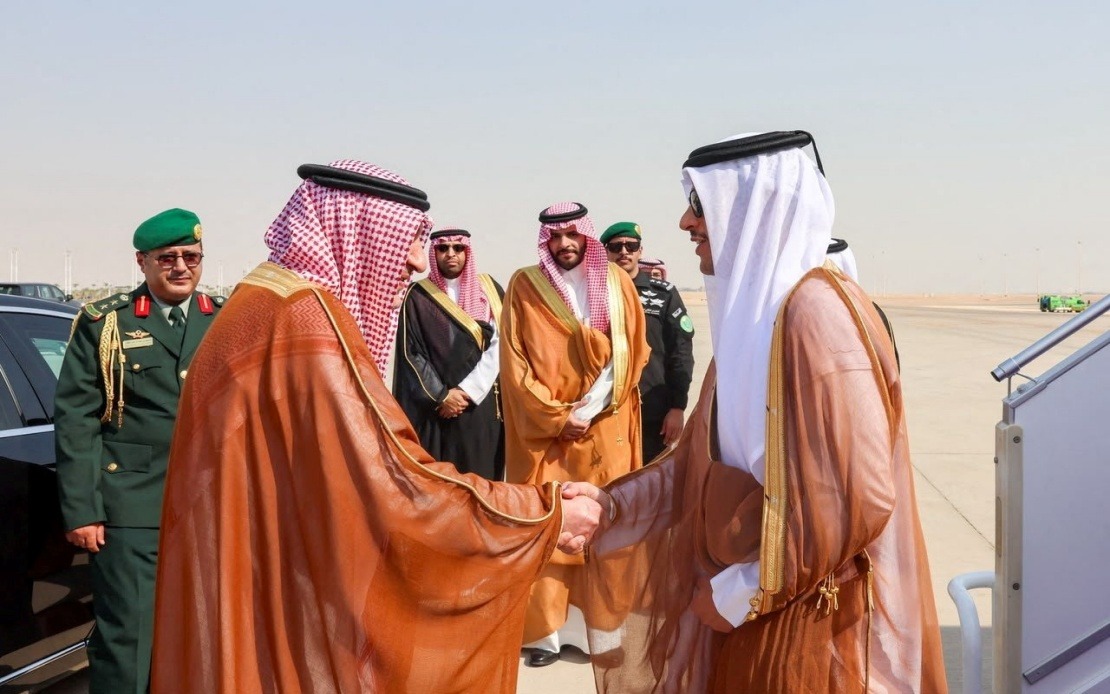
Qatar's Prime Minister Sheikh Mohammed bin Abdulrahman bin Jassim Al Thani arrived in the Saudi capital of Riyadh on Wednesday for an official state visit, where he held substantive meetings with senior Saudi officials to explore pathways for defusing the heightened tensions currently gripping the Middle East. The visit represents a significant diplomatic engagement between two of the region's most influential players at a moment when geopolitical fault lines have become increasingly pronounced across the Gulf.
During his time in Riyadh, Sheikh Mohammed—who holds the additional portfolio of Qatar's Foreign Minister—met with Saudi Foreign Minister Faisal bin Farhan to examine the full spectrum of bilateral relationships and assess the latest developments unfolding across the region. The discussions specifically centred on what both nations characterize as "diplomatic efforts to de-escalate tensions and enhance security and stability," according to a statement released by Qatar's Foreign Ministry. This language signals a deliberate emphasis on peaceful resolution over confrontational posturing at a time when military posturing and rhetoric have frequently dominated regional discourse.
Both delegations underscored their commitment to resolving outstanding disputes through dialogue and negotiated settlement rather than coercive measures. The reaffirmation of this principle carries particular weight given the escalating proxy conflicts and military incidents that have marked the Gulf region in recent years. By publicly endorsing diplomatic channels, Doha and Riyadh are positioning themselves as stabilizing forces within a volatile environment where miscalculation or uncontrolled escalation could have catastrophic consequences for the broader region and beyond.
A notable emphasis of the Qatari-Saudi talks involved maritime security and freedom of navigation, with both sides expressing concern about safeguarding commercial shipping lanes in the Arabian Gulf and Red Sea. This focus reflects the immense economic stakes involved, as these waters remain among the world's most critical trade arteries. Disruptions to shipping—whether from military action, piracy, or deliberate blockades—would ripple through global supply chains and have immediate implications for economies throughout Southeast Asia dependent on these corridors. For Malaysia and its neighbours, any deterioration in Gulf security directly threatens regional prosperity through higher energy costs and disrupted trade flows.
The officials called for enhanced coordination among both regional and international stakeholders to prioritize constructive engagement and establish mechanisms for preventing miscalculation. This multilateral approach acknowledges that the region's challenges cannot be resolved unilaterally and require buy-in from diverse actors with varying interests and strategic calculations. The emphasis on collective problem-solving stands in contrast to the compartmentalized and sometimes adversarial approaches that have characterized Gulf diplomacy in recent years.
Sheikh Mohammed was formally received upon arrival by Saudi Deputy Foreign Minister Waleed bin Abdulkarim Al-Khereiji, a gesture underscoring the official nature of the engagement. The Saudi protocol reflected Riyadh's interest in signalling receptiveness to Qatari diplomatic overtures during a period when such gestures carry symbolic weight alongside their practical significance. Official Saudi statements regarding the visit provided limited detail about its planned duration, maintaining customary diplomatic discretion about the timeline and scope of discussions.
The timing of this visit assumes particular importance against the backdrop of escalating tensions stemming from the broader Iran-United States rivalry that has defined Middle Eastern geopolitics in recent years. Saudi Arabia's established alliance with Washington places it squarely within one strategic camp, while Qatar maintains a more calibrated approach to regional relationships. The visit therefore presents an opportunity for both nations to synchronize their diplomatic objectives and explore common ground, even as their alliance with external powers may diverge.
For Southeast Asian observers, the Qatari-Saudi dialogue carries implications beyond bilateral relations. As the region becomes increasingly intertwined with global power competition and Middle Eastern stability, developments in Gulf diplomacy reverberate through Asian markets and security arrangements. Malaysia's role as a significant trader and energy importer means that de-escalation efforts in the Gulf directly influence domestic economic conditions and regional strategic stability. The success or failure of diplomatic initiatives like the Riyadh talks will partially determine whether energy supplies remain stable and trade routes remain open.
The visit also reflects Qatar's diplomatic positioning as a bridge-builder capable of engaging with multiple regional parties despite occasional tensions with Gulf neighbours. Doha's ability to maintain dialogue with various actors—including through its hosting of Taliban representatives and mediation roles in conflicts—gives it particular utility in de-escalation scenarios. By demonstrating commitment to coordinated diplomacy with Saudi Arabia, Qatar reinforces its credentials as a constructive actor invested in regional stability rather than conflict perpetuation.
Moreover, the emphasis on dialogue represents a measured counterweight to military buildups and security competition that have accelerated across the region. While defence spending and strategic positioning remain inevitable features of Gulf politics, the articulation of commitment to diplomatic resolution provides space for negotiated settlements and confidence-building measures. For a region already bearing enormous human and economic costs from sustained conflict and military tension, such diplomatic initiatives—however modest they may appear—offer crucial outlets for channelling interstate competition away from armed confrontation.
The visit underscores that despite the region's manifest divisions and competing interests, space remains for direct engagement between major powers. Whether such conversations can translate into concrete mechanisms for managing tensions and preventing escalation cycles will depend on sustained commitment from all regional and international players involved. For now, the Qatari-Saudi meeting serves as a reminder that diplomacy, though challenging in the current climate, remains the preferred instrument for addressing Middle Eastern challenges.

