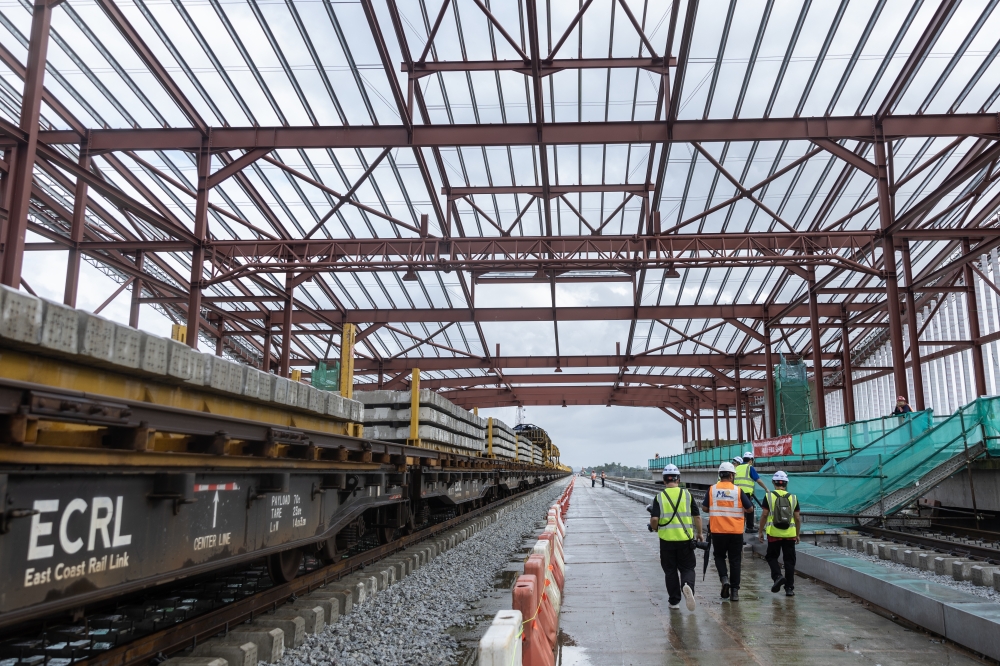
The federal government has given the green light to a comprehensive portfolio of 46 development initiatives in Pasir Puteh constituency, with a combined financial outlay of RM207 million. This significant intervention represents a deliberate strategy to harness the constituency's geographic advantages, particularly its proximity to the East Coast Rail Link corridor, which officials view as a catalyst for accelerated economic transformation across the Terengganu region.
Pasir Puteh's strategic location on the ECRL route positions it uniquely to become a logistics and manufacturing hub for the east coast. The government's project approval signals confidence that the rail connection will unlock commercial opportunities that have previously remained constrained by infrastructure limitations. When the ECRL reaches full operational capacity, the constituency stands to benefit from improved freight accessibility and passenger connectivity, essential ingredients for attracting industrial investment and facilitating interregional commerce.
The 46-project portfolio spans multiple sectors and addresses diverse developmental needs within the constituency. Infrastructure modernisation features prominently, with initiatives designed to upgrade roads, utilities, and public facilities that form the backbone of economic activity. Simultaneously, the package includes provisions for economic diversification, recognising that sustainable growth requires more than a single industry focus. Projects targeting human capital development, small and medium enterprise support, and skills training reflect a holistic approach to regional advancement.
This investment initiative arrives against a backdrop of intensifying regional competition for federal resources. East coast states have consistently advocated for greater attention and funding, arguing that peninsular development has historically concentrated resources in the western corridor. The Pasir Puteh allocation demonstrates responsiveness to these concerns whilst simultaneously positioning the government as proactive in managing equitable spatial development across Malaysia.
The timing proves significant given the ECRL's progression toward completion. Early investment in supporting infrastructure and economic readiness ensures that when the rail line becomes operational, Pasir Puteh possesses the foundational conditions necessary to capitalise on enhanced connectivity. Communities and businesses prepared in advance stand to capture commercial opportunities swiftly, whereas inadequate preparation risks missing the window for first-mover advantages.
Local stakeholders and business interests have long advocated for targeted government intervention to modernise Pasir Puteh's economic landscape. Agricultural communities, particularly those engaged in fishing and palm cultivation, perceive opportunities to diversify through value-added processing and agro-industrial development. The project portfolio's apparent inclusion of diverse sectors suggests government recognition of these aspirations and commitment to enabling structural economic transformation.
The RM207 million commitment, whilst substantial in local context, requires examination within broader development frameworks. Effective project execution becomes paramount—successful implementation will substantially elevate living standards and business prospects, whereas delays or mismanagement could squander the opportunity. Strong governance, transparent procurement processes, and community engagement throughout implementation phases will determine whether these projects deliver anticipated benefits.
Regionally, the Pasir Puteh investment may signal broader federal intentions regarding ECRL-adjacent communities. Other constituencies along the rail corridor may anticipate similar packages, potentially catalysing a comprehensive east coast development narrative. This could reshape Southeast Asian supply chains, particularly if improved connectivity facilitates deeper integration between Malaysian manufacturing facilities and regional markets in Brunei, Singapore, and beyond.
The investment package also reflects government recognition that modern infrastructure alone proves insufficient for regional development. Complementary initiatives addressing education, vocational training, business incubation, and workforce development must accompany physical infrastructure upgrades. The diversity of approved projects suggests this integrated approach has informed planning decisions.
From a Malaysian perspective, the Pasir Puteh initiative exemplifies how strategic transportation infrastructure like the ECRL can anchor broader development frameworks. Rather than treating the rail link as an isolated transport facility, the government appears to be orchestrating multi-sectoral investments that transform the rail corridor into a genuine economic development spine. This model potentially offers lessons for other infrastructure projects seeking to maximise developmental returns.
The implementation phase will prove critical. Project timelines must align reasonably with ECRL completion schedules to ensure supporting infrastructure reaches operational readiness concurrently. Coordination between federal agencies, state government, local authorities, and private sector partners becomes essential. Communities in Pasir Puteh will monitor progress closely, viewing the RM207 million commitment as tangible evidence of government commitment to equitable regional development and credible response to longstanding demands for eastern corridor advancement.

