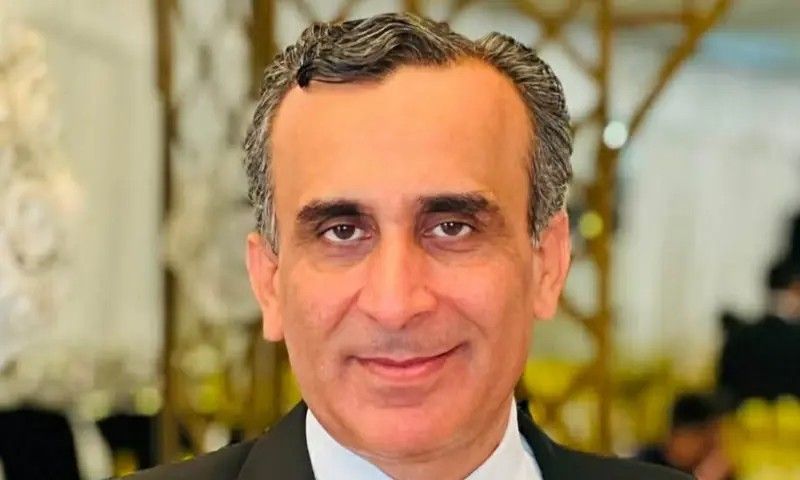
The Punjab provincial government has appointed Irfan Sadiq Tarar as Prosecutor General, a key position overseeing criminal prosecution across the province. The announcement came on Saturday through formal notification issued under Section 6 of the Punjab Criminal Prosecution Service Act 2006, establishing a three-year tenure for the appointee. The appointment carries significant implications for Pakistan's criminal justice administration in its most populous province, where thousands of cases move through courts annually.
Tarar's elevation to this position follows the departure of his predecessor, Farhad Ali Shah, who recently received nomination as an additional judge of the Lahore High Court. This judicial elevation reflects a common career trajectory within Pakistan's legal fraternity, where senior prosecutors often transition to the bench. The succession demonstrates the government's confidence in maintaining continuity within the prosecution service during a period of personnel transition.
The incoming Prosecutor General brings substantial experience from his involvement in provincial legal governance. Tarar previously served as vice chairman of the Punjab Bar Council, one of Pakistan's largest legal bodies overseeing attorney conduct and professional standards. This role exposed him to broader regulatory and administrative challenges within the legal profession beyond courtroom advocacy. His leadership position within the bar council network positioned him to understand systemic issues affecting legal practitioners and the wider justice system.
Additionally, Tarar held the position of vice president at the Lahore Bar Association, where he engaged with ongoing debates concerning judicial efficiency, case management, and lawyer welfare. The Lahore Bar Association represents one of Pakistan's most influential legal organizations, based in the provincial capital where significant appellate and high court functions operate. Service in this capacity demonstrates recognition among legal peers and involvement in professional advocacy affecting the administration of justice.
Tarar maintains affiliation with the Ahsan Bhoon-led Independent group, a faction within Pakistan's legal and political circles. This alignment provides insight into his ideological positioning within professional debates, though his appointment as a government prosecutor suggests acceptance across the political and administrative establishment. The Independent group has historically championed various causes within the legal profession, and Tarar's prominence within this network may influence his approach to prosecution priorities.
The Prosecutor General position carries responsibilities extending far beyond individual case management. This office coordinates prosecution strategy across Punjab's numerous courts, oversees the training and conduct of government prosecutors, and represents the state's interests in criminal matters ranging from ordinary crimes to white-collar offenses. The role requires coordination with law enforcement agencies, the judiciary, and defence advocates to ensure the criminal justice system functions effectively.
Punjab's criminal justice system handles an enormous caseload reflective of the province's 120 million population. Prosecution services must balance efficiency with fairness, managing cases that include everything from petty crimes to terrorism and organized crime matters. The Prosecutor General's office sets the tone for prosecution priorities and can influence how resources are allocated among different categories of offenses.
For Malaysian and Southeast Asian observers, Pakistan's prosecution appointments offer comparative perspective on legal system governance. Countries throughout the region grapple with similar challenges of ensuring prosecutorial independence, managing caseload backlogs, and maintaining public confidence in criminal justice. Pakistan's approach to appointing senior prosecutors through statutory procedures mirrors mechanisms in several Commonwealth-influenced jurisdictions.
Tarar's appointment through formal notification under specific legislation reflects attempts to institutionalize prosecution service governance. The three-year term structure provides defined tenure while allowing periodic review of performance. This contrasts with some jurisdictions where prosecution leadership lacks fixed terms, creating uncertainty about continuity or vulnerability to political pressure.
The transition also occurs during a period of broader discussion about Pakistan's judicial reforms and criminal procedure modernization. Recent years have witnessed debates about case management systems, court infrastructure, and prosecutorial effectiveness. Tarar's appointment suggests an opportunity to implement or advance reform initiatives within the prosecution service that might address systemic inefficiencies.
Looking ahead, observers will assess whether the new Prosecutor General advances particular prosecution priorities or implements procedural changes affecting case handling. His background in bar association leadership suggests familiarity with criticisms leveled against the prosecution service by the legal community, potentially positioning him to bridge relationships between prosecutors and defence advocates.
The appointment underscores how senior legal positions in Pakistan continue to be filled through established procedures despite broader political transitions. This institutional continuity in prosecution leadership may provide stability for criminal justice administration even amid fluctuations in other governance sectors. For regional legal professionals, the appointment demonstrates how Commonwealth-influenced jurisdictions maintain prosecutorial structures adapted to contemporary requirements.

