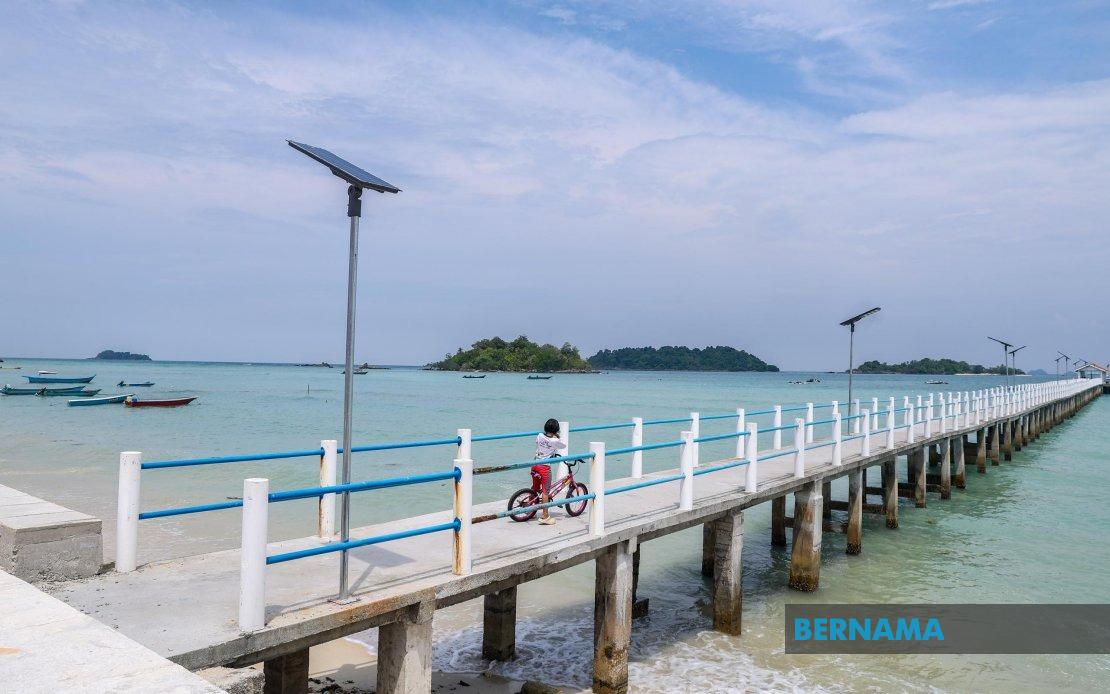
As Johor prepares for its state election on Saturday, the small island community of Pulau Tinggi is pressing its demands for long-overdue infrastructure maintenance and social support, with residents hopeful that a new state government will finally deliver on basic development needs that have languished for years. The 150-strong population scattered across Kampung Pasir Panjang and Kampung Tanjung Balang faces two interconnected challenges that encapsulate the broader struggle of rural and island communities in Johor: physical deterioration of essential public facilities and the economic vulnerability of its fishing-dependent residents.
The primary grievance centres on the Kampung Pasir Panjang jetty, which has served as a crucial transport and livelihood hub for both the island's residents and visiting tourists. According to Rossana Hussin, the village head of Kampung Pulau Tinggi, the facility has been visibly deteriorating since around 2017, yet remains in active use despite its compromised condition. The applications to upgrade this critical infrastructure were submitted to the Mersing District Office in March and have received what officials characterise as positive feedback, though tangible progress remains elusive. Rossana stressed the urgency of accelerating the upgrade process, noting that residents continue to use the deteriorating jetty out of necessity while being advised to exercise caution—a situation that underscores the precarious position of island communities that often fall through the cracks of state and federal development priorities.
Beyond infrastructure, the plight of fishermen in Kampung Tanjung Balang reveals the economic pressures facing Pulau Tinggi's residents. The majority of the island's population falls within the B40 income category, and many require housing repair assistance or have seen their housing projects left incomplete. Rossana explained that targeted housing support from the incoming administration would meaningfully improve living conditions for these families while providing some relief from the cumulative burden of maintaining homes on an isolated island where repair costs and material accessibility are significantly higher than on the mainland. The housing issue is not merely a matter of comfort; it directly impacts the island's capacity to retain young families and prevent further population decline.
The demographic trajectory of Pulau Tinggi reflects a broader challenge facing rural Malaysia. Mariam Mamat, an 85-year-old island resident, highlighted how the community's population has shrunk as younger people have migrated to seek employment opportunities elsewhere, with some settling in Felda schemes that offer more stable economic prospects. This outmigration represents not just a loss of human capital but also a threat to the cultural continuity and social fabric of island communities. Mariam advocates for tourism sector revitalisation as a potential antidote, arguing that renewed investment in island tourism could generate employment opportunities for young people and provide reasons for residents to remain or return to their roots.
The timing of these concerns is significant. With approximately 2.7 million eligible voters set to participate in Saturday's state election to choose 56 lawmakers, Pulau Tinggi residents are among countless communities across Johor presenting their developmental wish lists to candidates. The Tenggaroh state representative elected on Saturday will inherit responsibility for addressing these accumulated grievances. For island and remote communities like Pulau Tinggi, such elections represent perhaps their primary mechanism for securing state attention and resources, making the articulation of these issues during campaign season strategically important.
What emerges from Pulau Tinggi's situation is a portrait of infrastructure and social service gaps that have persisted through multiple election cycles. The jetty applications dating to March suggest that even when formal processes are followed and positive responses received, implementation timelines remain frustratingly vague. This pattern reflects a common Malaysian experience where rural and island constituencies often struggle to translate political attention into concrete delivery, particularly when projects involve more modest communities with limited political leverage. The combination of infrastructure neglect and limited economic opportunity creates a cycle of decline that is difficult to reverse without deliberate intervention.
For Malaysian policymakers and Johor voters, Pulau Tinggi's demands offer a microcosm of broader questions about regional equity and development. Island communities face inherent disadvantages—higher transportation costs, limited employment diversity, and reduced access to services—that require proactive state support to overcome. Without targeted intervention, such places risk becoming economically redundant, their populations dispersed and their character erased. The incoming Johor administration will face multiple competing demands for limited resources, but the residents of Pulau Tinggi have made clear that from their perspective, basic infrastructure maintenance and housing support are not luxuries but foundational requirements for dignified living and economic participation.

