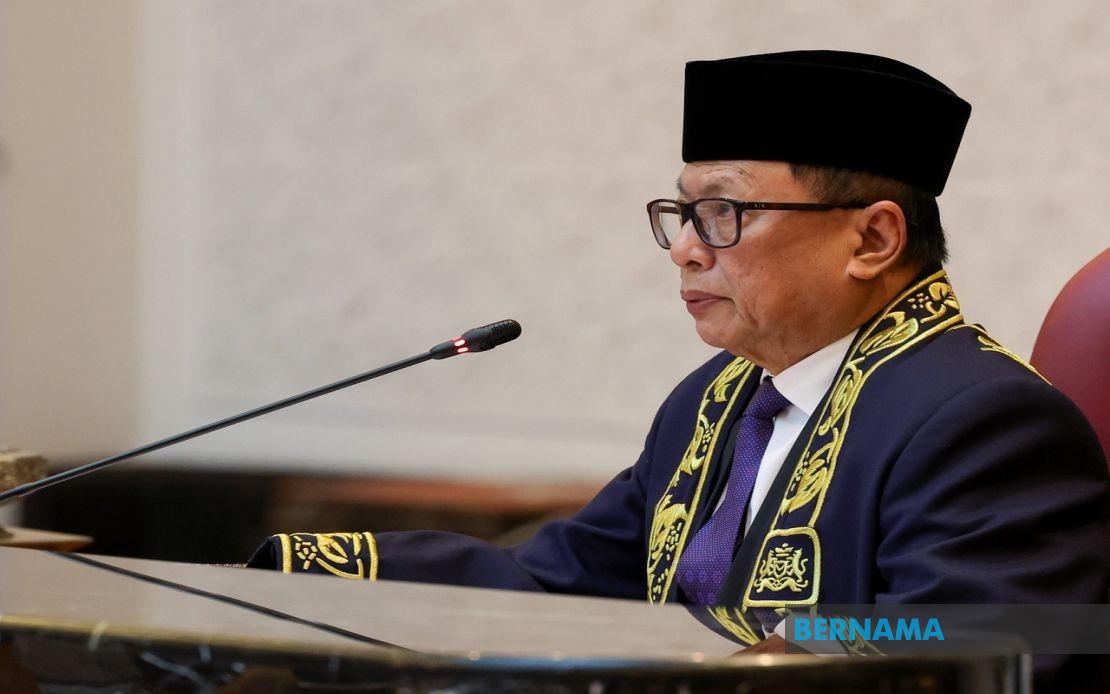
A prominent UMNO figure has severed ties with Malaysia's ruling party in a dramatic departure that signals deepening fractures within the coalition's Johor machinery. Datuk Dr Mohd Puad Zarkashi, holding the influential position of Supreme Council member, announced his immediate resignation on June 25, declaring the move would liberate him from party constraints and enable him to voice concerns without fear of internal sanctions.
In his resignation statement circulated via social media, Puad presented his exit as a carefully considered decision made without pressure or external influence. He framed the departure strategically, noting that his voluntary withdrawal would spare UMNO the administrative burden of initiating formal expulsion proceedings. This tactical framing suggests Puad anticipated potential disciplinary action, yet sought to position himself as the actor rather than the subject of party discipline. By stepping away voluntarily, he effectively removed UMNO's leverage to silence him through formal mechanisms.
Puad's core grievance centres on what he characterises as the subordinate status of Johor UMNO's leadership. Using the vernacular term "pak turut"—literally a yes-man or unquestioning follower—he portrays Onn Hafiz as unable or unwilling to exercise genuine leadership autonomy. His description of Johor UMNO as a "tethered puppet" suggests a structure where decision-making authority lies elsewhere, rendering the state party apparatus incapable of independent action or advocacy. This characterisation carries significant implications for UMNO's organisational cohesion, implying that factional control has superseded meritocratic or democratic processes within the party's state hierarchy.
The timing of Puad's resignation carries political weight. His departure follows his public allegations of irregularities in the candidate selection process for the upcoming Johor state election. These claims suggest internal tensions over how UMNO allocates nomination slots—a crucial resource that determines which party members gain electoral viability. Puad's decision not to defend his Rengit state assembly seat, despite winning it comfortably in 2022, indicates either growing alienation from party processes or strategic repositioning ahead of anticipated conflicts.
Puad's political trajectory illuminates his stature within UMNO and the broader Malaysian political ecosystem. His previous tenure as Johor State Legislative Assembly Speaker demonstrates his elevation to senior legislative roles. His federal appointments—including Deputy Education Minister from 2009 to 2013 and Director-General of the Special Affairs Department from 2015 to 2018—reveal a politician with considerable administrative experience and, by extension, established networks within the federal bureaucracy. His loss of the Batu Pahat parliamentary seat to PKR's Mohd Idris Jusi in the 13th General Election represents a significant electoral setback, particularly given his earlier victory in the 12th General Election by a comfortable 12,968-vote majority.
Puad's framing of his resignation as an act of "political courage" deserves examination. By positioning his departure as exposure of wrongdoing before escalation, he claims moral authority and suggests he is acting in the broader national interest rather than from self-interest. This rhetorical positioning attempts to transcend factional narratives and appeal to principles of institutional integrity. However, Malaysian political observers will recognise that such characterisations often mask deeper power struggles within party hierarchies, where conflicting visions for organisational direction collide with personal political calculations.
The allegations against Johor UMNO's candidate selection process touch a nerve in contemporary Malaysian politics. The federal government's legitimacy increasingly depends on demonstrating that institutional processes operate fairly and transparently. When senior party figures publicly challenge nomination systems, they effectively highlight governance failures that extend beyond internal party mechanics. For UMNO specifically, such internal criticism risks amplifying voter perceptions of institutional decay precisely when the party faces electoral competition from rival Malay-Muslim political formations including PAS and newer coalition partners.
Puad's departure reflects broader UMNO fragmentation evident across multiple state chapters. The party has experienced successive waves of internal departures, disciplinary actions, and factional reconfiguration since the 2022 general election. That senior figures continue resigning despite UMNO's participation in government suggests fundamental disagreements over party direction, resource distribution, and decision-making authority. Such internal instability complicates UMNO's ability to present unified electoral messaging and organisational discipline to voters.
For Malaysian readers, Puad's resignation illustrates how elite factional conflicts within ruling coalition parties shape their governing capacity and policy coherence. When senior politicians depart citing leadership deficiencies and nomination irregularities, they implicitly question the party's ability to attract and retain capable personnel through fair processes. This has ripple effects across government institutions staffed through party patronage networks. Moreover, public disputes over internal governance mechanisms signal to voters that coalition partners cannot even manage their own internal affairs effectively, raising questions about their stewardship of national institutions and resources.
The specific timing of Puad's resignation—immediately preceding electoral contests—indicates calculation about future political positioning. Whether he subsequently joins another formation, contests as an independent, or withdraws from electoral politics will signal his actual political intentions. If he joins opposition parties or independent coalitions, his insider knowledge of UMNO's internal operations and grievances could significantly amplify criticism of the federal government. Conversely, if he remains politically dormant, his departure may simply represent a dignified exit by a senior figure alienated from current party direction.
For UMNO and its parent Barisan Nasional coalition, managing such high-profile departures presents strategic challenges. Public responses must balance acknowledging legitimate governance concerns against defending organisational cohesion and leadership credibility. The party's ability to address the systemic issues Puad raises—particularly regarding candidate selection transparency—will likely influence whether similar departures follow. In the broader Southeast Asian context, Malaysia's coalition politics remain under international scrutiny regarding institutional quality and democratic norms, making internal governance disputes consequential beyond domestic factional considerations.

