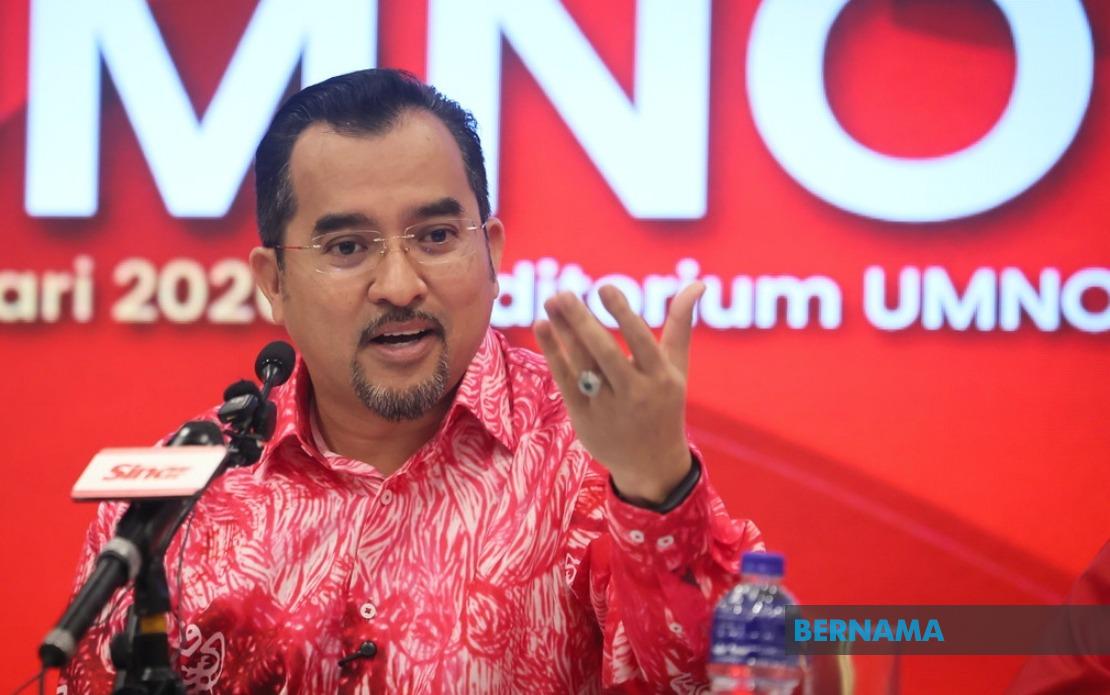
Datuk Dr Mohd Puad Zarkashi's unexpected resignation from UMNO stems from disappointment that his son was not selected as the party's candidate for the Rengit state seat, according to UMNO secretary-general Datuk Dr Asyraf Wajdi Dusuki. The claim emerged as the party grapples with internal friction just days before the crucial Johor state election, scheduled for July 11. Asyraf Wajdi made the assertion through a Facebook statement, offering the party's perspective on why the high-profile Supreme Council member chose to abandon his decades-long affiliation with the organisation.
Mohd Puad announced his departure from UMNO on June 25 via social media, describing the move as voluntary and emphasising that it would grant him greater freedom to voice his personal opinions without party constraints. His resignation comes amid heightened political activity in Johor, where the state legislature was dissolved on June 1, triggering the electoral process that will culminate in polls within weeks. The timing of his exit raised eyebrows within party circles, given the sensitive period preceding a major election when party unity typically becomes paramount.
In his response, Asyraf Wajdi elaborated that Mohd Puad had previously written extensively to party leadership, explicitly threatening to launch public attacks against UMNO and abandon the party if his demands regarding his son's candidacy were not met. The secretary-general characterised these communications as attempts at coercion, suggesting that Mohd Puad sought to leverage internal pressure to secure preferential treatment for his son. Asyraf Wajdi acknowledged that while the younger Puad possessed youth and considerable leadership potential worthy of future development, the party could not subordinate its selection criteria to individual or familial interests.
The secretary-general also seized the opportunity to dismiss Mohd Puad's earlier allegations that the Johor palace exercised undue control over UMNO affairs and orchestrated the dissolution of the State Legislative Assembly. Asyraf Wajdi described such claims as slanderous, rejecting the notion that palace interference had influenced party decision-making or candidate selection processes. This rebuttal addressed a broader narrative that had circulated regarding institutional pressures on the party, suggesting instead that internal governance procedures operated independently.
This episode is not the first occasion when Mohd Puad has reportedly made similar threats. According to Asyraf Wajdi's account, during Datuk Seri Najib Tun Razak's tenure as party president, Mohd Puad had warned of departure unless he received renomination as Member of Parliament for Batu Pahat. The pattern of behaviour, if accurately characterised, suggests a troubling precedent wherein senior party figures attempted to extract concessions through ultimatums—a practice that UMNO leadership appears determined to reject as incompatible with party discipline and meritocratic principles.
Asyraf Wajdi's statement included a broader philosophical defence of UMNO's institutional identity, emphasising that the party is not structured as a hereditary organisation that reserves positions for family members or close relatives. He stressed that the party's foundational mission—defending Malay-Muslim interests, Islamic values, and national sovereignty—transcends individual ambitions or personal satisfaction. This framing positioned the dispute as fundamentally about organisational integrity versus faction-driven power plays, casting UMNO's refusal to capitulate as a principled stance rather than merely bureaucratic procedure.
For observers of Malaysian politics, the Mohd Puad episode illuminates ongoing tensions within UMNO regarding meritocracy versus patronage networks. While the party publicly champions selection based on capability and party contribution, critics have long argued that family connections and factional loyalty frequently determine advancement. Mohd Puad's departure, whether voluntary or driven by institutional rejection, demonstrates that even senior figures face constraints when attempting to leverage personal relationships for political advancement. The episode also suggests that current UMNO leadership under Zahid Hamidi's stewardship has adopted stricter discipline regarding candidate selection, potentially to project greater legitimacy before voters.
The timing of this internal discord carries implications for the Johor election campaign. UMNO's capacity to present itself as a united, professionally-managed entity capable of stable governance depends partly on containing internal dissent and demonstrating that party institutions function independently of personality-driven factionalism. Mohd Puad's public exit, accompanied by his palace-control allegations and Asyraf Wajdi's pointed rebuttal, risks amplifying narratives of internal disarray precisely when the party seeks to convince voters of its competence and renewal.
For regional observers and international analysts, the incident reflects broader patterns within Malaysia's dominant Malay-Muslim political formations, where tension between institutional rules and informal power networks persistently generates friction. The fact that a Supreme Council member felt emboldened to threaten public attacks if denied patronage suggests that such networks remain influential despite formal procedures. Conversely, leadership's willingness to accept his departure rather than negotiate suggests shifting dynamics where institutional integrity increasingly trumps accommodating senior dissidents.
The Johor election itself unfolds against this backdrop of party turbulence. With nomination day on June 27 and polling on July 11, UMNO must rapidly consolidate its message and candidate slate whilst navigating residual tensions from this high-profile resignation. Whether the Rengit seat ultimately goes to Mohd Puad's son through another party affiliation, remains as a constituency candidate independent of major party backing, or falls to another UMNO nominee, the circumstances surrounding this decision will likely reverberate through the election discourse and shape perceptions of UMNO's internal culture.

