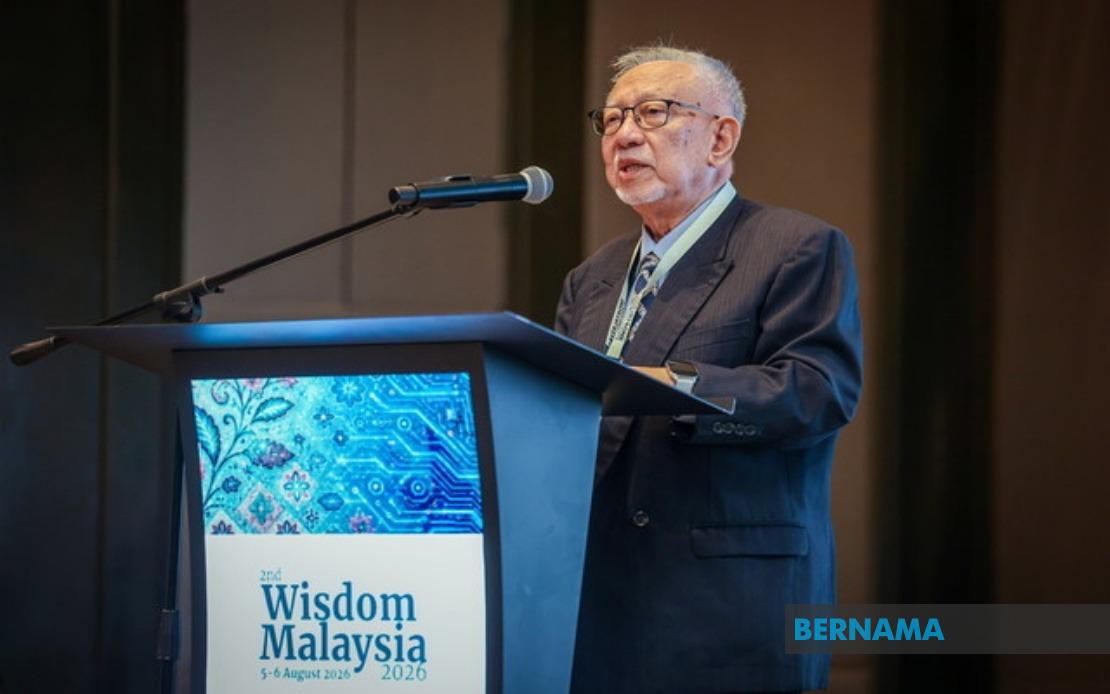
Malaysia risks a deepening culture of institutional silence if it continues to suppress and intimidate those willing to expose corruption, according to Datuk Syed Ahmad Idid Syed Abdullah, a former High Court Judge of Malaya and Borneo. Speaking at the 2nd Wisdom Malaysia Conference 2026 in Kuala Lumpur, he argued that adequate protections for whistleblowers are not merely a matter of individual justice but a foundational requirement for national integrity and public trust in government institutions.
The consequences of discouraging whistleblowing extend far beyond the individual cases left unreported. When organisations—whether governmental or corporate—create environments hostile to truth-telling, they effectively establish a filtering mechanism that allows only the unscrupulous to remain forthright about their conduct. Syed Ahmad Idid emphasised that this dynamic transforms honest officers into silent bystanders, gradually eroding the moral fabric of entire institutions. Without credible channels for raising concerns and genuine assurances of protection, even the most principled civil servants face an impossible choice between their careers and their conscience.
The former judge's intervention speaks to a paradox in Malaysia's anti-corruption architecture: whilst formal mechanisms exist to investigate graft, the practical environment often punishes those who initiate such investigations through official channels. Intimidation tactics—whether through administrative pressure, reputational damage, or legal harassment—send clear signals throughout the bureaucracy that compliance with the status quo is safer than compliance with the law. This perverse incentive structure means that corruption schemes can metastasize unchecked, each unreported infraction emboldening perpetrators and entrenching criminal networks deeper within state structures.
Crucially, Syed Ahmad Idid distinguished between whistleblowing and slander, reframing the act of exposing wrongdoing as a legitimate instrument of justice rather than a form of treachery or disloyalty. This semantic clarity is essential in Southeast Asian contexts where collective values and institutional hierarchy are often invoked to silence critics. By anchoring whistleblowing in principles of justice and institutional health, he positioned transparency not as a threat to organisational stability but as its prerequisite. An organisation that cannot tolerate internal scrutiny is already compromised.
The financial dimension of corruption recovery presents a compelling case for why whistleblower protection serves national development interests. If Malaysia could successfully reclaim illicit proceeds flowing out through corrupt channels—funds that represent leakages from public budgets meant for healthcare, education, and infrastructure—the resulting capital injection could fundamentally transform public services. Syed Ahmad Idid outlined concrete scenarios in which recovered corruption funds could finance the construction of two general hospitals per state, coupled with the establishment of 20 to 50 high-quality schools nationwide. These are not theoretical abstractions but specific, measurable improvements to citizens' lives.
The educational dimension carries particular significance for Malaysia's long-term competitiveness. A well-resourced education system transcends classroom learning; it produces security personnel capable of detecting and preventing sophisticated crimes, athletes equipped for international competition, and a broader citizenry possessing the analytical skills to resist deception and demand accountability. Investment in education funded through corruption recovery thus creates a virtuous cycle—the very act of fighting graft generates resources to build human capital that becomes progressively less susceptible to corrupt practices in future generations.
Syed Ahmad Idid's warning against lenient or skewed interpretations of corrupt practices reflects mounting concern that Malaysia's regulatory environment sometimes accommodates euphemistic framings of serious crimes. When officials characterise outright theft as "cost adjustment" or fraud as "administrative flexibility," they lower the social and moral threshold for misconduct. This semantic erosion, occurring across multiple institutions simultaneously, gradually normalises behaviour that should trigger immediate investigation and prosecution. Societal complicity in such reframing—whether through media silence, bureaucratic tolerance, or judicial leniency—represents a collective failure to uphold foundational principles of justice.
The platform provided by the 2nd Wisdom Malaysia Conference, organised by Kerjaya One PLT, reflects growing recognition among Malaysia's leadership cadre that corruption cannot be vanquished through enforcement mechanisms alone. When sitting and former industry leaders, judges, and policymakers convene to discuss principled conduct and institutional integrity, they signal that these concerns occupy the agenda of those with experience and credibility. The dialogue session titled 'The Life, Conscience and Costs of the Principled' implicitly acknowledges that demanding ethical conduct carries personal and professional risks, and that society bears responsibility for supporting those who bear such costs.
For Malaysia specifically, the implications extend to regional standing and investor confidence. Countries perceived as permissive toward corruption experience capital flight, reduced foreign direct investment, and brain drain as professionals seek jurisdictions offering predictable, merit-based advancement. Conversely, nations demonstrating genuine commitment to whistleblower protection and transparent investigations attract quality investment and talent. Syed Ahmad Idid's intervention thus addresses not merely domestic governance but Malaysia's position within an increasingly competitive regional economy where institutional integrity functions as a tangible economic asset.
The challenge ahead lies in translating such articulate advocacy into institutional reform. Whistleblower protection requires statutory frameworks providing anonymity, legal immunity, and employment safeguards; investigative capacity that can act swiftly and competently on reports; and a political culture in which exposing wrongdoing is celebrated rather than punished. It demands that senior leadership model accountability and visibly support those who challenge institutional wrongdoing. Without such systemic changes, statements about the importance of whistleblower protection risk becoming performative gestures that mask continued intimidation and suppression.
Syed Ahmad Idid's message ultimately resonates beyond technical discussions of anti-corruption policy. He articulates a vision in which societies choose between two trajectories: one where institutional silence breeds institutional decay, enabling progressively larger scandals; and another where protected disclosure becomes routine, corruption becomes riskier, and recovered resources fund the education and infrastructure necessary for sustained development. Malaysia stands at an inflection point where the investment in whistleblower protection—both institutional and moral—will determine whether future generations inherit functional, trustworthy institutions or face the compounding costs of endemic graft.

