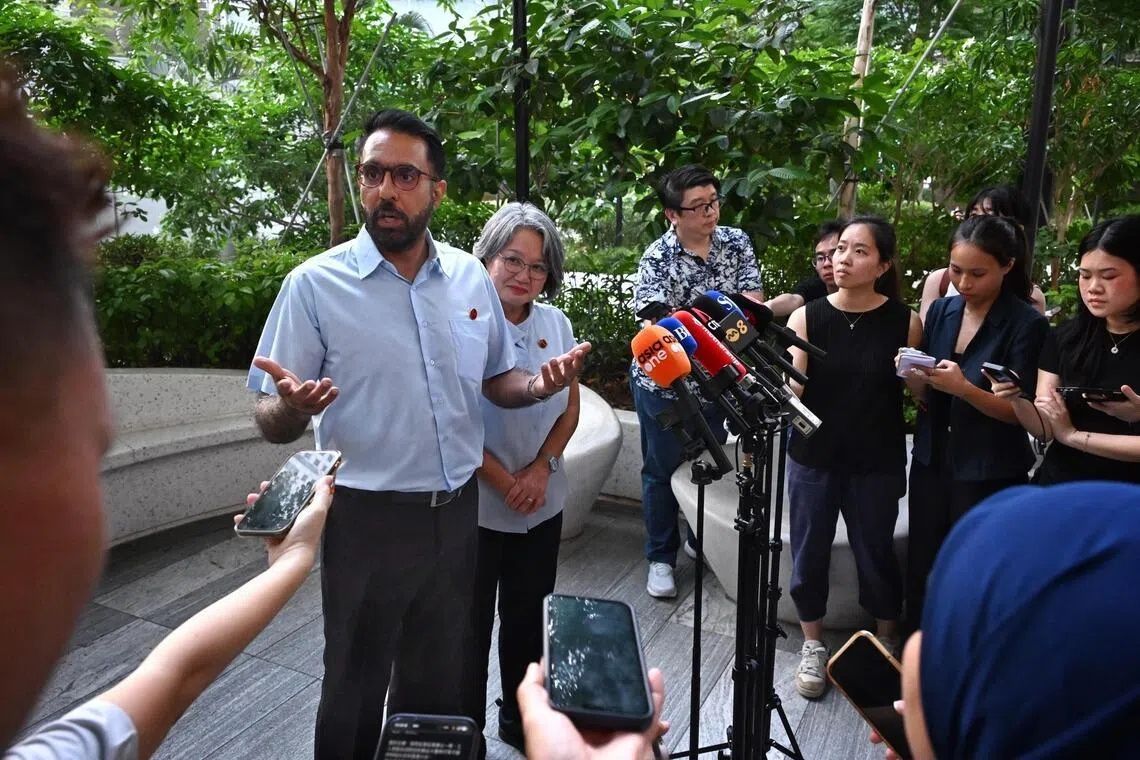
Singapore's largest opposition party moved decisively to retain Pritam Singh as its leader on June 28, after dissident members failed to force his resignation at a dramatic internal meeting. The Workers' Party chief was returned unopposed in the party's regular elections that followed a special cadres conference held the same morning, effectively closing a chapter of internal discord that had threatened to destabilise the party's hierarchy.
The sequence of events reflected deep institutional tensions within the opposition movement. A faction of 25 party cadres had triggered the special conference through a formal letter in December 2025, seeking either Singh's voluntary departure or a secret ballot on his future. Their dissatisfaction stemmed partly from Singh's legal troubles, which have cast a shadow over the party since the 2021 parliamentary lies scandal involving then-MP Raeesah Khan. The cadres' action represented the most serious challenge to his leadership since he assumed the post, signalling underlying frustrations within the party's ranks over his handling of that controversial episode.
In the secret ballot held during the morning meeting, Singh secured well in excess of a supermajority, with party sources indicating he received approximately 80 per cent support from the inner circle of slightly more than 100 members. Gerald Giam, the Aljunied GRC MP who chaired the proceedings, characterised the discussion as robust yet civil, with a single round of voting allowing cadres to voice concerns before Singh delivered a statement and fielded questions. This orderly process demonstrated the party's commitment to due process, even as it confronted internal discord that could have spiralled into deeper factional conflict.
The underlying source of the rebellion was Singh's December 2025 conviction by the High Court for misleading a parliamentary committee regarding his role in Khan's deception. The court upheld his culpability in guiding Khan to maintain her fabricated account for several months, a finding that troubled senior party members who questioned whether Singh remained the appropriate figurehead for an opposition movement claiming moral authority. The legal judgment coincided with Singh's removal as Leader of the Opposition following a determination by Parliament in January 2026 that he was unsuitable for the role, a humiliation that some cadres felt necessitated his political retirement.
Yet the vote's decisive outcome suggests the broader party membership distinguished between Singh's judicial setback and his capacity to lead the opposition. In a post-election statement on LinkedIn, newly elected central executive committee member Harpreet Singh, a senior counsel, articulated this distinction explicitly. He argued that party cadres rejected blind loyalty in favour of a careful assessment grounded in Singh's track record, noting his tireless service and steady leadership during sustained political pressure. This framing attempted to contextualise the court conviction within a longer narrative of competent stewardship, implying that a single transgression need not negate years of institutional building.
The special conference was itself a consequence of internal party mechanisms designed to prevent unchecked leadership. The 25 dissidents had invoked constitutional procedures available to any group of members, effectively forcing accountability procedures that many opposition movements lack entirely. The outcome, while vindicating Singh, simultaneously validated the party's internal democratic structures. Singh himself emphasised this point when addressing the media, stating that the party understands it must behave rationally and responsibly to represent Singaporeans faithfully, and that closing ranks was essential to any respectable political organisation.
Crucially, the resistance evaporated when former chief Low Thia Khiang publicly reaffirmed his support for Singh on the morning of the vote. Low's intervention proved decisive in quelling speculation among dissidents that he might back a challenger, which would have fragmented the party's leadership cohort. The fact that Low felt compelled to intervene underscored just how uncertain Singh's position had become in the weeks preceding the meeting, despite his public displays of confidence. For observers tracking opposition politics across Southeast Asia, the episode illustrated how institutional succession and legitimacy remain fraught even within parties that have developed relatively sophisticated internal governance protocols.
The broader challenge confronting the Workers' Party extends beyond Singh's reinstatement. The party's refusal to nominate another MP for the Leader of the Opposition position following Prime Minister Lawrence Wong's invitation demonstrated its commitment to the principle that the role should default to the largest opposition party's leader—effectively Singh himself, despite his stated unsuitability as determined by Parliament. This principled stance prioritised institutional integrity over pragmatic accommodation with the government, suggesting the party retained strategic unity on matters of constitutional importance even as it grappled with leadership legitimacy.
The regular biennial elections that followed the special conference proceeded with minimal drama. Sylvia Lim, who has served as party chair since 2003, was returned unopposed, continuing her stewardship of the party's administrative apparatus. Twelve central executive committee members were elected, with most returning from the previous roster. Only one newcomer entered this inner circle: Harpreet Singh, the senior counsel who had recently contested the May 2025 general election as part of the party's Punggol GRC team. The inclusion of Singh and the retention of figures like former chief Low Thia Khiang and former MP Faisal Manap ensured continuity while signalling openness to fresh talent, though the relatively static composition suggested limited appetite for dramatic institutional renewal.
For Malaysian observers, the Workers' Party episode offers instructive parallels regarding opposition party sustainability and the relationship between legal jeopardy and political viability. Singh's survival of the challenge demonstrates that court convictions need not automatically terminate political careers in developed democracies with established rule of law, provided party institutions remain resilient and membership retains confidence in the accused's administrative competence. However, the margin of his victory—while overwhelming in proportional terms—also revealed genuine divisions within the opposition movement that could resurface if circumstances shift, particularly if Singapore's electoral landscape changes dramatically or if new allegations of misconduct emerge.
The resolution of the internal crisis leaves Singh positioned to rebuild the Workers' Party's standing ahead of future electoral contests. The party has expanded its parliamentary presence significantly in recent election cycles, and the consolidation of leadership should enable more coherent policy development and campaign strategy. Yet Singh operates under constraints that his predecessors did not face, including reduced authority as former Leader of the Opposition and ongoing judicial exposure given his conviction, which remains subject to potential further legal action. His ability to translate the vote's endorsement into renewed political momentum will depend heavily on whether the party can move beyond recrimination and rebuild public confidence in its capacity to serve as a genuine parliamentary counterweight to the ruling establishment.

