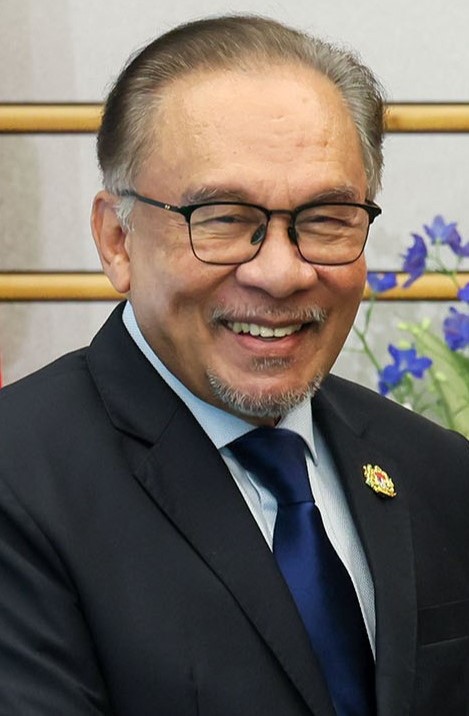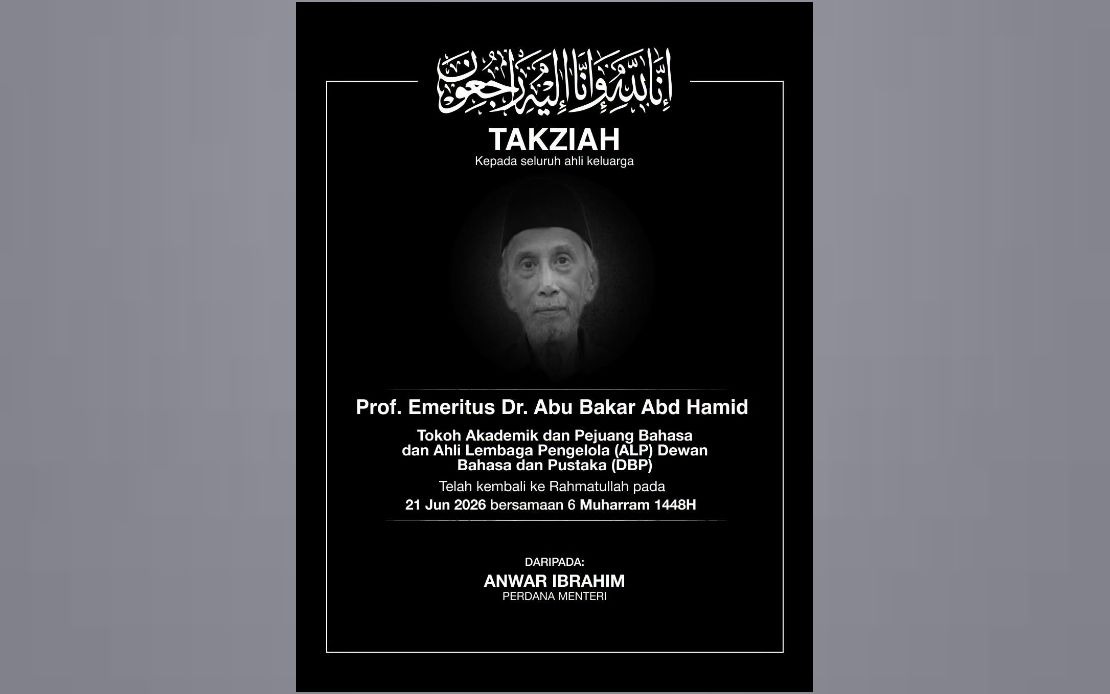
Prime Minister Datuk Seri Anwar Ibrahim has paid tribute to the late Professor Emeritus Datuk Abu Bakar Abd Hamid following his death last Sunday, describing the veteran academic as a cherished mentor and a transformative figure in Malaysia's intellectual landscape. Through a Facebook statement, Anwar reflected on his personal connection to Abu Bakar, whom he credited with shaping not only his own scholarly trajectory but that of countless other students across generations. The loss marks the end of an era for Malaysian academia and letters, removing from public life one of the country's most respected voices on Malay language and culture.
Abbu Bakar, a native of Johor, passed away at approximately 10.30pm on June 21 at his home in Petaling Jaya, Selangor, following a sudden onset of respiratory distress. He was subsequently laid to rest at Bukit Kiara Muslim Cemetery on the following Monday. His death represents a significant departure for the Malaysian scholarly community, which has long benefited from his decades-long contributions to literary studies and institutional development. The timing of his passing sparked widespread reflections across academia and government circles about his outsized influence on the nation's cultural and educational foundations.
Beyond his role as an inspiring educator, Abu Bakar occupied several positions of considerable institutional importance throughout his career. He served as deputy vice-chancellor at Universiti Malaya beginning in 1987, a posting that saw him shape academic policy during a formative period for Malaysian higher education. His stewardship of UM's operations coincided with broader expansion of the university sector across Southeast Asia, placing him at the nexus of regional academic development. During this tenure, he worked to elevate standards of scholarly inquiry and to ensure that Malaysian institutions could compete on the international stage.
One of Abu Bakar's most enduring legacies lies in his instrumental role in establishing Universiti Kebangsaan Malaysia, where he served as joint secretary of the foundational committee in 1968. UKM's creation represented a watershed moment for Malaysian higher education, as it was explicitly conceived as an institution dedicated to advancing knowledge in the Malay language and promoting scholarship rooted in Malaysian and Southeast Asian contexts. Abu Bakar's involvement in this endeavor reflected his deep commitment to building indigenous intellectual capacity rather than simply importing foreign frameworks. The university that emerged from this foundational work has since become one of the region's most respected institutions, a testament to the vision of pioneers like Abu Bakar.
About a decade after his retirement from UM, Abu Bakar took on the role of chairman of the Board of Governors of the Malaysian National News Agency, Bernama, a position he held from 1996 to 2000. His stewardship of this important media institution came during a period of significant change in Malaysian journalism and information dissemination. The appointment underscored his reputation as someone capable of leading major national institutions and his recognition among policymakers as a figure of authority and integrity. His tenure at Bernama reflected the esteem in which he was held across multiple sectors of Malaysian public life.
Throughout his lifetime, Abu Bakar accumulated numerous accolades in recognition of his scholarly contributions and institutional leadership. These honors reflected not merely ceremonial appreciation but rather substantive acknowledgment of his impact on Malay literary studies and the development of rigorous academic discourse within Malaysia. His research and writing demonstrated a commitment to elevating the profile of Malay language scholarship on regional and international platforms at a time when such work was still establishing its credentials. The breadth of recognition he received speaks to the respect he commanded among peers and the lasting impression his work left on Malaysian intellectual circles.
Anwar's personal connection to Abu Bakar as a former student adds particular poignancy to the Prime Minister's statement of condolence. Rather than offering merely ceremonial remarks, Anwar drew directly on his lived experience of Abu Bakar's mentorship, describing him as someone who exemplified passion for knowledge and inspired all who encountered him. This dimension of the tribute highlights how Abu Bakar's influence extended beyond published works and institutional positions to shape individuals who would themselves go on to occupy positions of national importance. The relationship between mentor and student represents one of academia's most profound legacies, one that often escapes quantification but fundamentally shapes national trajectories.
The passing of figures like Abu Bakar raises important questions about intellectual continuity in Malaysia. As the country navigates rapid social and technological change, preserving and building upon the scholarly traditions established by pioneers becomes increasingly urgent. Abu Bakar's work in Malay literary studies occurred during a period when establishing the legitimacy and rigor of such scholarship was an ongoing project. His contributions helped create intellectual infrastructure upon which subsequent generations could build. The challenge now for Malaysian academia involves not only honoring this legacy but ensuring that it remains dynamic and responsive to contemporary concerns.
For Malaysian readers and Southeast Asian observers, Abu Bakar's life and work exemplify the possibilities of institutional leadership grounded in genuine intellectual commitment. His journey from student to mentor to national institution-builder reflects a particular model of academic excellence that prioritized both rigor and relevance to local and regional contexts. In an era when Malaysian universities seek greater international recognition, Abu Bakar's example reminds stakeholders that such recognition flows most naturally from institutions that have first developed distinctive intellectual identities rooted in their own societies. His passing invites reflection not only on what has been lost but on what must be actively cultivated in the years ahead.