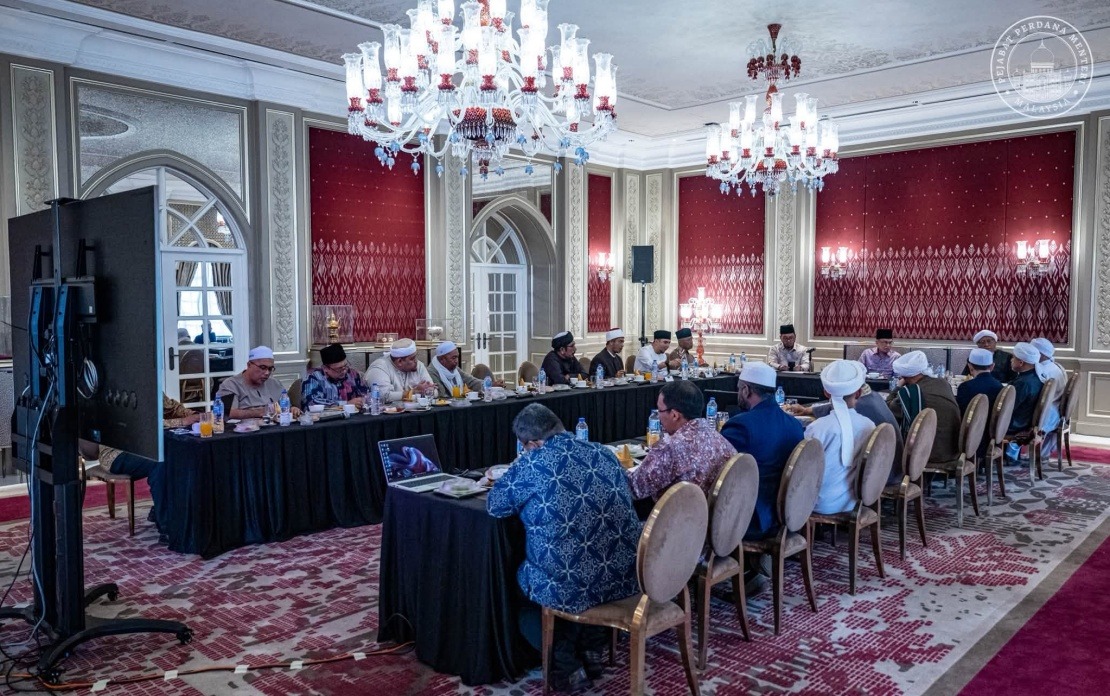
Prime Minister Datuk Seri Anwar Ibrahim has reaffirmed his government's commitment to consulting with religious scholars as a cornerstone of policymaking, describing such engagements not as routine administrative meetings but as reflective opportunities to refine governance. Speaking through a Facebook post on August 27, Anwar articulated a vision of leadership that remains grounded in religious knowledge and responsive to the evolving needs of Malaysia's Muslim communities, positioning scholarly counsel as essential to navigating contemporary challenges.
The Prime Minister's remarks came during a series of muzakarah—traditional Islamic discussion forums—held to commemorate Maulidur Rasul, the birthday of Prophet Muhammad. During these sessions, Anwar met with Sheikh Dr Muhyiddin Awwamah, a representative of Darul Hadis al-Awwamiyyah, an established Islamic educational institution. This encounter reflects a broader strategy within the current administration to maintain regular dialogue with influential voices in Malaysia's Islamic establishment, ensuring policy decisions benefit from scholarly perspective and religious legitimacy.
Anwar's emphasis on the consultative process carries particular weight given Malaysia's constitutional status as an Islamic state with a significant Muslim-majority population. The Prime Minister's framing of these discussions as opportunities for "reflection" rather than mere formality suggests an attempt to institutionalise religious input into government planning. By publicly highlighting these engagements, Anwar signals to both the religious establishment and the broader Muslim community that their concerns and insights are not peripheral to decision-making but integral to it.
Sheikh Dr Muhyiddin Awwamah brings considerable scholarly credentials to such discussions. He is the son of Al-'Allamah Sheikh Muhammad bin Awwamah, a renowned Islamic scholar and hadith expert whose intellectual contributions have shaped Islamic jurisprudence and teaching across the region. Anwar's explicit acknowledgment of the elder Sheikh's written works—describing them as "intellectual legacy" rather than mere publications—demonstrates an understanding of how Islamic scholarship operates as a cumulative tradition, with each generation building upon the foundational knowledge of its predecessors.
The Prime Minister's reference to appreciating books by Sheikh Muhammad bin Awwamah reveals a deeper strategic consideration. By honouring scholarly legacies and framing them as connective tissue linking past Islamic learning to present-day governance, Anwar positions his administration as custodian of an intellectual continuum. This approach attempts to bridge potential tensions between traditional religious authority and modern state governance, suggesting that contemporary policymaking can draw strength and legitimacy from historical Islamic scholarly traditions.
For Malaysian readers, the significance of these muzakarah sessions extends beyond ceremonial gesture. Malaysia's political landscape has seen periodic tension between secular governance structures and religious institutional influence, particularly regarding sensitive matters touching on Islamic law, religious education, and communal identity. Anwar's visible engagement with scholars suggests an attempt to manage these tensions through structured dialogue rather than allowing friction to fester or become politicised.
The timing of these discussions during Maulidur Rasul celebrations is also noteworthy. By anchoring religious consultation within established Islamic commemorations, the government frames such engagement as theologically appropriate and culturally rooted rather than opportunistic or merely instrumental. This temporal anchoring may help sustain these dialogues beyond the initial government term, potentially establishing them as enduring institutional practices.
Southeast Asia more broadly has seen varying approaches to integrating religious scholarship into governance. Malaysia's model, as articulated by Anwar, emphasises voluntary consultation and collaborative refinement of policies rather than ceding decision-making authority to religious institutions. This balanced approach attempts to preserve governmental independence while demonstrating respect for Islamic knowledge systems and community values. For a nation with Malaysia's religious diversity and plural political culture, maintaining this equilibrium remains consistently challenging.
Anwar's statement that "religion continues to flourish when those in power are willing to listen to the voice of knowledge" contains an implicit warning against dismissing scholarly perspectives. This framing inverts traditional power dynamics, suggesting that political leaders who remain deaf to religious wisdom risk undermining the very faith communities they claim to serve. The statement thus positions religious consultation not as a favour granted by government but as a necessary condition for legitimate Islamic governance.
The practical implications of these muzakarah discussions merit consideration. Beyond symbolic value, such forums can provide government agencies with grassroots insights into how policies are perceived within Muslim communities, offer perspective on emerging religious concerns, and potentially identify unintended consequences of existing legislation. Religious scholars often maintain closer connections to community sentiment than bureaucratic structures, making their feedback valuable for policy refinement and effective implementation.
Looking forward, the sustainability of this consultative model depends on demonstrating tangible outcomes. If religious scholars perceive their input as genuinely influencing policy direction, they will likely continue engagement; if consultations appear performative without meaningful influence, credibility will erode. Anwar's public emphasis on these discussions creates accountability for the government to show that scholar feedback actually shapes decisions.
The broader context includes Malaysia's efforts to position itself as a moderate Islamic nation balancing religious values with pluralistic governance. Regular, high-level engagement between political leadership and Islamic scholars reinforces this positioning internationally while domestically reassuring Muslim communities that their faith remains central to national identity and governance philosophy. For an administration navigating complex domestic politics and regional strategic considerations, maintaining strong connections with the religious establishment provides both legitimacy and stability.

