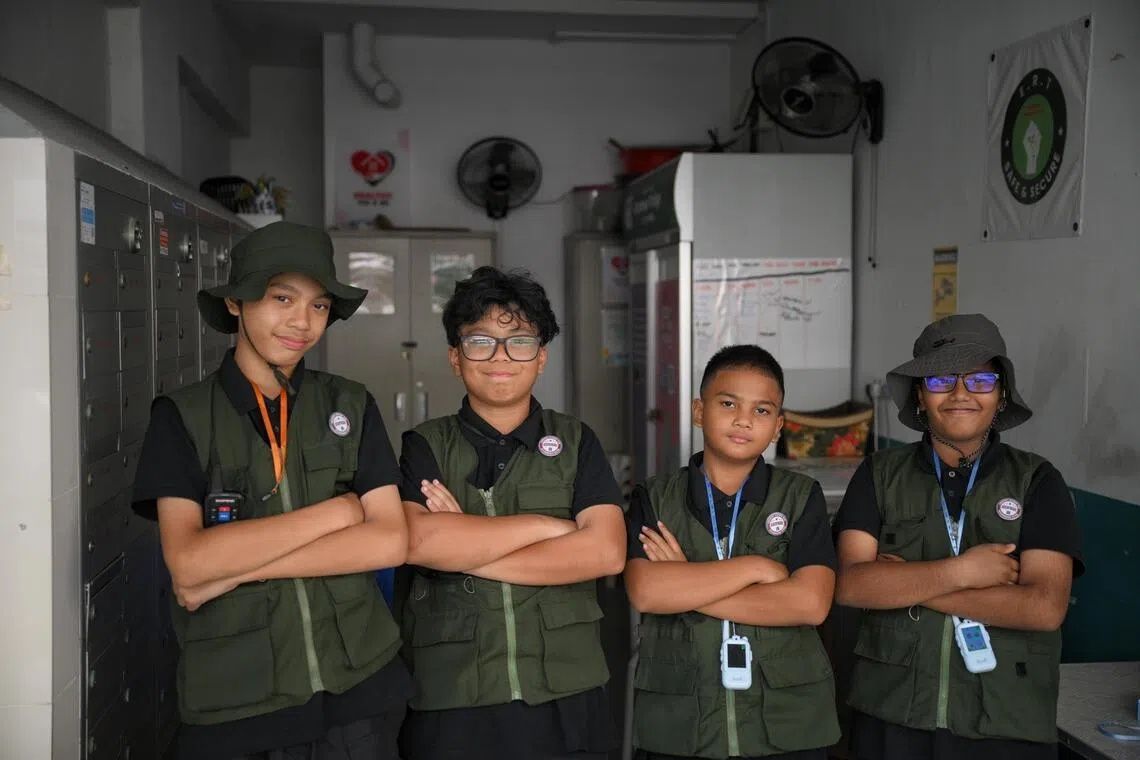
When 12-year-old Rafieq Sahin Rafizal witnessed community fridges stocked with milk and drinks for disadvantaged children being systematically depleted by others, he resolved to take action. Rather than stand passively by, he opted to become a guardian of sorts, monitoring the facility in his Lengkok Bahru neighbourhood. What began as a modest response to a specific problem has blossomed into something far more consequential: a neighbourhood patrol operation led entirely by schoolchildren who have captured the imagination of their community and earned national recognition.
Today, Rafieq and three classmates, ranging in age from 11 to 14 years old, constitute the Emergency Response Team LB, conducting systematic patrols throughout their residential estate. The concept sounds almost improbable—children in matching vests bearing their names and team logo, conducting daily surveillance of their neighbourhood—yet the operation has proven remarkably effective at identifying and reporting genuine problems. During their routes covering up to six blocks, the young patrols document issues including indiscriminate disposal of bulky waste, acts of vandalism against common property, and the charging of personal mobility devices in shared spaces, a practice that poses documented fire risks. Each documented concern is photographed and reported to Rafieq's mother, Marlina Yased, a 48-year-old homemaker who serves as the team's coordinator and liaison with estate management authorities.
The initiative's origins reveal a clever strategic pivot by Marlina. When the community fridge she established in 2023—with sponsorship support—began experiencing systematic depletion by adults taking substantial quantities of provisions intended for schoolchildren, she faced a choice between abandonment and innovation. Rather than position her son as a simple custodian of the facility, she reframed the boys' involvement into something broader: neighbourhood ambassadors responsible for monitoring community welfare more generally. This shift transformed what could have been a frustrating response to theft into a comprehensive community safety initiative, positioning the young people not as property protectors but as civic participants.
Since commencing their patrol operations in August 2025, the Emergency Response Team LB has documented a range of interventions extending well beyond their initial mandate. The boys have assisted elderly residents with mobility limitations in transporting groceries from local shops to their homes. They have intervened in disputes between neighbourhood children, applying conflict resolution principles beyond their years. Most significantly, in early 2026, their vigilance led to a tragic discovery: after noticing a distinctive foul odour emanating from a residential unit, they escalated the matter through appropriate channels. Police subsequently discovered the decomposed remains of an elderly male resident whose death had gone unnoticed by the broader community, a sobering reminder of isolation affecting some residents in even densely populated urban settings.
The operational structure of the Emergency Response Team LB reflects careful consideration of youth engagement and safety protocols. Following completion of their school day, the four boys don their team uniforms and proceed on patrol in paired configurations, maintaining constant communication with Marlina and 21-year-old volunteer Fahmidah Farihullah via walkie-talkie systems. The team originally comprised seven members but has since consolidated to its current four-person core, suggesting either attrition through loss of initial enthusiasm or deliberate restructuring toward sustainability. The boys remain cognisant that their primary obligations—education and age-appropriate activities—take precedence, with patrols constituting approximately one hour of daily commitment despite their characterisation of the work as deeply meaningful.
Rafieq's naming of the initiative reveals the aspirational thinking driving the young people involved. Drawing inspiration from Singapore's professional Emergency Response Team police units who deploy to high-risk incidents, he selected a designation that elevates their neighbourhood monitoring into a framework of formal civic service. This conscious branding demonstrates sophisticated understanding among the boys that their activities represent genuine contribution to community functioning rather than mere juvenile busywork. When articulating his motivations, Rafieq emphasised the deliberate sacrifice of leisure time—"we can play any time"—in favour of structured community engagement, a value proposition that transcends typical adolescent priorities.
Community reception to the patrol initiative has evolved from initial scepticism to qualified enthusiasm. Some residents expressed understandable uncertainty about whether schoolchildren conducting neighbourhood surveillance represented an appropriate or effective safety mechanism. However, residents like 27-year-old mother of five Nasha Asrin have come to view the boys' presence positively, appreciating that structured civic engagement channels youthful energy away from potentially negative activities like aimless estate loitering. This shift in perception suggests that consistent, visible commitment gradually builds credibility even among initially doubtful community members. The team's handling of the decomposed body discovery—demonstrating mature judgment in escalating the matter appropriately rather than sensationalising it—likely reinforced community confidence in their reliability.
The developmental impact on the participating boys appears substantial and multifaceted. Aaron Sarandev, 11, reports that daily patrols have cultivated a sense of personal responsibility and perseverance, particularly on days when motivation flags but commitment supersedes inclination. Didie Andiqa Muhaimin, 14, joined the initiative describing himself as having "nothing to do," yet found purpose through meaningful participation in organised community work. Marlina, observing the boys across multiple months of involvement, has documented observable improvements in their focus and academic engagement. She reports receiving feedback from their mothers indicating increased school attendance regularity and demonstrably enhanced concentration spans, suggesting that structured civic responsibility may produce collateral educational benefits beyond the obvious community outcomes.
The culmination of the Emergency Response Team LB's trajectory has arrived in the form of invitation to participate in Singapore's August 2026 National Day Parade. For Rafieq, Aaron, Al-Mirza Danish, and Didie, this represents an unprecedented platform, their first participation in the nation's flagship annual celebration. Their inclusion in a specific segment honouring ordinary Singaporeans who contribute meaningfully to national cohesion and neighbourhood improvement reflects official recognition of their work's significance. For a community characterised by economic disadvantage—the neighbourhood centres around a community fridge designed to support low-income families—the elevation of its young people to national ceremonial prominence carries symbolic weight extending beyond the boys themselves.
The broader implications of the Emergency Response Team LB extend beyond its immediate neighbourhood context. The initiative demonstrates that structured youth civic engagement, when properly scaffolded with adult mentorship and clear purpose frameworks, can generate tangible community benefits while simultaneously supporting adolescent development. Unlike programmes imposing external service requirements upon reluctant participants, this model emerged organically from genuine neighbourhood need and youth agency, with adult coordination rather than direction. For Southeast Asian nations grappling with adolescent engagement and community cohesion challenges, the Lengkok Bahru model offers a replicable blueprint: identify authentic neighbourhood problems, empower young people to participate meaningfully in solutions, provide appropriate supervision and support infrastructure, and allow intrinsic motivation to sustain participation over time.
As the boys prepare for their National Day Parade appearance, their story challenges assumptions about children's capacity for civic contribution and adult responsibility. While their ages—ranging from 11 to 14—might ordinarily consign them to categories of dependency and supervision, Rafieq, Aaron, Al-Mirza, and Didie have demonstrated that young people can identify genuine problems, organise themselves into functional teams, implement sustainable interventions, and contribute meaningfully to their community's safety and cohesion. In doing so, they have elevated a simple concern about a depleted community fridge into a model for youth civic participation with documented impacts on both neighbourhood functioning and their own developmental trajectories.

