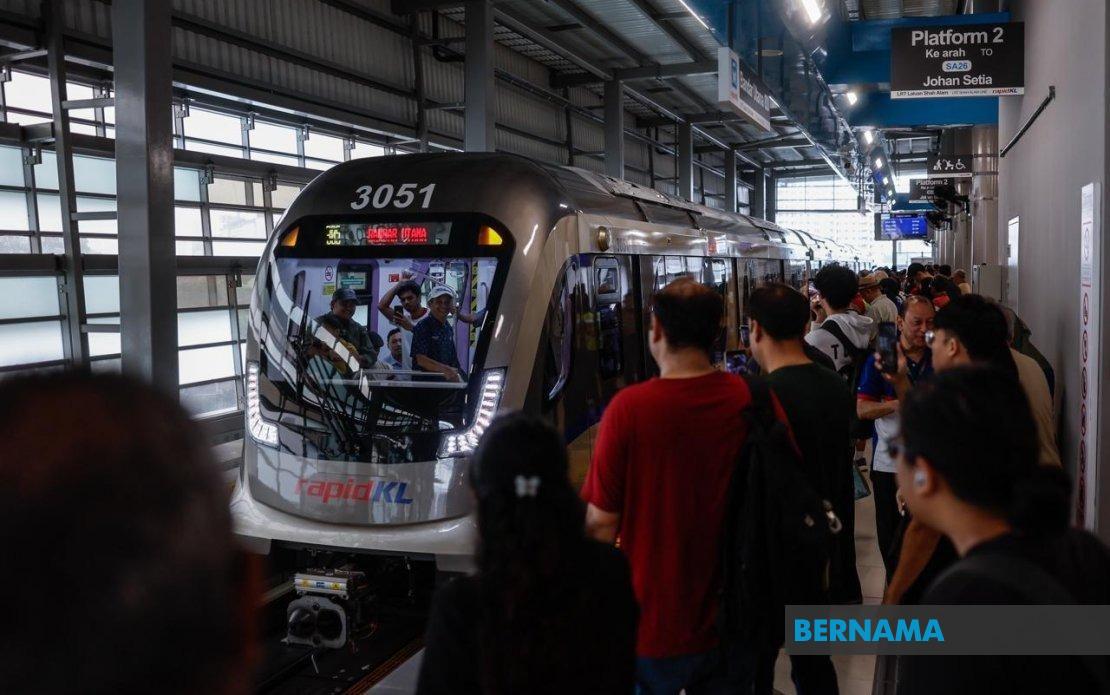
Prasarana Malaysia Berhad commenced operations of the Light Rail Transit 3 (LRT3) Shah Alam Line today, marking a significant expansion of the Klang Valley's rapid transit network. The operator anticipates between 5,000 and 10,000 passengers will use the new service on its inaugural day, with the figure expected to climb substantially over the coming weeks as commuters adjust to the additional transport option.
Amir Hamdan, Prasarana's president and chief executive officer, outlined an ambitious growth trajectory for the line, projecting daily ridership of 67,000 passengers within the first operational year. This projection hinges on how quickly the travelling public integrates the new route into their commuting habits and becomes familiar with the service offerings. Prasarana's expectations acknowledge the reality that new public transport infrastructure typically experiences a gradual ramp-up rather than an immediate surge to maximum capacity, particularly when introducing services to areas previously dependent on alternative modes of transport.
The Shah Alam Line began service at 6 am with considerable public enthusiasm evident from the outset. Early feedback from commuters has been overwhelmingly positive, with many passengers expressing relief at having access to a more comfortable alternative to driving through congested roads. Social media channels have amplified these initial positive sentiments, with users highlighting the appeal of office commutes freed from the stress of traffic jams. This sentiment reflects broader Malaysian frustrations with urban congestion and suggests strong underlying demand for reliable mass transit solutions in the Klang Valley region.
Initial operations have proceeded without significant disruptions. Prasarana reported that train frequency during peak hours is set at eight-minute intervals, with all station facilities and systems functioning as designed. This headway is comparable to other established LRT lines in the network and suggests the operator has calibrated service provision to handle anticipated opening-phase demand while maintaining reasonable service reliability. The smooth commencement reflects extensive preparation work, though the true test of the system's resilience will emerge as ridership volumes increase.
The new line's integration points with existing rapid transit infrastructure represent critical junctures for passenger convenience. Glenmarie 2 station serves as a major interchange with the Kelana Jaya Line, while Bandar Utama provides connections to the Kajang Line. These interchange stations will receive particular monitoring attention from Prasarana, as they will be instrumental in channelling passengers between the new line and established networks. Effective integration at these nodes could substantially amplify ridership figures by making multi-line journeys more seamless for commuters.
Prasarana's immediate operational focus centres on passenger experience elements that often determine whether occasional users become regular riders. The functionality of automatic fare gates, ticketing machines, and passenger flow management at stations will be continuously assessed during this critical launch period. These seemingly mundane operational details are essential to building public confidence in the service and reducing friction in the boarding process. Should any bottlenecks emerge, the operator has indicated readiness to adjust train frequency and potentially position additional standby units along key routes during congested periods.
The operator has deliberately chosen not to implement women-only coaches during the initial phase, signalling a data-driven approach to future service enhancements. However, Prasarana intends to monitor ridership composition and passenger feedback carefully to inform future decisions on specialized facilities. This pragmatic stance reflects recognition that premature investment in particular amenities without supporting demand data could constitute inefficient resource allocation. As the line matures and usage patterns crystallize, such gender-segregated facilities may become incorporated if evidence demonstrates genuine passenger preference and operational viability.
Prime Minister Datuk Seri Anwar Ibrahim announced yesterday that all LRT3 services and associated Prasarana feeder bus connections will operate free of charge for one month from today through July 31. This promotional period removes financial barriers to trial usage and provides an excellent opportunity for Prasarana to generate accurate baseline data on organic demand patterns, commuter origin-destination flows, and peak-hour concentrations. The complimentary service period effectively transforms the first month into an extended market research phase that will substantially inform future capacity planning and service optimization decisions.
The Shah Alam Line represents significant progress toward relieving congestion pressures in one of Malaysia's most economically productive regions. With Shah Alam serving as an important industrial and commercial hub, the line's connectivity directly addresses mobility challenges faced by workers, shoppers, and business travellers navigating the city and its broader metropolitan region. The success of this expansion will likely influence future mass transit investment decisions across the Klang Valley, making the coming months particularly consequential for demonstrating the viability and public acceptance of rail-based solutions.
For Malaysian commuters confronting chronic traffic congestion, the LRT3 Shah Alam Line offers tangible hope that alternatives to private vehicle ownership are gradually becoming available. However, the transition from car-dependent commuting patterns to public transport requires not merely the existence of infrastructure but genuine convenience, reliability, and cost advantages. The free-ride promotional period provides a crucial window for potential regular users to experience these benefits firsthand. Should Prasarana successfully convert trial users into committed commuters, the Shah Alam Line could substantially reshape mobility patterns across the western Klang Valley and establish precedent for further rapid transit expansion into underserved areas.

