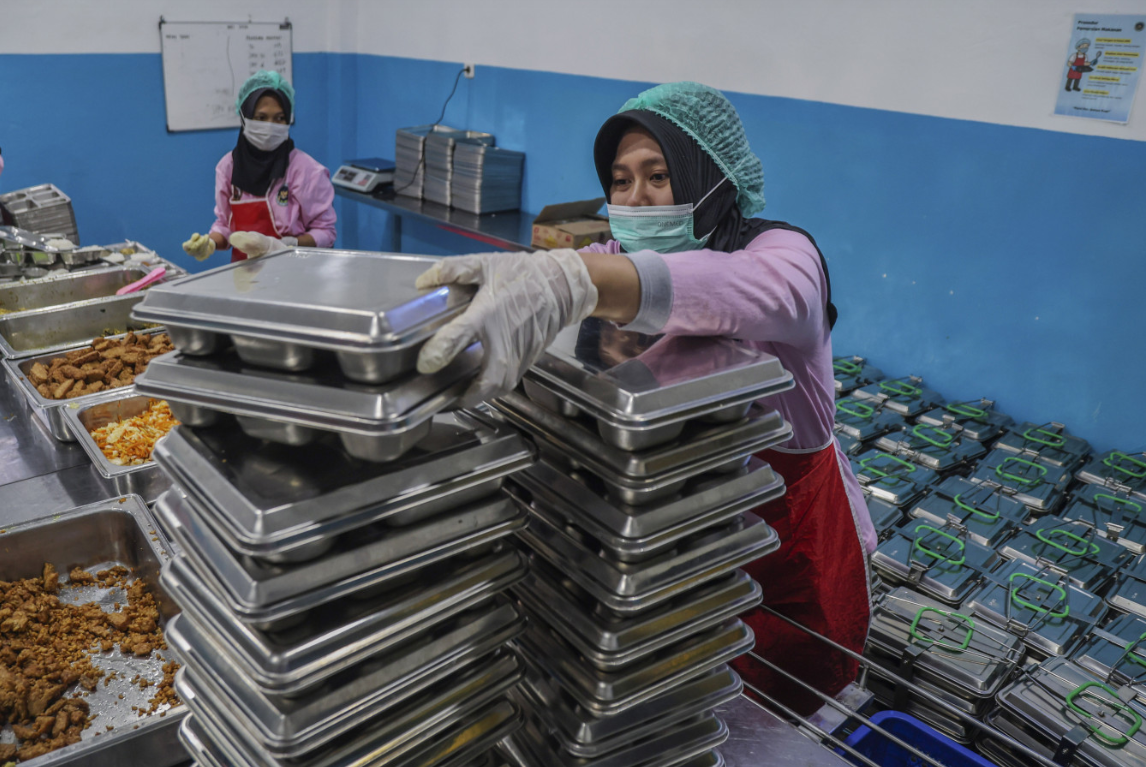
President Prabowo Subianto has initiated a comprehensive reassessment of two centrepiece initiatives that have become increasingly controversial since his administration took office, suggesting the government may be prepared to substantially alter how these ambitious schemes operate. The decision to review both the free nutritious meal programme and the Red and White cooperative scheme reflects mounting pressure on his administration to address widespread concerns about implementation, cost, and unintended consequences that have generated considerable public discord across Indonesia.
The President's directive emerged from a four-hour closed-door discussion at the Palace on Wednesday (July 15) with cabinet members overseeing the programmes' rollout. Officials whose ministries manage these initiatives, including leadership from the National Nutrition Agency (BGN) responsible for administering school meals, participated in what appears to be a strategic reassessment rather than a routine policy meeting. The deliberate nature of the gathering suggests the administration recognises the political risks posed by continuing the current approach without modification.
Agustina Arumsari, deputy chief of the National Nutrition Agency, disclosed after the meeting that Prabowo has instructed the BGN to undertake a detailed, methodical examination of how the free meals programme functions within schools. The agency has been given one month to complete this evaluation, indicating that the government intends to implement changes within a defined timeframe rather than permitting indefinite consultation. Her characterisation of the President's instructions emphasised the desire for rigorous analysis before any modifications take effect. "The President asked that every policy be thoroughly studied. He wants the improvements to be fair and not done hastily," Arumsari explained, suggesting that hastiness in implementation has been a previous concern.
The core focus of the review centres on reassessing which students should qualify for meals, with officials examining whether to exclude families with higher incomes from the programme's reach. This represents a significant potential departure from the current universal approach. The government is grappling with a fundamental challenge in mixed-income school settings, where implementing selective eligibility could create visible disparities among classmates receiving or not receiving meals. Officials are consciously evaluating the psychological impact on students excluded from the programme, recognising that classroom segregation of beneficiaries may damage educational outcomes and student wellbeing beyond the narrow question of nutrition provision.
Beyond eligibility restructuring, the administration is exploring alternative delivery mechanisms that could depart substantially from existing infrastructure. Prabowo's instructions have prompted consideration of utilising school canteens rather than maintaining the centralised free meal kitchens currently established across the nation. This shift could fundamentally reshape the programme's architecture, moving from a direct government-operated model to one leveraging existing school facilities. Such a change would likely affect programme costs, quality control protocols, and the distribution of responsibilities between federal authorities and local educational institutions.
The free meals initiative represents an extraordinarily expensive commitment within Indonesia's fiscal framework. The government has allocated a minimum of Rp 268 trillion (US$19.5 billion) for the programme in 2026 alone, targeting approximately 83 million beneficiaries encompassing schoolchildren, pregnant women, and other vulnerable populations. The initiative aims to address malnutrition and childhood stunting, persistent public health challenges across the archipelago that affect long-term development and productivity. However, the programme's substantial cost, combined with implementation difficulties, has transformed it into a credibility test for the Prabowo administration.
The political environment surrounding the initiative has deteriorated markedly. Last month, street protests emerged demanding programme suspension, reflecting public frustration with various implementation issues. Beyond activism, the programme has faced multiple crises including documented food poisoning incidents affecting beneficiaries and a corruption investigation involving senior officers from both the National Police and the Indonesian Military (TNI). These scandals have undermined public confidence and fuelled accusations that government resources are being misappropriated or mismanaged rather than genuinely serving their intended humanitarian purpose.
The second programme undergoing reassessment—the Red and White cooperative initiative—has generated its own political liabilities. Coordinating Food Minister Zulhas Hasan announced that the government intends to expand these cooperatives' operational scope, transforming them into official channels through which the state distributes various assistance programmes alongside subsidised goods and direct social payments. Additionally, cooperatives will be authorised to purchase agricultural commodities such as rice and corn during periods when market prices dip below government-established price floors, effectively operating as government-guaranteed purchasers protecting farmer incomes.
However, the cooperative programme has become tainted by tragic implementation failures. Mandatory military-style training required for cooperative managers resulted in at least four deaths, generating extraordinary negative publicity and ethical questions about programme administration. These fatalities transformed what was intended as a rural economic development initiative into a symbol of heavy-handed government implementation. The deaths have intensified scrutiny regarding whether the cooperative model adequately protects participant welfare and whether the training protocols reflect reasonable administrative practices.
For Malaysian observers, these developments in Indonesia carry significant implications. As Southeast Asia's largest economy, Indonesian policy failures create regional ripple effects through trade relationships, investment patterns, and regional stability. The political vulnerability that these controversies create for Prabowo could influence regional diplomatic relationships and his administration's capacity to engage constructively on Southeast Asian issues. Additionally, the effectiveness of Indonesia's social programmes affects regional migration patterns and labour market dynamics that influence economies throughout the region, including Malaysia.
The reassessment signals that even flagship programmes with substantial political backing face practical and public acceptance constraints that can force course corrections. Rather than viewing this as administrative failure, the willingness to review and modify approaches may demonstrate governmental flexibility, though it also suggests that initial programme design and stakeholder consultation were insufficient. How the administration implements whatever modifications emerge from these reviews will substantially influence public perception of Prabowo's governance capacity and his administration's responsiveness to citizen concerns over the coming months.

