Indonesia's ambitious free nutritious meals initiative has hit another roadblock with the sudden departure of National Nutrition Agency (BGN) chief Nanik Sudaryati Deyang, who stepped down after less than two months in the role, citing severe health complications compounded by the immense pressure of overseeing the sprawling programme. Her exit, announced via Facebook on Wednesday, represents the latest twist in a saga of institutional instability that has repeatedly undermined President Prabowo Subianto's flagship social welfare scheme, a cornerstone of his electoral pledges that promised to strengthen the nation's nutritional security through widespread subsidised meals.
Nanik revealed that medical specialists had discovered an arterial blockage requiring treatment abroad, which she partially attributed to the extraordinary stress accompanying her stewardship of the agency's substantial budget. In candid remarks posted the previous evening, she described the psychological toll of safeguarding enormous sums of taxpayer money as akin to standing precariously at the edge of a cliff, where any miscalculation could prove catastrophic. Her emphasis on personal accountability—refusing to authorise transactions independently and subjecting every directive to repeated scrutiny—underscored the burden that senior officials face when managing a programme of such fiscal magnitude and political sensitivity.
The timing of Nanik's resignation carries particular significance given the recent turmoil within the agency's leadership hierarchy. She replaced Dadan Hindayana, the previous BGN chief, who was detained in early June alongside two subordinates following a corruption probe initiated by the Attorney General's Office into suspected irregularities in procurement and financial management across the multitrillion-rupiah operation. Nanik's appointment had been intended to restore institutional credibility and demonstrate that the administration would tackle misconduct decisively; her departure, therefore, suggests that even experienced administrators may struggle to navigate the programme's operational complexities and political sensitivities.
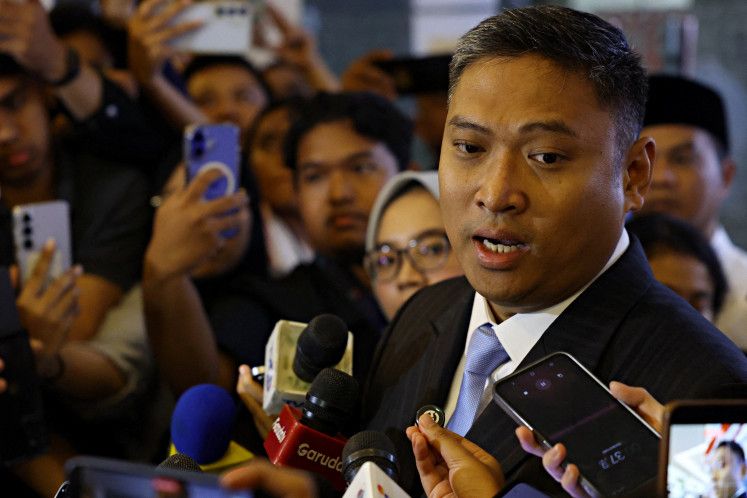
Within hours of accepting Nanik's resignation, President Prabowo moved swiftly to install Deputy Agriculture Minister Sudaryono as her successor in a formal ceremony held at Jakarta's State Palace. Sudaryono, a member of Prabowo's Gerindra Party who previously served as an aide to the President, brings both partisan alignment and some familiarity with the initiative's conceptual foundations. During his inauguration remarks, Sudaryono acknowledged the governance shortcomings that have plagued the agency and committed to implementing transparency reforms, including the digitisation of manual processes to ensure comprehensive documentation and prevent covert decision-making.
The appointment of a politician with established ties to Prabowo raises questions about whether institutional resilience will be genuinely prioritised over political loyalty. State Secretary Prasetyo Hadi defended the selection by noting that Sudaryono had participated in the programme's formulation during its developmental phase, suggesting technical competence. However, political analyst Wasisto Raharjo Jati offered a more critical assessment, arguing that the recurring problems demonstrated that the free meals initiative had been propelled more by political ambition than by rigorous technocratic planning. This characterisation reflects growing concerns among observers that the programme's architecture may be fundamentally flawed, regardless of which individuals occupy leadership positions.
The operational challenges facing the BGN extend far beyond leadership volatility. The agency has contended with persistent questions about food quality and has been repeatedly engulfed in investigations into mass poisoning incidents across multiple jurisdictions. In response to mounting criticism, Nanik instituted a moratorium on the establishment of new meal distribution kitchens while undertaking a comprehensive audit of approximately 28,000 existing facilities nationwide. This pause, while administratively prudent, sparked significant protests from thousands of prospective kitchen operators who had invested heavily in their facilities under the expectation of swift expansion, adding another layer of friction between the programme and stakeholder groups.
Beyond operational difficulties, the BGN has made substantial revisions to its financial commitments and beneficiary projections, reflecting a fundamental recalibration of the programme's scope and ambition. The agency announced on Tuesday that the provisional budget allocation for 2026 would be reduced to Rp229 trillion (approximately US$12.8 billion) from the previously anticipated Rp268 trillion. Simultaneously, the target number of beneficiaries has been lowered to 62.7 million individuals, down from an initial goal of 82.9 million people encompassing schoolchildren, toddlers, and pregnant women. This contraction represents a significant retreat from the programme's original expansionary trajectory and reflects administrative recognition that operational and financial realities demand more constrained targets.
The BGN's deputy chief Agustina Arumsari articulated a reframing of institutional priorities, stating that improving service quality would supersede the pursuit of numerical expansion targets. This shift in emphasis, while rationally justified, implicitly concedes that the programme had previously been driven by beneficiary count metrics rather than by ensuring reliable, nutritious meal delivery. Such a reconceptualisation may ultimately strengthen the initiative's sustainability, yet it also underscores the initial planning deficiencies that observers like Wasisto have identified as central to the programme's difficulties.
For Malaysian observers and regional development specialists, Indonesia's experience with the free meals initiative offers instructive lessons about the implementation challenges inherent in large-scale social programmes. The combination of corruption vulnerabilities, operational bottlenecks, quality control difficulties, and the human toll of administrative pressure suggests that even well-intentioned flagship policies require not merely political commitment but also institutional depth, technical capacity, and phased rollout strategies. The BGN's struggles parallel challenges that Southeast Asian governments frequently encounter when attempting to rapidly scale welfare interventions without proportionate investment in supporting infrastructure and human resources.
The appointment of Sudaryono presents an opportunity for the programme to stabilise and, potentially, to demonstrate that genuine institutional reform can proceed. His public commitments to transparency and digitalisation, if sincerely pursued, could address some of the systematic vulnerabilities that have enabled misconduct and operational failures. However, the frequency of leadership transitions and the pattern of recurring crises suggest that structural challenges run deeper than any individual administrator's capacity to remedy. The coming months will reveal whether Sudaryono can chart a more sustainable trajectory for a programme that remains central to Prabowo's policy agenda, even as its credibility continues to be tested by successive waves of institutional dysfunction and public controversy.

