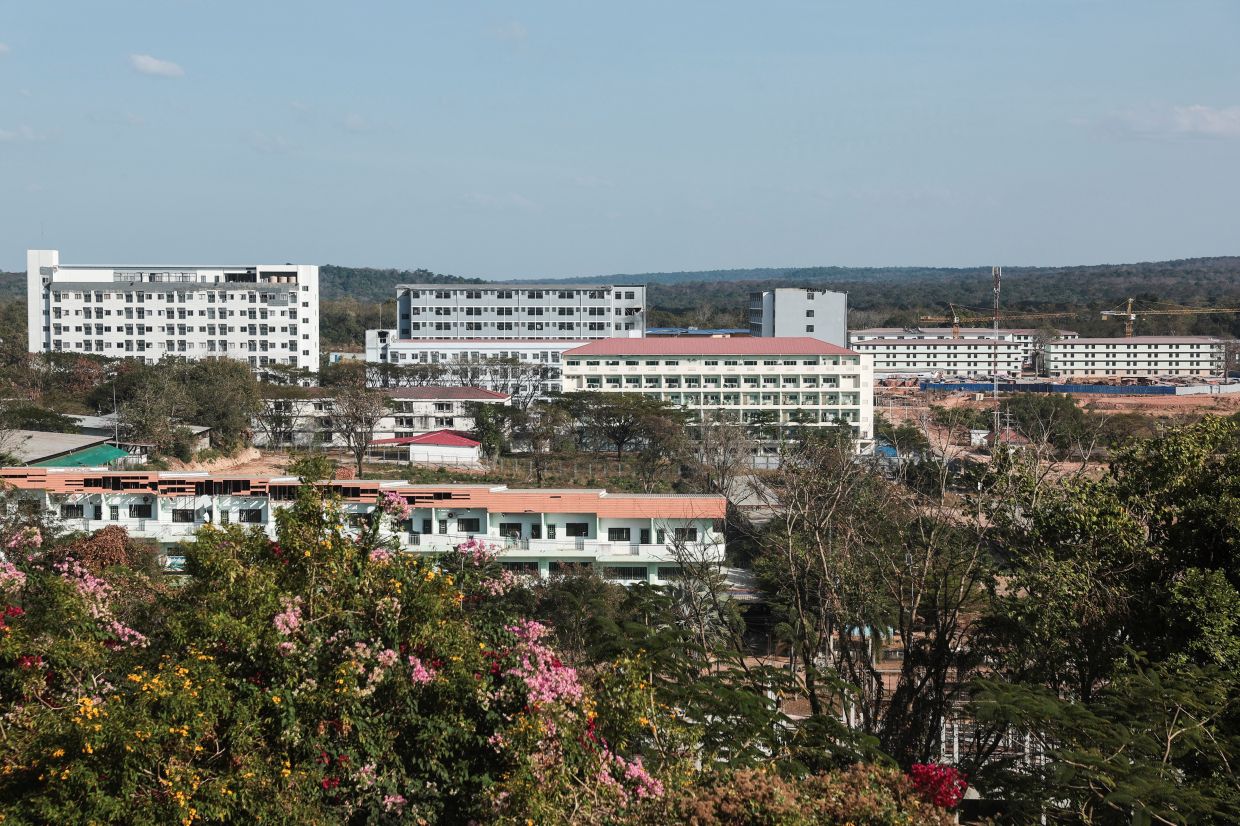
An extensive Reuters investigation has uncovered the involvement of a powerful Cambodian tycoon's gambling enterprise in facilitating one of Southeast Asia's most serious transnational crime operations. Lim Heng Group, which controls a substantial casino empire, operated as the commercial landlord to a compound housing industrial-scale cyberscamming and human trafficking networks along the Thai-Cambodian border. The rental arrangement, documented through a March 2024 agreement, involved leasing multiple structures at rates substantially exceeding market value, fundamentally raising questions about due diligence, accountability, and how such large-scale criminal enterprises operate with apparent impunity in a region plagued by organised crime.
The Royal Hill casino, a neoclassical-style structure adorned with gold-trimmed spires located metres from the Thai frontier, served as both a gambling establishment and an operational base for what appears to be a coordinated criminal enterprise. Within buildings located just tens of metres from the casino, investigators discovered multiple rooms that had been deliberately constructed to replicate police stations and financial institutions from various nations. These fabricated settings functioned as the physical infrastructure for perpetrating romance scams and police impersonation fraud schemes targeting victims across the globe. The scale of the operation was substantial enough to warrant visits by Reuters journalists to the compound, interviews with Thai military officials overseeing the site, and detailed documentary evidence from security investigations conducted by Thai authorities.
The rental agreement examined by Reuters specified an extraordinary monthly fee of US$200,000 for a three-building complex to be leased for two years to a Chinese national whose identity Reuters has withheld pending independent verification. This pricing structure becomes immediately apparent as excessively inflated when compared to commercial real estate in Cambodia's capital and economic centres. A comparable mixed-use building in an upscale neighbourhood of Phnom Penh, situated in the nation's most desirable business district, was advertised in May for merely US$25,000 monthly—one-eighth of the Royal Hill rate. The disparity strongly suggests that Lim Heng Group understood it was leasing to tenants whose financial capacity exceeded typical border-town business operations, a consideration that may become relevant to any legal investigation into the landlord's knowledge of suspicious activity.
Although Reuters found no direct evidence demonstrating that Lim Heng Group actively participated in the scamming or trafficking operations themselves, Cambodian legal experts have indicated that landlords can face criminal prosecution if investigations establish they possessed knowledge of illegal activity on their property and permitted it to continue. The independent Cambodian Human Rights Action Coalition and attorney Piseth Duch, who specialises in business and human rights law, both confirmed that this legal standard applies in Cambodian jurisdiction. The significance of this threshold is heightened by the fact that Lim Heng Group received explicit notice regarding potential trafficking activities as early as September 2024, when company representatives initiated legal complaints against two Cambodian media outlets that had published reports of foreign nationals being confined within the Royal Hill compound.
The legal complaints filed by Lim Heng Group's representatives invoked charges of "incitement to discrimination" against the publishers, dated September 16, 2024. Notably, the court summonses did not specify which particular allegations in the published articles the company objected to, a procedural detail that raises questions about the substantive basis for the legal action. One publisher, Penn Nuon, confirmed receiving a legal complaint related to coverage of foreign nationals held at Royal Hill. Although Nuon stated that the reporting was accurate, he subsequently removed the article following attorney advice aimed at settling the dispute. Reuters could not confirm whether the legal complaint had ultimately been withdrawn, and the Phnom Penh court handling the cases declined to provide information about their status.
Lim Heng emerges from this investigation as a figure deeply embedded within Cambodia's political and military establishment. He has been photographed at social gatherings alongside senior military generals, holds a royal title equivalent to the rank of duke, and donated US$20,000 to Cambodia's military in the year preceding the investigation. Thai authorities established Lim Heng's ownership of the Royal Hill site through government security agency reports prepared in 2024. Professor Sophal Ear of Arizona State University, who specialises in Cambodian politics, has noted that casino ownership in Cambodia frequently corresponds with political connections and military influence. This concentration of commercial interests, political access, and security relationships creates structural conditions that facilitate the kind of organised crime networks discovered at Royal Hill.
The broader context of Southeast Asian cyberscam infrastructure is essential to understanding how Royal Hill operated. The region has become a primary hub for what security analysts term "scam factories"—clandestine facilities where primarily Chinese-led criminal syndicates confine trafficking victims and force them to perpetrate financial fraud against targets worldwide. The United States government estimated that American victims alone lost US$10 billion to fraudsters operating from the region during 2024. Jason Tower of the Global Initiative against Transnational Organized Crime observed that Chinese-affiliated scam syndicate operators frequently maintain ownership stakes in casinos, which provide the financial infrastructure necessary to launder illicit proceeds generated through fraud and trafficking. An Amnesty International investigation, based on analysis of gambling regulator records and witness testimony, determined that in Cambodia specifically, casino owners exercised direct operational control over at least a dozen identified scam centres, though Reuters has not independently confirmed these figures.
General Thatchai Pitaneelaboot of the Royal Thai Police, leading investigations into alleged cyberfraud at the compound, confirmed that Chinese criminal syndicates perpetrated scams at the Royal Hill site, though he did not provide specificity regarding individual gang identities or hierarchical structures. Thai military forces discovered evidence corroborating the scamming operations when they occupied the compound following a brief December border conflict with Cambodia. The Thai military subsequently invited Reuters journalists to document the fabricated police stations and banking environments that had been constructed within the buildings, presenting physical evidence of the false-front operations. Pornpen Aimhun, a Thai woman who described herself as a trafficking victim held at Royal Hill, provided testimony regarding the systematic nature of the detention and coercion practices employed at the facility.
The Cambodian government's official position regarding Royal Hill has remained inconsistent with the mounting evidence of criminal activity at the site. Despite images of the fake police stations and financial institution replicas being broadcast by international media throughout 2024, Cambodian officials have repeatedly characterised Royal Hill as simply a hotel facility. The government has nevertheless pledged to eradicate scam centres, and has taken some enforcement actions, most notably extraditing casino owner and alleged scamming kingpin Chen Zhi to China. Cambodia has also enacted new legislation directly targeting scam operators. Chhay Sinarith, a senior minister responsible for combating online fraud, stated in response to Reuters inquiries that the government remains committed to international cooperation against scams and confirmed that investigations into alleged fraud operations in the Royal Hill vicinity are ongoing. However, Sinarith asserted that Thai security forces should return custody of seized locations to Cambodia to facilitate these probes.
The Royal Thai Police bombing of Royal Hill in December occurred during territorial disputes when Thai forces reported that casino buildings in the area had been occupied by Cambodian military units and repurposed for drone and sniper operations against Thai forces. This militarisation of the border zone, combined with the discovery of transnational scamming infrastructure, illustrates how Cambodia's border regions have become zones of overlapping criminality, territorial ambiguity, and weak institutional control. The Cambodian military declined to respond to Reuters questions regarding its relationships with Lim Heng or its oversight of commercial activities at Royal Hill and adjacent properties.
The Royal Hill case exposes significant vulnerabilities in how Southeast Asian states regulate high-value commercial properties operated by politically connected individuals. The convergence of gambling operations, international criminal syndicates, human trafficking networks, and inadequate government oversight creates conditions where massive fraud schemes can operate in plain view of authorities. For Malaysian policymakers and security officials, the Royal Hill investigation serves as a cautionary illustration of how criminal networks exploit border zones and corrupt commercial relationships to establish operational bases. As Malaysian authorities intensify efforts against transnational scam syndicates and trafficking networks that frequently route victims and proceeds through Malaysia, the Royal Hill precedent demonstrates the necessity of enhanced scrutiny of casino ownership, property transactions involving foreign nationals in border regions, and the political networks surrounding major business operators in neighbouring jurisdictions.

