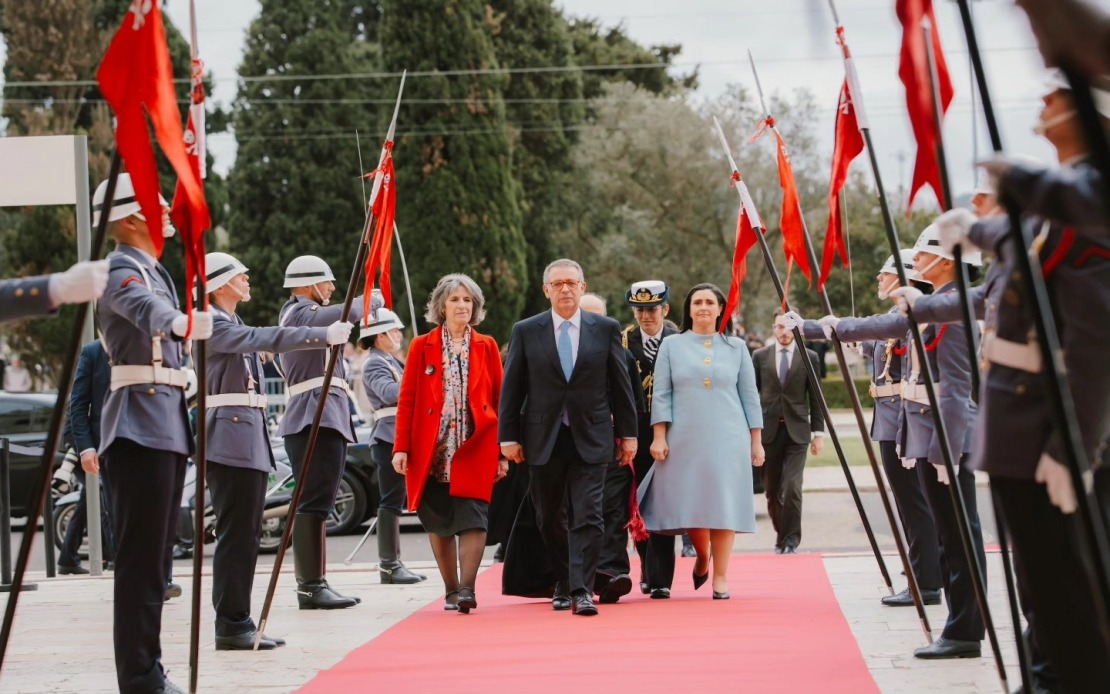
Portugal has officially joined a growing cohort of European nations enforcing restrictions on face coverings in public spaces. President Antonio Jose Seguro signed the contentious legislation on Tuesday, marking a significant shift in the country's approach to personal religious expression and social integration. The law, which originated from proposals by the right-wing Chega party, represents a culmination of parliamentary deliberation and reflects broader European conversations about identity, security, and cultural values.
The Portuguese presidency framed the decision within a context of social sensitivity and democratic principle. According to a statement released by Belem Palace, the presidential residence in Lisbon, Seguro determined that amendments incorporated during parliamentary debate had sufficiently addressed his initial concerns about the measure. Rather than viewing the ban as a simple security initiative, the presidential office articulated a comprehensive philosophical argument centring on the nature of public trust and social cohesion in European democracies.
At the foundation of Portugal's rationale lies an assertion that facial visibility constitutes an essential component of interpersonal trust and mutual recognition within society. The presidential statement emphasised that daily interaction among Portuguese citizens rests upon the capacity to establish direct human connection, which the government contends requires the ability to see faces in shared public spaces. This reasoning extends beyond practical security concerns to encompass what officials describe as a "structuring dimension" of Portuguese social identity and collective experience.
The equality dimension proved particularly prominent in official justifications for the ban. Portuguese authorities argued that restricting face coverings specifically affects women who wear Islamic veils, creating an asymmetrical impact that contradicts principles of gender parity fundamental to European democracies. The presidential statement explicitly flagged what it characterised as an incompatibility between full-face covering requirements and the equal dignity owed to all citizens regardless of gender. This framing attempts to position the ban as protective of women's rights rather than restrictive of religious liberty, though such reasoning remains contested.
Official Portuguese commentary also invoked European Court of Human Rights jurisprudence to bolster the legal foundation for the prohibition. By referencing established European case law on face coverings, the government sought to anchor its position within existing continental legal frameworks and demonstrate consistency with interpretations already accepted by respected judicial authorities. This strategy reflects a broader European pattern of building consensus around restrictions through reference to shared legal traditions and institutional precedent.
However, the ban has encountered immediate opposition from civil rights advocates. Amnesty International Portugal has issued a formal critique characterising the legislation as discriminatory and fundamentally incompatible with individual freedoms, particularly religious liberty. The organisation contends that the law disproportionately targets Muslim women who voluntarily choose to wear face coverings for religious reasons, thereby restricting autonomy under the guise of protecting equality. This tension between security or social integration arguments and protections for minority religious practice represents a central fault line in European policy debates on the issue.
Portugal's decision aligns it with an established European trajectory. France implemented the first comprehensive ban in 2011, followed by Belgium and Austria, which adopted similar restrictions. Denmark subsequently enacted partial prohibitions in certain contexts, while the Netherlands developed tiered restrictions depending on location and circumstance. This pattern reveals a continent increasingly moving toward stricter controls on face coverings, though approaches vary in scope and enforcement mechanisms. Portugal's entry into this group signals the continued expansion of such policies across Southern Europe.
The regulatory landscape reflects fundamental tensions within contemporary European societies regarding religious expression, integration policies, and security governance. Governments invoking these restrictions frequently emphasise practical concerns around public safety and identification, alongside broader claims about social cohesion and cultural continuity. Yet these justifications consistently encounter resistance from international human rights organisations and minority communities, which emphasise the disproportionate impact on Muslim populations and the erosion of individual liberty protected under international law. Malaysia and other Southeast Asian nations with significant Muslim populations are likely to view such developments with concern, particularly regarding implications for diaspora communities and international standards for minority rights protection.
The timing and tenor of Portugal's action demonstrate how face-covering restrictions have become increasingly normalised within European policy-making circles. What once represented a contentious boundary-crossing now appears as an incremental step in an ongoing continental process. This normalisation matters considerably for international human rights advocacy and for understanding how democratic societies navigate conflicts between competing values such as security, integration, religious freedom, and gender equality. The Portuguese case illustrates how governments can frame restrictive policies in progressive language while maintaining substantive restrictions on minority religious practices, a rhetorical strategy that influences global conversations about rights, identity, and belonging.

