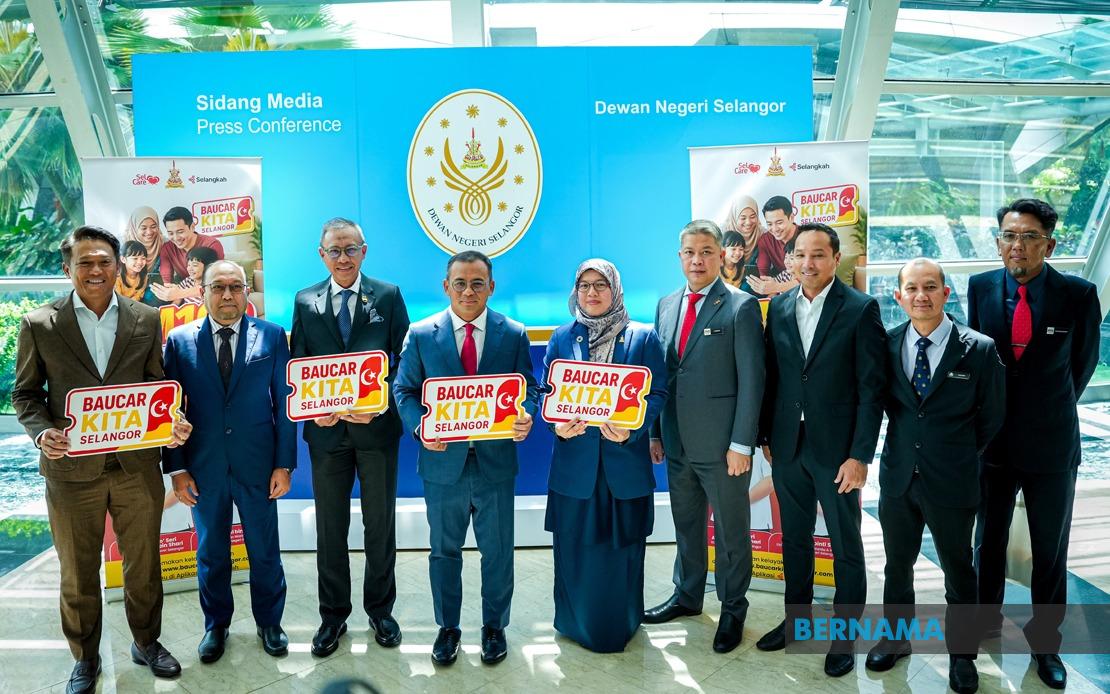
The Selangor state government has resolved all land-related arrangements for the Port Klang third terminal development on Pulau Carey as of December last year, according to Menteri Besar Datuk Seri Amirudin Shari. The clarification comes as the ambitious port expansion project navigates a complex approval process at the federal level, raising questions about the timeline for one of Malaysia's most significant maritime infrastructure undertakings in recent years.
The land portfolio assembled for the terminal comprises three distinct components totalling over 1,700 hectares. The foundation consists of approximately 1,012 hectares of seabed area, with an additional 688 hectares of land held by Yayasan Selangor and a further 86 hectares available for immediate development. This comprehensive land bank positions the state to move forward rapidly once federal clearance materialises, though the distinction between seabed and terrestrial holdings introduces complexity given that port reclamation involves transforming submerged areas into functional port infrastructure.
From Selangor's administrative perspective, the state has fulfilled its obligations and signalled readiness to commence construction activities since the beginning of 2024, pending the necessary federal approvals. The Port Klang Authority has already conducted detailed studies identifying and delineating the specific land parcels required for port operations, providing technical documentation to support the development application. Meanwhile, the Selangor State Development Corporation (PKNS) is engaged in ongoing discussions with the private sector partner designated to undertake the construction and initial development phases.
However, a critical bottleneck has emerged at the federal level that overshadows these state-level preparations. The Transport Ministry is grappling with constitutional and governance questions about port ownership and regulatory authority. A legal opinion obtained by the state indicates that under Malaysian law, ports must be owned and controlled by the Federal Government and cannot be structured as privately owned commercial entities. This interpretation creates a fundamental tension between the state's desire to attract private investment through a concession model and federal constitutional requirements governing maritime infrastructure.
Transport Minister Anthony Loke Siew Fook acknowledged on June 18 that Selangor continues to refine solutions to these land and governance challenges. Discussions involving his ministry, the state government, and private-sector stakeholders centre on establishing an appropriate concession framework that satisfies federal ownership requirements while enabling private participation and investment. The complexity of these negotiations suggests that reaching consensus may require creative structural arrangements—potentially involving federal ownership with operational or concessional rights granted to private entities—that currently remain undefined.
The port expansion itself represents a major undertaking that extends beyond conventional land acquisition. Unlike traditional port developments that occur on existing land, the third terminal will be constructed through extensive seabed reclamation in Pulau Carey waters. This engineering approach requires careful coordination between dredging operations, environmental management, and maritime safety protocols. The reclamation process will be lengthy and capital-intensive, making the timing of federal approval crucial to the project's viability and cost efficiency.
For Malaysia's maritime sector, this third terminal holds substantial strategic importance. Port Klang currently ranks among Asia's busiest container ports, and capacity constraints have prompted discussions about expansion for several years. A modern third terminal could accommodate larger container vessels, improve operational efficiency, and strengthen Malaysia's position in regional shipping networks. The delay in federal approval thus carries implications beyond Selangor's economic development agenda, affecting national port capacity and competitiveness with rival regional hubs like Singapore and Port Tanjung Pelepas.
The Selangor state government's emphasis on accelerating construction once approvals materialise underscores the competitive pressures in port development. Delays in approval translate directly to postponed revenue generation, extended operational constraints at existing facilities, and potential loss of market share to competing ports. From an investor perspective, prolonged uncertainty about federal approval structures and ownership models creates risk and may affect the financial terms under which private partners commit capital to the project.
The concession model discussions mentioned by Transport Minister Loke represent a common approach in Southeast Asian port development, where federal ownership coexists with private operational management under defined contractual terms. However, establishing consensus on the specific structure—whether through Build-Operate-Transfer arrangements, long-term concession contracts, or hybrid models—requires alignment between multiple stakeholders with differing priorities and risk tolerances.
At stake is not merely a single port terminal but a precedent for future private-sector participation in Malaysian maritime infrastructure. How the Federal Government resolves the Port Klang third terminal ownership and approval questions will shape the investment climate for subsequent projects. A prolonged approval process may discourage future private investment in port infrastructure, whereas a streamlined decision and clear operational framework could catalyse additional capacity expansions elsewhere along Malaysia's coastline.
The state government's confirmation that land matters are resolved positions Selangor to move swiftly once federal decisions materialise. However, the absence of a clear timeline for Federal Government approval—whether weeks or months—leaves the project in an extended holding pattern. For Malaysian industry stakeholders dependent on port capacity, for Selangor's economic planning, and for international shipping lines evaluating port options, clarity on the Federal Government's position and timeline has become increasingly urgent.