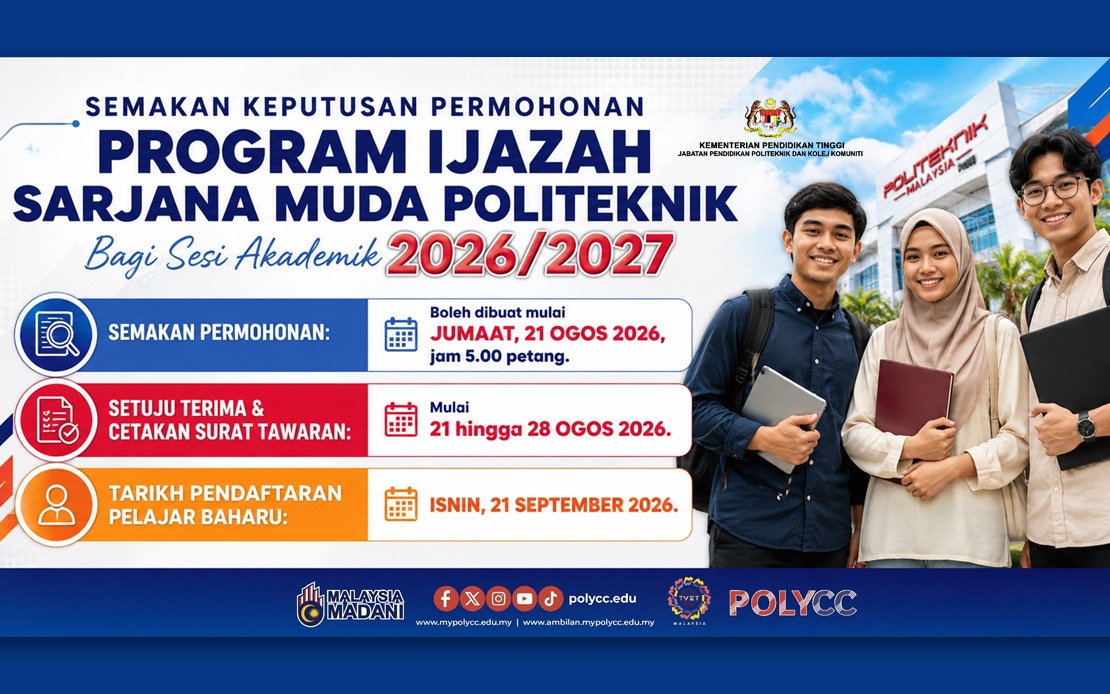
Aspiring students across Malaysia can now access their application outcomes for Bachelor's Degree programmes offered through the country's polytechnic network. The results became available from today, marking a crucial checkpoint in the higher education pathway for technical and vocational qualifications. Candidates who have received offers are required to formally confirm their acceptance within a narrow seven-day window, extending from today through August 28, underscoring the time-sensitive nature of the enrollment process.
The polytechnic sector continues to expand its bachelor-level offerings, with twelve distinct programmes now accessible through this intake cycle. These qualifications span diverse engineering disciplines, creative industries, and service sector specialisations, reflecting the evolving skill demands of Malaysia's economy. Mechanical Engineering Technology, Civil Engineering Technology and Built Environment, and Electrical and Electronic Engineering Technology represent the traditional engineering backbone, while Visual Communication and Design caters to the creative economy sector. Tourism and Hospitality programmes address the country's significant tourism and hospitality industries, which remain vital employment generators across the region.
Four major polytechnic institutions are participating in this intake, strategically distributed across the Peninsular Malaysian landscape. Politeknik Ungku Omar in Ipoh, Perak, and Politeknik Sultan Azlan Shah in Behrang, Perak, both serve the northern region, while Politeknik Sultan Salahuddin Abdul Aziz Shah in Shah Alam, Selangor, serves the central commercial hub. Politeknik Ibrahim Sultan in Pasir Gudang, Johor, extends opportunities to the southern industrial corridor. This geographic distribution aims to increase accessibility and reduce relocation burdens for qualified candidates from different states.
The combined intake across all four institutions totals 534 available places, a significant allocation that indicates the government's commitment to expanding technical education capacity. This expansion reflects Malaysia's recognition that engineering, design, and hospitality professionals require advanced qualifications beyond traditional diploma level to compete in both regional and global labour markets. The availability of bachelor's programmes through polytechnics democratises access to degree-level technical education, offering an alternative pathway to traditional university systems.
For students entering the system, enrolment procedures commence on September 21, providing sufficient time for administrative processing and student preparation. This lag between confirmation and registration allows polytechnics to complete paperwork, verify credentials, and prepare facilities for incoming cohorts. The staggered timeline also permits institutions to conduct orientation programmes and establish support systems before classes commence.
Applicants who have not received offers possess recourse through the appeals mechanism, a crucial provision that prevents capable students from being entirely excluded due to initial placement decisions. The online appeal process operates from today until September 4, allowing unsuccessful candidates a final opportunity to contest decisions or present additional information. The follow-up offer outcomes for appeal candidates will be announced on September 8, providing clarity well before the September 21 registration deadline.
This system demonstrates Malaysia's commitment to inclusive higher education access, particularly through vocational and technical pathways that have historically underperformed in attracting top-tier students. By expanding polytechnic bachelor's offerings and providing transparent appeal mechanisms, the government seeks to increase participation in technical education while maintaining quality standards. The pathway has particular relevance for Malaysian students seeking practical, industry-focused qualifications without the theoretical emphasis of traditional universities.
The timing of this intake cycle aligns with Malaysia's broader educational calendar, allowing secondary school leavers to progress smoothly from their examination results into tertiary institutions. The compressed confirmation period reflects administrative efficiency while the subsequent weeks before registration enable candidates to arrange accommodation and prepare financially for further education. For families in lower-income brackets, polytechnic bachelor's programmes often represent more affordable alternatives to private universities while offering credentials recognised across Southeast Asia.
Prospective applicants or those seeking clarification regarding their applications can contact the Student Intake and Development Division under the Department of Polytechnic Education and Community Colleges. This centralised support structure ensures consistency in information delivery and provides students with reliable guidance throughout the application and enrolment process. The availability of dedicated support channels reflects institutional recognition that many first-generation university students require additional assistance navigating technical admission procedures.
The polytechnic sector's expansion into bachelor-level education represents a significant policy shift in Malaysia's skills development strategy. Rather than positioning polytechnics solely as intermediate-level institutions, the government now recognises their potential as comprehensive technical universities capable of producing graduates with advanced qualifications. This evolution aligns with similar developments across Southeast Asia, where countries increasingly invest in technical education as a cornerstone of economic competitiveness and workforce development in high-skill sectors.

