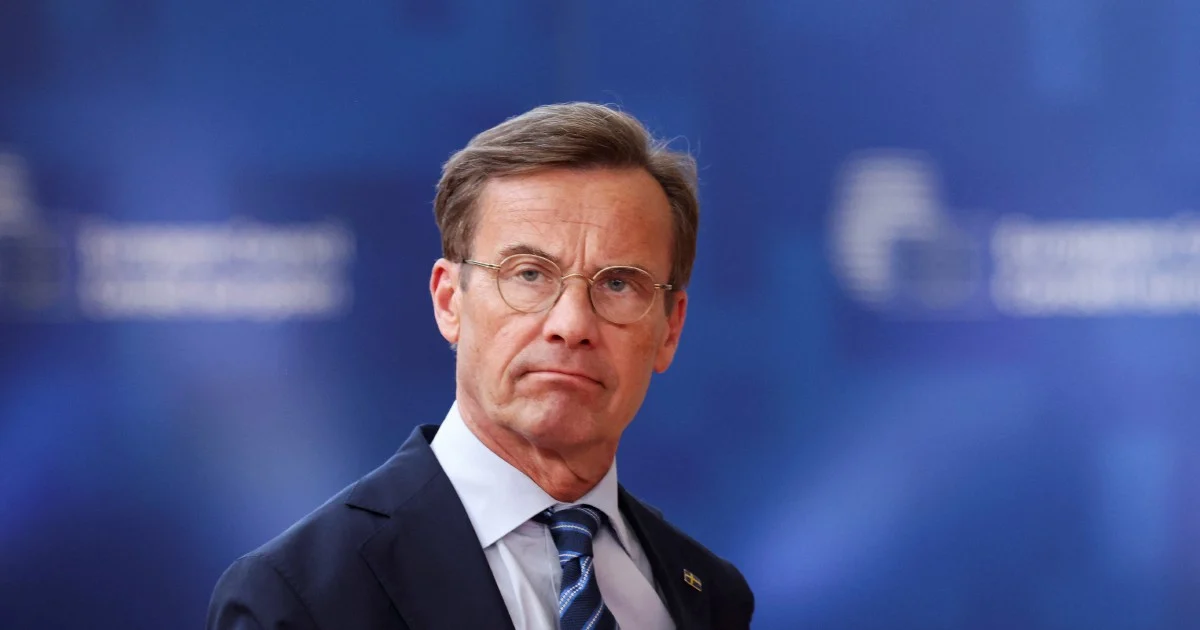
Swedish Prime Minister Ulf Kristersson appears to possess an unusual capacity to emerge from political storms relatively unscathed. Throughout his four years in office, the centre-right leader has navigated a succession of scandals that might have ended the careers of less resilient politicians, only to face fresh corruption allegations as Sweden approaches crucial legislative elections in just three months. The recurring pattern raises questions about the durability of political accountability mechanisms in the Nordic nation and offers an intriguing case study for governance observers across Europe and Asia.
The timing of the latest allegations is particularly consequential, arriving at a moment when Kristersson and his coalition government had hoped to focus on policy achievements ahead of the electoral contest. Instead, his administration finds itself defending his personal and professional conduct once again, a scenario that has become almost routine during his premiership. The allegations themselves touch upon fundamental issues of governmental integrity and the appropriate use of public resources, matters that traditionally carry significant weight in Swedish political culture, which prides itself on transparency and ethical governance standards.
What distinguishes Kristersson's political trajectory is the apparent disconnect between the frequency and seriousness of scandals enveloping his office and their limited impact on his standing or his government's stability. Observers have frequently remarked on his capacity to deflect criticism and maintain support within his coalition partners despite controversies that would typically demand explanations and potentially resignations. This resilience suggests either sophisticated political management or a broader normalization of scandal within Swedish public discourse that warrants closer examination.
The Swedish electoral system and coalition dynamics play instrumental roles in insulating Kristersson from more severe consequences. His centre-right coalition government relies on the continued support of multiple parties, each with their own political interests and electoral calculations. Withdrawing backing from the Prime Minister would trigger governmental collapse and force coalition partners into elections they might not be prepared for, creating powerful incentives to maintain the status quo despite mounting controversies. This structural reality means that even serious allegations must clear an exceptionally high threshold to provoke coalition breakdown.
Swedish public opinion, traditionally attuned to governance quality and ethical standards, appears paradoxically less mobilized against Kristersson than comparable scandals have provoked in other Nordic nations or continental Europe. This phenomenon may reflect several factors: saturation from repeated controversy reporting, perceptions that Kristersson's government has delivered on economic or immigration policies important to his base, or a broader fragmentation of public discourse across traditional and social media that makes unified opposition more difficult to crystallize. The absence of sustained popular pressure simultaneously removes a crucial pressure valve that forces political accountability.
The implications for Southeast Asian observers lie partly in how parliamentary democracies manage prime ministerial tenure during scandal cycles. Unlike presidential systems where fixed terms provide temporal boundaries, parliamentary frameworks allow leaders to survive multiple controversies through coalition management and institutional inertia. Kristersson's experience demonstrates how these mechanisms can protect unpopular leaders and potentially delay accountability processes, a pattern relevant for Malaysia and other Westminster-influenced democracies in the region.
The substance of the new allegations matters considerably. Corruption charges carry particular weight in Swedish political culture, which has long prided itself on transparent institutions and relatively low levels of public sector malfeasance compared to many European nations. If the allegations prove substantial and involve direct misuse of public funds or position, they could pierce the defensive walls that have protected Kristersson through previous scandals, assuming media attention intensifies and opposition parties coordinate effectively in exploitation of the issue.
Opposition parties face their own strategic dilemmas regarding how aggressively to pursue Kristersson on corruption matters. Overreach risks appearing opportunistic, while insufficient pressure allows the government to manage the narrative and potentially neutralize the issue before elections. The opposition's effectiveness in translating scandals into electoral gains depends on their ability to connect the allegations to broader governance failures and convince voters that change is necessary and possible.
The three-month timeframe before elections adds urgency to the situation while simultaneously providing Kristersson potential cover. A condensed campaign period limits investigation depth, allows competing narratives to circulate freely, and may actually benefit an incumbent by shifting focus toward future policy platforms rather than past conduct. Conversely, if the allegations generate substantial international attention or involve genuinely egregious conduct, even a brief timeframe suffices to reshape electoral dynamics significantly.
For Malaysian stakeholders observing Swedish politics, the Kristersson case illustrates how reputation, institutional relationships, and political structure interact to shape accountability outcomes in established democracies. His ability to weather scandals reflects not merely personal skill but also systemic features that insulate coalition leaders from consequences. Understanding these mechanisms proves valuable for evaluating governance quality and democratic health across different contexts.
The approaching elections will ultimately determine whether Kristersson's pattern of scandal resilience continues or whether accumulating allegations finally penetrate the defensive barriers he has constructed. His electoral performance will reveal whether Swedish voters view the controversies as dealbreakers or manageable concerns relative to other policy considerations. Either outcome carries significance for understanding how modern democracies balance accountability with political stability and continuity.