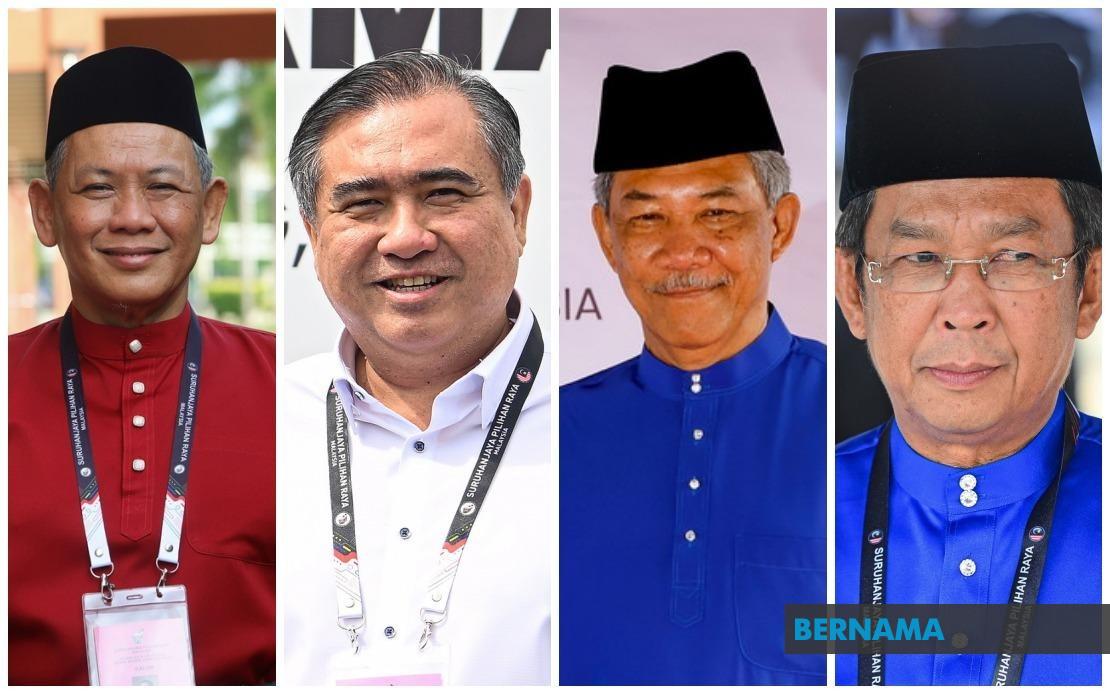
The 16th Negeri Sembilan state election has positioned senior politicians from the country's major coalitions in unexpectedly tight contests, with multiple heavyweights unable to count on straightforward victories. The nomination process concluded on July 18 in Seremban, formally launching a 14-day campaign that will determine control of the state assembly and set the trajectory for Malaysian politics heading into the remainder of this electoral cycle.
Current Menteri Besar Datuk Seri Aminuddin Harun, who chairs the state Pakatan Harapan machinery, finds himself locked in a three-way struggle for the Linggi constituency. Facing both the incumbent BN representative Datuk Mohd Faizal Ramli and Bersatu's Datuk Zamri Md Said, Aminuddin cannot rely on the consolidation of opposition votes that might have assisted his candidacy in less fractured political circumstances. His position as PKR vice-president underscores the national significance of this state-level contest, as his performance will reverberate through internal coalition dynamics.
The Chennah seat presents another significant battleground where DAP secretary-general Anthony Loke, who doubles as Transport Minister in the federal government, confronts a reinvigorated challenge from BN's Siow Kong Choon, chief of the MCA Youth wing in Negeri Sembilan. Despite DAP's nearly unbroken control of the constituency since 2013, Loke's dual responsibilities at federal and state levels may have created political vulnerability that BN intends to exploit. The seat represents not merely a local contest but a test of DAP's ability to maintain its traditional strongholds amid shifting coalitional pressures.
In Rantau, Barisan Nasional's deputy chairman Datuk Seri Mohamad Hasan—better known colloquially as Tok Mat—encounters a generational challenge that extends beyond ordinary electoral competition. The Foreign Minister and UMNO deputy president, who has represented Rantau continuously since 2004, faces Dr Azizul Hakim Mahdi, a substantially younger PH contender. The age differential and fresh approach of his challenger illustrate how even the most established political figures cannot take voter retention for granted in an environment where demographic shifts and evolving electoral preferences create openings for new political talent.
Pertang's three-way contest involving BN incumbent Datuk Seri Jalaluddin Alias, PH's Mohd Umry Abdul Khois, and Bersatu's Mohd Faizal Fadli Mohd Idrus demonstrates how the fracturing of the Malay-Muslim political base has complicated traditionally secure constituencies. Jalaluddin's tenure since 2013 would normally suggest relative security, yet the presence of multiple candidates competing for similar voter demographics suggests that Bersatu's presence continues fragmenting support in ways that undermine incumbent advantage.
The five-cornered battles materialising in constituencies like Nilai and Sri Tanjung illustrate the complexity of contemporary Negeri Sembilan politics. In Nilai, DAP national deputy chairman J. Arul Kumar confronts four opponents including BN's Datuk Lai Chien Kong, Bersatu's Datuk V. Saravana Kumar, Berjasa's Zamani Ibrahim, and an independent challenger. This fragmentation across ideological and communal lines means that plurality victories become increasingly possible without commanding overwhelming voter support.
Sri Tanjung's five-way contest highlights the generational tensions reshaping Malaysian electoral competition. PH incumbent Dr G. Rajassekaran faces BN's A. Achutan, two independent candidates, and Bersatu's Leevineshwaraan Murugan, who at 23 years old represents the youngest candidate in the entire state election. The emergence of such youthful candidates signals how younger voters and political organisers are beginning to contest space previously dominated by established figures.
The overall candidate distribution reveals the continued dominance of traditional coalitions despite Bersatu's significant presence. Pakatan Harapan fields all 36 candidates, occupying every state seat contestation, whilst Barisan Nasional presents 25 candidates and Bersatu 24. Perikatan Nasional contributes 11 candidates, with smaller players including Berjasa, ASLI, and PSM fielding individual representatives alongside four independent contenders. This competitive landscape across 103 total candidacies reflects political fragmentation at levels rarely seen in state elections.
For Malaysian politics more broadly, Negeri Sembilan's state election carries implications extending beyond the state's borders. As a central state with mixed urban and rural constituencies, Negeri Sembilan often signals broader electoral trends affecting the peninsula's political trajectory. The difficulties faced by established leaders suggest that incumbency provides diminishing protection, and that voters increasingly demand performance and fresh alternatives regardless of seniority or coalition affiliation. The campaigns proceeding through July 31 will demonstrate whether these competitive dynamics translate into actual seat losses or whether traditional party machinery ultimately prevails in translating voter preferences into electoral victories.

