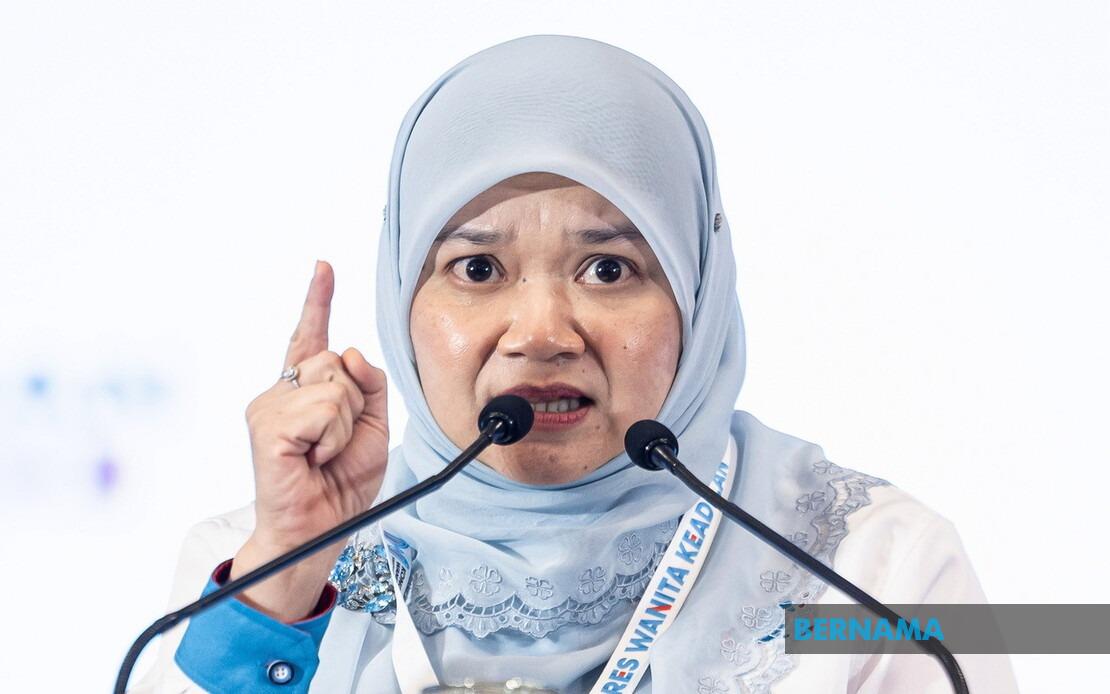
During the 2026 Wanita PKR National Congress in Melaka this week, party chief Fadhlina Sidek delivered a pointed message about the direction Malaysian politics should take: competition among political movements ought to be rooted in substantive ideas and demonstrable capacity to solve societal problems, rather than weaponising matters of faith for short-term electoral gain. Her remarks come at a time when Malaysia's political landscape has increasingly witnessed campaigns that invoke religious sentiment and identity as mobilising forces, sometimes overshadowing policy discussions that directly affect voters' daily lives.
Fadhlina's intervention addresses a persistent tension in Malaysian politics. Religious discourse carries immense weight in a nation where Islam holds constitutional prominence and where a substantial portion of the electorate considers faith-based values central to their political choices. Yet her statement suggests that PKR, as a multiethnic and multireligious coalition partner in the current federal government, views this dynamic as potentially corrosive to democratic deliberation. By framing the issue as one of respect—contending that religious matters warrant reverence precisely because they should not become tools for partisan manipulation—she articulated a position that seeks to protect both electoral integrity and religious sanctity simultaneously.
The timing of these remarks is significant for Malaysian politics more broadly. As the nation moves toward 2026 and beyond, political parties are already positioning themselves and laying groundwork for future contests. PKR, which has experienced considerable internal turbulence and membership fluctuations in recent years, faces pressure to stabilise its organisational structures and deepen its appeal. Fadhlina's emphasis on reconnecting with grassroots communities suggests recognition that electoral success ultimately depends not on incendiary messaging but on sustained engagement with voters' concrete needs—whether those involve economic opportunities, infrastructure development, education quality, or healthcare access.
Her call for leaders to strengthen community ties by directly understanding local circumstances reflects a strategic reassessment of how political parties can build durable support. Rather than investing primarily in campaign machinery that relies on sensationalised claims, Fadhlina advocated for grassroots work centred on identifying and addressing genuine community challenges. This approach demands greater discipline from party members and a willingness to perform unglamorous developmental work. For Malaysian voters accustomed to seeing politics dominated by headline-grabbing statements and personality-driven narratives, this model represents a markedly different proposition.
The distinction Fadhlina drew between religious sensitivity and religious exploitation deserves careful examination. In Malaysian political culture, distinguishing between legitimate appeals to shared values and cynical manipulation of faith can prove difficult, particularly when competing interpretations of Islam and other religions coexist. Her framework suggests that respecting religion means treating it as something too important to be subordinated to electoral calculation—a position that implicitly critiques opposition and government parties alike when they have instrumentalised religious controversy.
For PKR specifically, this messaging carries particular weight given the coalition's composition. Unlike Barisan Nasional or Perikatan Nasional, PKR operates within a government structure that includes DAP, a party perceived by some conservative voters as insufficiently attentive to Islam's role in Malaysian governance. By emphasising that political competition should transcend religious polarisation, Fadhlina attempted to reframe the coalition's identity around shared commitment to solving problems that affect all Malaysians regardless of religious affiliation. This repositioning strategy recognises that while religious identity matters to voters, it need not be the primary lens through which all political questions are filtered.
The exhortation for party loyalty and steadfastness, delivered alongside critiques of exploitative campaigning, also conveyed implicit messaging about PKR's internal challenges. The party has struggled with defections, leadership disputes, and organisational strain. By invoking the need for commitment despite trials and challenges, Fadhlina appeared to address members who might be tempted to abandon the party or compromise its principles amid difficult political circumstances. Her insistence that party strength derives from sustained hard work and grassroots readiness, rather than from dramatic political moves or divisive tactics, suggested a deliberate choice to chart a different course from competitors.
The practical implications of this perspective for Malaysian politics could be substantial. If PKR and its coalition partners genuinely embrace competitive frameworks centred on ideas rather than religious demarcation, their policy proposals, implementation records, and public communications should reflect that commitment. This would require resisting the temptation to weaponise religious differences when faced with electoral setbacks or political pressure. It would also demand that the party demonstrate tangible improvements in governance and service delivery, since voters evaluating parties on policy performance rather than religious messaging will hold them accountable for concrete outcomes.
Moreover, Fadhlina's intervention invites reflection on what Malaysian democracy might look like if political competition genuinely prioritised substantive policy debate. Healthcare systems, education quality, economic mobility, environmental sustainability, and infrastructure development represent areas where different political philosophies can produce meaningfully distinct approaches. Yet these topics often receive limited attention in Malaysian campaigns, overshadowed by controversies that activate religious and ethnic sensibilities. A shift toward ideas-based competition could potentially elevate policy discussions and force parties to clarify their positions on complex governance challenges.
The road toward implementing this vision faces considerable obstacles. Opposition parties have their own incentives to invoke religious sentiment, and portions of the electorate remain highly responsive to faith-based messaging. Voters themselves sometimes prefer emotionally resonant appeals to technical policy explanations. Creating space for ideas-based competition requires sustained effort from multiple actors—not merely PKR, but also media organisations willing to cover policy substance, civil society groups that facilitate public deliberation, and voters who demand accountability based on performance rather than rhetoric.
Ultimately, Fadhlina's remarks represented both a critique of current Malaysian political practice and an attempt to chart a different course for her party. Whether PKR can sustain this commitment while competing effectively in an environment where religious mobilisation remains commonplace will test the party's resolve. For Malaysian politics more broadly, her intervention suggested that some significant political actors recognise the potential costs of religion-centred competition and are seeking alternatives—though translating that recognition into transformed political practice remains an ongoing challenge requiring commitment across multiple levels of governance and society.

