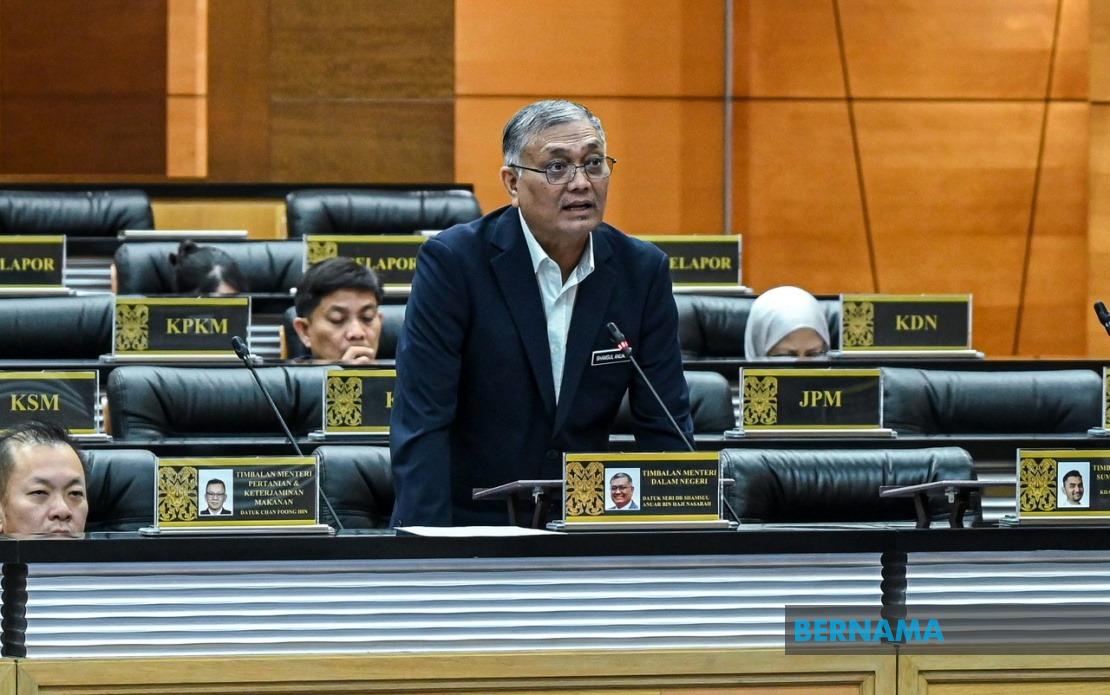
Deputy Home Minister Datuk Seri Dr Shamsul Anuar Nasarah has emphatically stated that the Royal Malaysian Police (PDRM) maintain an unwavering commitment to impartiality when handling high-profile investigations, declining to extend preferential treatment to any individual based on their position or political allegiance. Speaking during a parliamentary session in Kuala Lumpur on July 15, Shamsul Anuar underscored the force's dedication to conducting inquiries with professionalism, transparency, and equity across all cases brought before it.
The minister's statement came in response to parliamentary questions regarding the status of several sensitive investigations, most notably the ongoing probe into an intimate video recording that circulated widely in 2019 and became linked to a former member of the Cabinet. He explained that police efforts in this matter remain focused on locating the original source material, while simultaneously working to identify and secure all devices, computer systems, and technological equipment that may have been involved in the creation or distribution of the content.
The investigation into the 2019 viral recording operates under multiple provisions of Malaysia's criminal framework. Specifically, authorities are applying Section 292, Section 377B, and Section 504 of the Penal Code—statutes addressing obscene publications, consensual sexual conduct, and criminal intimidation respectively—alongside Section 233 of the Communications and Multimedia Act 1998, which governs offences related to digital communications. This multi-layered legal approach reflects the complexity inherent in cases involving intimate content and its online dissemination, particularly when determining culpability across different stages of creation, sharing, and amplification.
The question posed by Datuk Wan Saifulruddin Wan Jan, representing the Tasek Gelugor constituency under the Perikatan Nasional banner, sought clarification on progress across multiple sensitive investigations. This parliamentary inquiry reflects broader public concern about whether investigations into cases involving prominent political figures or their relatives proceed without undue influence or favour. Shamsul Anuar's response appears designed to address such anxieties by reaffirming institutional independence and the irrelevance of political connection to investigative outcomes.
Beyond the 2019 video case, Shamsul Anuar touched upon a separate investigation involving the son-in-law of former Prime Minister Tan Sri Muhyiddin Yassin. In this instance, he indicated that the Malaysian Anti-Corruption Commission (MACC) has assumed investigative authority, having already secured and executed an arrest warrant against the individual in question. The minister declined to elaborate further, citing the ongoing nature of the MACC inquiry and the boundary between parliamentary disclosure and active investigation confidentiality. This demarcation illustrates how Malaysian authorities navigate transparency obligations with the operational requirements of criminal investigation.
The involvement of the MACC signals that corruption-related allegations form the basis of that particular case, distinguishing it from the obscenity and digital communications dimensions characterising the 2019 intimate video investigation. The existence of separate investigative agencies with distinct mandates—PDRM handling general criminal matters, MACC focusing on corruption—demonstrates Malaysia's institutional framework for addressing different categories of wrongdoing. However, this fragmentation also raises questions about coordination, information-sharing, and potential jurisdictional overlaps that observers in Malaysia and the region frequently highlight when examining high-profile case progression.
Shamsul Anuar also addressed Malaysia's position on international extradition matters, confirming that such processes remain governed by the Extradition Act 1992 and bilateral or multilateral treaties to which Malaysia is party. The nation currently maintains extradition agreements with eleven countries and has committed to the ASEAN Extradition Treaty framework. This international dimension carries particular significance for Southeast Asian stability, as transnational crime, money laundering, and corruption increasingly transcend national boundaries. Malaysia's readiness to negotiate additional extradition treaties reflects an acknowledgment of evolving cross-border criminal patterns affecting the region.
The emphasis on existing and prospective extradition arrangements acquires additional resonance given recurring instances of fugitive individuals exploiting jurisdictional gaps within Southeast Asia. Enhanced cooperation protocols facilitate the return of suspects to face prosecution in their home countries, thereby reducing safe havens and undermining the utility of geographic flight as an evasion strategy. For Malaysian readers and businesses operating across the region, robust extradition mechanisms support the rule of law and investor confidence by demonstrating commitment to holding wrongdoers accountable irrespective of their location.
Shamsul Anuar's parliamentary pronouncements ultimately seek to reassure stakeholders—legislators, the public, international observers—that institutional mechanisms exist to investigate sensitive matters without bias or political interference. Whether such assurances sufficiently address persistent scepticism, particularly when cases involve former or current political heavyweights, remains contested terrain in Malaysian political discourse. The credibility of such claims depends substantially on visible investigative progress, transparent communication about charges or outcomes, and demonstrable consistency across cases involving individuals of varying political prominence.
The minister's reaffirmation that political affiliation or ministerial rank provides no shield against investigation carries both symbolic and practical weight. Symbolically, it reinforces the principle of legal equality and institutional integrity. Practically, it establishes an expectation that investigative momentum will persist regardless of external pressure or the status of those implicated. For a nation working to strengthen public confidence in law enforcement and anti-corruption frameworks—objectives central to Malaysia's broader development agenda—such clarifications form essential components of institutional legitimacy.
Moving forward, Malaysian authorities face the challenge of converting rhetorical commitments to impartiality into visible outcomes that persuade an increasingly scrutinising public. The continued advancement of the 2019 video investigation, the MACC's handling of the former prime minister's relative case, and the quality of Malaysia's extradition partnerships will all serve as empirical measures of whether institutional independence genuinely prevails in practice. Regional observers, particularly those in Singapore, Thailand, and Indonesia managing their own high-profile prosecutions, will monitor these developments as indicators of Malaysia's institutional maturity and capacity to manage politically sensitive cases according to law rather than political convenience.

