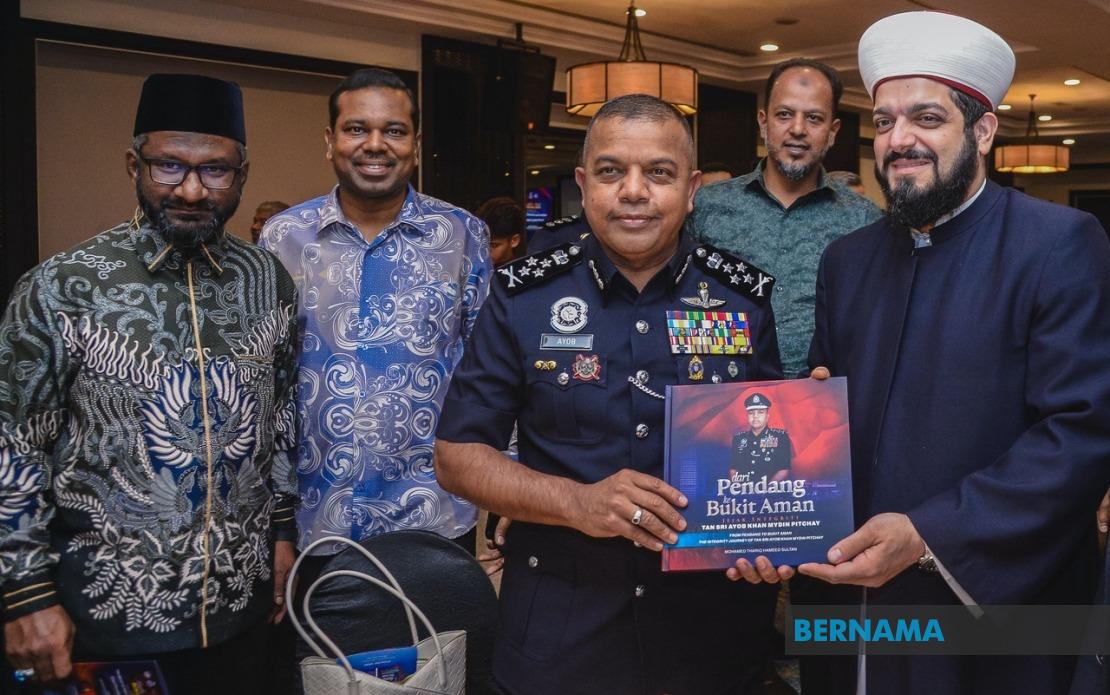
The sophistication of extremist recruitment in Malaysia is entering a new phase, with militant and deviant groups progressively abandoning conventional tactics in favour of digital channels that offer greater reach and anonymity. Deputy Inspector-General of Police Tan Sri Ayob Khan Mydin Pitchay made this assessment while launching his biography in Kuala Lumpur, warning that the threat landscape will continue to evolve unless law enforcement maintains aggressive counter-measures. His remarks reflect growing concern within the police hierarchy about the adequacy of current strategies to address radicalisation pathways that increasingly bypass traditional community surveillance.
The most striking element of this evolution involves the infiltration of mainstream gaming ecosystems. Video games such as Roblox, a massively multiplayer platform with millions of young users globally, have become hunting grounds for recruiter elements seeking to capitalise on the gaming community's relative isolation and the difficulty in moderating private chat functions. Unlike public social media where extremist content can be more readily detected and removed, the gaming environment provides cover through its primary purpose as an entertainment service, allowing malicious actors to embed themselves within communities before pivoting towards ideological messaging. This represents a fundamental tactical shift from the pre-internet era when recruitment centred on physical usrah, or religious study circles, where participants could be directly monitored by community and family networks.
The psychology underpinning modern radicalisation has also undergone transformation, according to Ayob Khan's analysis. Where extremist movements historically relied on doctrinal religious indoctrination, contemporary recruitment increasingly exploits emotional vulnerabilities such as anger, alienation, and a desire for belonging. Individuals harbouring grievances, whether rooted in personal circumstances or perceived societal injustices, become susceptible to narratives that provide both explanation and purpose for their resentment. Recent arrests involving teenagers have demonstrated this pattern, where young people with limited life experience and developing cognitive frameworks become targets for groups promising community, identity, and a sense of agency through violent means. This emotional vulnerability proves particularly acute in digital spaces where algorithmic amplification and echo chambers reinforce increasingly extreme viewpoints.
The implications for Malaysian security are substantial. The shift towards online recruitment means that traditional intelligence gathering methods, which rely on physical surveillance, informant networks within mosques and religious organisations, and community reporting, become less effective. Law enforcement must develop expertise in digital forensics, undercover operations within online gaming communities, and rapid response capabilities to emerging recruitment networks. Furthermore, the lower barriers to entry in online spaces mean that marginalised individuals with limited social skills or access to physical communities can now connect with extremist networks from their homes, substantially expanding the potential recruitment pool. This democratisation of access to radicalisation content creates a numbers problem for security agencies: monitoring millions of gaming accounts and private chat interactions exceeds traditional police capacity.
Ayob Khan's call for proactive rather than reactive posturing reflects the principle that intelligence failure—allowing an attack to occur domestically that could have been prevented—constitutes a fundamental breach of state security. This mindset has pushed the Special Branch's Counter-Terrorism Division and related units towards intelligence-led operations designed to identify and neutralise threats before they crystallise into operational planning. However, the legal and ethical frameworks governing such proactive measures remain contested terrain. Digital surveillance, even when legally sanctioned, raises concerns about privacy, particularly when applied to young people in recreational spaces, and the line between legitimate investigation and entrapment requires careful calibration.
The geographic and demographic scope of this challenge extends beyond Malaysia's borders. Extremist networks operate transnationally through online platforms, allowing Malaysian recruits to join international training networks, connect with experienced operatives, and contribute to group objectives from within the country. This creates vulnerabilities both for Malaysian security and for neighbouring Southeast Asian nations whose nationals may also be radicalised through the same digital channels. Cooperation between Malaysia's police, intelligence services, and counterparts in Indonesia, Thailand, Singapore, and Brunei becomes essential, particularly regarding information sharing about emerging online recruitment methods and identified operators.
The involvement of multiple senior security officials at Ayob Khan's biography launch—including the Melaka Governor, the CID Director, and leadership from the CCID and KDNKA—underscores institutional recognition of the gravity of this challenge. However, it also suggests that a unified strategy across these agencies may still be under development. Coordination between criminal investigation, commercial crime oversight (relevant to financial flows supporting extremist networks), and internal security units requires sophisticated information-sharing protocols and clear delineation of operational responsibilities. The tendency for security agencies to maintain separate intelligence databases and operational fiefdoms historically has hampered effectiveness in complex transnational challenges.
Industry cooperation from major technology and gaming companies will prove critical to any sustained counter-extremism strategy. Platforms such as Roblox, Discord, Telegram, and others host millions of users and possess the architectural knowledge and data access necessary to disrupt recruitment networks at scale. Yet private companies have mixed incentives regarding law enforcement cooperation, balancing concerns about user privacy, reputational risk from association with security operations, and liability for content hosted on their platforms. Malaysia and other Southeast Asian nations have begun developing regulatory frameworks to compel greater accountability from technology companies, but enforcement remains uneven and subject to negotiation between national governments and multinational corporations with competing loyalties.
The pathway forward requires integration of prevention, intervention, and enforcement. Prevention means addressing the underlying grievances, alienation, and emotional vulnerabilities that make radicalisation appealing, particularly among young people. This involves investment in youth services, mental health support, educational programmes that build critical thinking about online content, and community engagement that provides alternative sources of belonging and purpose. Intervention targets individuals who have been exposed to extremist content or early recruitment overtures but have not yet committed to violent action, requiring rehabilitation programmes and support networks that can redirect ideological commitment. Enforcement remains necessary for individuals who have crossed into operational planning or active participation in extremist organisations. Only a comprehensive approach combining all three elements can hope to address the scale and sophistication of recruitment now occurring across Malaysia's digital landscape.

