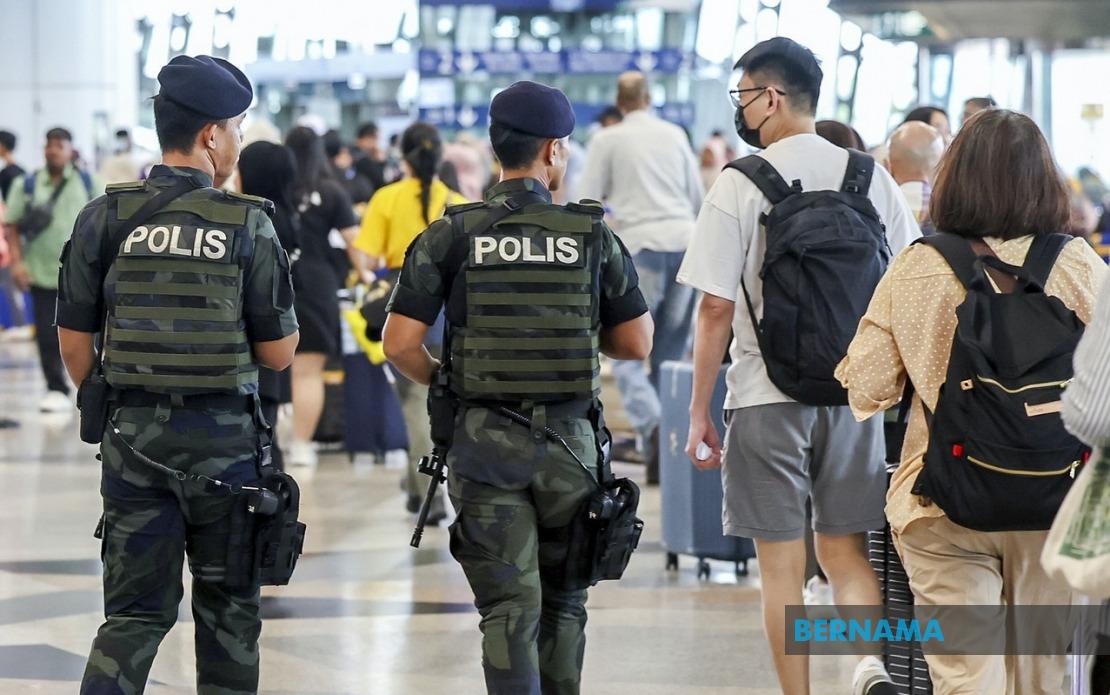
The Malaysian government is moving swiftly to reinforce security protocols at the nation's airports by embedding personnel from the Royal Malaysia Police directly into aviation security operations. Communications Minister Datuk Seri Fahmi Fadzil announced the measure during his weekly press conference in Putrajaya on August 5, characterizing the step as an urgent response to recent security breaches that have exposed vulnerabilities in how Malaysia's airports screen personnel and cargo. The decision reflects growing concern within federal agencies that current arrangements have failed to detect prohibited activities, prompting coordinated action across multiple government departments to identify and plug gaps in the system.
The catalyst for this administrative overhaul was the arrest of a 39-year-old Malaysian pilot by Indonesian authorities at Soekarno-Hatta International Airport's Terminal 3. Investigators discovered the suspect allegedly attempted to transport 25 kilograms of narcotics, with law enforcement uncovering 15 packages containing approximately 70,114 capsules of ecstasy and methamphetamine. According to the Indonesian National Police, the street value of the seized substances exceeded RM45 million at prevailing market rates in Indonesia, underscoring the scale of the operation and the financial incentives driving such smuggling attempts through regional aviation hubs.
Currently, the Aviation Security unit, known as AVSEC, operates under the management of auxiliary police personnel rather than fully trained, regular police officers. This structural arrangement drew specific attention from the Home Ministry and Transport Ministry during a Cabinet session where officials presented their assessment of security deficiencies. The decision to station full Royal Malaysia Police officers within AVSEC represents a meaningful upgrade in operational capacity and authority, positioning regular police alongside security personnel who can conduct more rigorous inspections and investigations. The shift acknowledges that auxiliary personnel, while trained for certain functions, may lack the investigative powers and specialized experience necessary to detect sophisticated smuggling schemes.
Beyond the immediate redeployment of police personnel, Malaysia Aviation Group will undergo a comprehensive review of its hiring and assessment procedures for flight deck crew. The airline operator has been tasked with re-evaluating background screening mechanisms and health evaluation protocols for both pilots and co-pilots. This broader institutional examination suggests that the incident has raised questions about whether existing vetting processes adequately investigate personal circumstances, financial pressures, or associations that might render flight crew vulnerable to criminal recruitment. The review will likely examine databases, reference checks, and psychological assessments to determine whether additional safeguards can identify individuals at elevated risk before they are assigned to sensitive operational roles.
The Royal Malaysia Police and the Malaysian Border Control and Protection Agency, known as AKPS, have received explicit instructions to conduct a forensic examination of airport security infrastructure. Their mandate extends beyond identifying what went wrong in this particular case to mapping out systemic vulnerabilities that could potentially be exploited by other individuals or organized networks. This preventive approach recognizes that international drug trafficking organizations likely study airport procedures and personnel practices in search of exploitable weaknesses. By conducting this assessment now, Malaysian authorities aim to address not only the known vulnerability exposed by the pilot's arrest but also other latent gaps that criminals might be planning to exploit in coming months.
Fahmi acknowledged that the government has not yet received comprehensive documentation regarding the Indonesian investigation, having received only preliminary briefings from the Transport and Home Ministers. He indicated that before committing to more expansive investigative measures, such as establishing a dedicated task force, officials require access to the complete investigative file. This measured approach reflects diplomatic considerations, as the case remains active within Indonesia's jurisdiction and Malaysian authorities must coordinate carefully with their Indonesian counterparts. The delay also serves a practical purpose: understanding the full scope of any conspiracy and identifying whether other individuals in Malaysia or elsewhere were complicit in the smuggling scheme.
The implications of the pilot's arrest extend beyond immediate security adjustments. The incident raises uncomfortable questions about the screening processes that allow individuals with criminal intentions or vulnerability to coercion to obtain licenses and employment in aviation. For Malaysia, which has cultivated an international reputation for aviation safety and professionalism, the case presents a reputational challenge that demands visible, decisive action. Regional competitors and international aviation authorities will be observing how thoroughly Malaysia investigates the breach and implements preventive measures, particularly given the nation's position as a hub for regional aviation and its role in maintaining ASEAN's aviation standards.
The arrest also highlights the persistent challenge facing Southeast Asian nations in combating transnational drug trafficking networks that exploit legitimate transportation infrastructure. Aircraft, with their speed and international routing, present attractive conduits for moving large quantities of narcotics across borders. Flight crew, with their legitimate access to airports and aircraft, represent valuable targets for recruitment by trafficking organizations. Malaysia's response—combining immediate operational changes with systematic security reviews—mirrors approaches adopted by neighboring countries confronting similar threats. However, the sustainability of these measures depends on whether they are accompanied by adequate training, resource allocation, and interagency coordination.
The government's commitment to studying the full Indonesian investigation file before deciding on additional steps suggests officials recognize that incomplete information could lead to misdirected policy responses. The Transport and Home Ministries will need to determine whether the pilot acted as an isolated actor or as part of a larger organization, whether he was recruited through coercion or incentivized by financial circumstances, and whether his access to airport facilities was exploited in ways that suggest additional systemic problems beyond personnel screening. These details will shape the scope and nature of follow-up measures implemented in coming weeks and months.
For Malaysian travelers and the aviation industry, the government's visible response may offer some reassurance, though the effectiveness of these measures will ultimately depend on implementation quality and resource availability. The deployment of regular police personnel to AVSEC, while symbolically significant, must be accompanied by adequate staffing to avoid creating bottlenecks that compromise operational efficiency. Similarly, enhanced background screening for flight crew could extend hiring timelines and reduce the pool of available personnel if not carefully calibrated. The challenge facing Transport Ministry officials is implementing genuine security improvements without creating logistical obstacles that diminish Malaysia's competitive position as a regional aviation hub.

