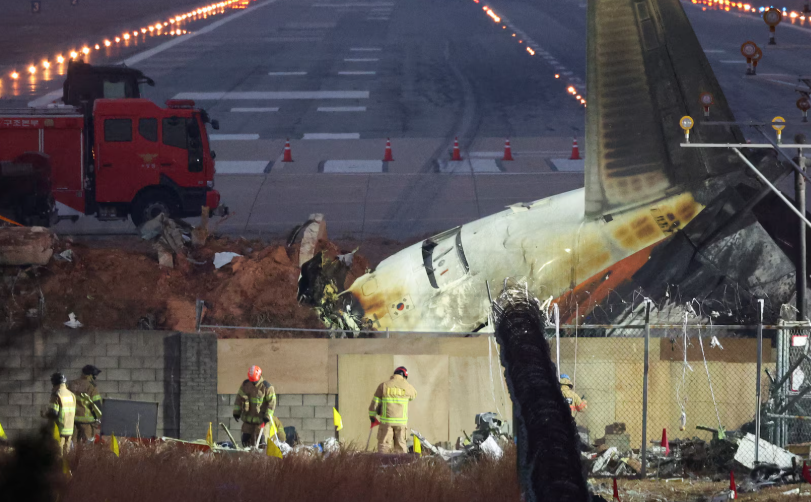
South Korean law enforcement agencies have escalated their investigation into the Jeju Air tragedy that claimed 179 lives, conducting coordinated raids across multiple government entities and infrastructure operators on Tuesday. The police operation targeted Korea Airports Corp, the transport ministry, and the Busan Regional Office of Aviation, marking another significant phase in what has become one of the nation's most intensive aviation disaster inquiries. The sweep was designed to unearth additional documentary evidence that investigators believe may shed light on systemic failures leading up to the catastrophic incident at Muan International Airport on December 29, 2024.
Korea Airports Corp, which operates the majority of South Korea's major domestic aviation hubs with the notable exception of Incheon International Airport, became a focal point of the investigation following the Muan crash. The organisation's operational procedures, maintenance protocols, and emergency response systems have come under scrutiny as authorities attempt to reconstruct the events preceding and following the disaster. By targeting KAC specifically, investigators appear to be examining whether adequate safety standards were maintained and whether proper procedures were followed during the critical moments when intervention might have prevented loss of life.
The transport ministry faced its third investigative search since the crash inquiry began, underscoring the persistence with which authorities are examining governmental oversight of aviation safety. The repeated searches suggest that initial document seizures may not have yielded sufficient evidence, prompting investigators to return for more targeted material gathering. This pattern of intensive re-examination indicates that the probe has identified specific gaps in accountability or documentation that require further clarification from the transport authority responsible for broader aviation policy and regulation.
According to investigators, the raids were conducted to gather evidence relevant to charges of professional negligence resulting in death or injury, which form part of the criminal allegations against 74 suspects identified so far. Professional negligence charges in aviation disasters typically focus on individuals or organisations whose failure to meet expected standards of care contributed directly to the tragedy. In the context of the Jeju Air crash, such charges could apply to airport operators, maintenance personnel, controllers, or ministry officials whose decisions or inactions facilitated the circumstances leading to the accident.
Beyond the negligence charges already filed, authorities have signalled their intention to pursue additional charges of causing a serious public disaster, a more severe legal designation that carries heightened criminal liability. Public disaster charges typically apply when systemic failures or widespread negligence place populations at risk and result in mass casualties. The potential application of such charges suggests that investigators have uncovered evidence pointing to broader institutional failures rather than isolated individual errors, potentially implicating entire organisational frameworks within Korean aviation administration.
The investigation's focus has remained firmly centred on two interconnected questions since the December 2024 tragedy. Firstly, authorities continue to examine the precise sequence of technical and operational factors that led to the aircraft's crash upon landing at Muan. Secondly, investigators are scrutinising whether relevant government agencies, airport authorities, and emergency responders followed proper procedures once the emergency situation developed. This dual-track approach suggests suspicion that both technical failure and institutional response breakdowns contributed to the extraordinarily high death toll.
For Malaysian and Southeast Asian aviation observers, the intensity of this investigation carries significant implications. The region's aviation sector operates under similar international safety frameworks, and the rigorous examination of Korean oversight mechanisms and accountability structures offers instructive precedent for regulatory environments across Asia. The case demonstrates how rapidly authorities can mobilise investigative resources when major disasters occur, and how systematically they can reconstruct the decision-making chains that preceded catastrophes.
The Jeju Air crash remains one of the deadliest aviation accidents in recent South Korean history, comparable in severity to major regional disasters that have shaped aviation policy across Asia. The 179 fatalities represent a substantial proportion of the aircraft's total complement, indicating that survival rates were severely compromised. The ongoing investigation reflects the seriousness with which Korean authorities approach accountability following such tragedies, contrasting sharply with the immediate post-incident period when confusion and incomplete information typically characterise disaster response.
Investigators have cast their net widely across government and quasi-governmental organisations, suggesting that responsibility for safety failures may be distributed across multiple institutional actors rather than concentrated in single individuals or departments. The targeting of diverse agencies simultaneously demonstrates a coordinated investigative strategy designed to prevent evidence destruction or coordination among potential suspects. The serial raids on the transport ministry particularly suggest that investigators believe ministry records contain crucial information about safety oversight decisions, budget allocations, staffing levels, or regulatory enforcement patterns relevant to understanding how systemic conditions developed at Muan.
The expanding suspect pool from initial investigative stages to the current 74 individuals reflects a broadening understanding of accountability chains within Korean aviation administration. As the investigation matures, authorities appear to be identifying not only those directly responsible for immediate operational decisions but also individuals positioned higher in bureaucratic hierarchies whose policies, oversight, or budgetary decisions created environments where dangerous conditions could persist unaddressed. This vertical expansion of culpability investigations mirrors patterns seen in other major Asian aviation disasters.
The raids also signal that the investigation has moved beyond preliminary hypothesis formation into a phase requiring specific documentary verification. Rather than pursuing broad-spectrum evidence gathering, investigators now appear focused on acquiring records that can confirm or refute particular theories about how circumstances converged to produce the crash. This specificity indicates that preliminary findings have crystallised into working hypotheses that investigators believe particular documents can substantiate.
As the investigation continues, the outcomes will likely influence aviation safety policy across South Korea and potentially inform international aviation safety discussions. The Korean aviation sector remains one of Asia's largest, with extensive international connections, meaning that procedural reforms resulting from this inquiry could have ripple effects throughout regional aviation operations. The rigour with which authorities are pursuing this investigation demonstrates official commitment to preventing similar incidents through comprehensive accountability and systematic improvement of safety cultures within aviation organisations.

