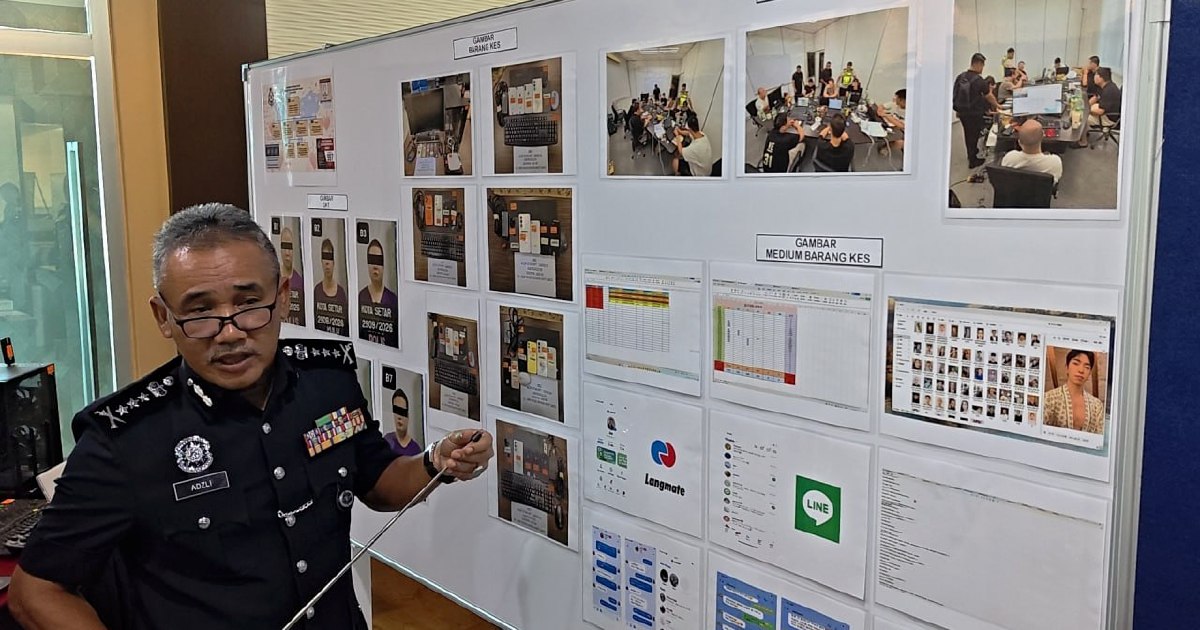
Malaysian law enforcement has successfully dismantled a coordinated cyber-fraud operation specialising in romance scams that predominantly victimised Japanese nationals. The breakthrough came following a targeted enforcement action at a commercial property located within Alor Star's Kristal Light Industrial Park, which culminated in the apprehension of seven individuals of Chinese nationality.
The syndicate represents a particularly concerning variant of online fraud that exploits emotional vulnerability and trust. Romance scams operate by establishing false relationships with unsuspecting victims over messaging platforms and social media, gradually building rapport before introducing financial requests. These schemes have proven remarkably effective across Asia, where cultural differences and language barriers can compound victims' hesitancy to report fraud.
The choice of Japanese nationals as primary targets reflects broader patterns in transnational cybercrime. Japan's ageing demographic includes many economically secure, tech-savvy individuals with disposable income and internet access. Simultaneously, the Japanese diaspora and substantial Japanese expatriate communities throughout Southeast Asia create additional pools of potential victims unfamiliar with local criminal networks and reporting mechanisms. Scammers exploit this combination systematically.
The Kristal Light Industrial Park location suggests the operation maintained operational infrastructure within Malaysia, likely serving as a coordination hub and payment processing centre. Industrial parks across Malaysia have increasingly become focal points for organised cybercrime operations, as they provide legitimate business cover, relatively anonymous commercial spaces, and proximity to financial services. The sophistication implied by a physical operational base indicates this syndicate operated at a more advanced level than many solo online fraudsters.
For Malaysian authorities, disrupting foreign-based criminal networks operating domestically carries strategic importance beyond individual case outcomes. Romance scams generate significant reputational consequences for host nations, as victims often report their experiences to their home country governments and media outlets. When Japanese citizens experience fraud facilitated through Malaysian infrastructure, even if perpetrators are foreign nationals, the incident reflects on Malaysia's capacity to maintain cybersecurity standards and protect foreign residents and visitors.
The operational methods employed by such syndicates typically involve division of labour among participants. Some individuals manage victim communications and psychological manipulation, others coordinate financial transfers and money laundering, while additional members handle technical infrastructure and platform access. The seven arrests likely represented different functional roles within this hierarchical structure, suggesting investigators have captured sufficient personnel to substantially disrupt the operation's functionality.
Southeast Asia's position within global financial networks creates particular vulnerability to romantic fraud schemes. The region's integration into international money transfer systems, combined with relatively developed telecommunications infrastructure and large online populations, makes it an attractive jurisdiction for cybercriminals. Furthermore, the prevalence of informal money transfer mechanisms and cryptocurrency trading platforms facilitates rapid laundering of illicit funds, complicating recovery efforts for victims across borders.
The Japanese government and private sector have increasingly coordinated with Southeast Asian partners to combat romance fraud targeting their citizens. Japanese businesses maintain substantial operations across Malaysia, Singapore, and Thailand, creating official channels through which victim complaints reach diplomatic missions and law enforcement agencies. This institutional framework enables more rapid information sharing and coordinated responses than typically occurs with unorganised individual victims reporting crimes through standard channels.
Romance fraud carries disproportionate psychological impact compared to other cybercrime categories. Victims frequently experience profound emotional trauma alongside financial loss, as the deception involves deliberate manipulation of personal attachments and trust. Japanese victims, often elderly or isolated individuals, may face additional complications including family stigma and reduced willingness to report crimes that might reflect poorly on their judgment or digital literacy within their social circles.
The investigation and prosecution of transnational cybercrime requires sophisticated cooperation between Malaysian authorities and Japanese counterparts, encompassing digital forensics, financial tracking, and international evidence standards. The successful raid suggests local law enforcement agencies have developed enhanced capacity in identifying and locating foreign-operated cybercrime infrastructure, a critical capability as such operations become increasingly international in scope.
Looking forward, this operation's dismantlement may temporarily disrupt romance scam activity targeting Japanese nationals, though similar syndicates will likely emerge elsewhere. The fundamental vulnerability persists: isolated individuals with internet access remain susceptible to patient, skilfully executed emotional manipulation from criminals who have refined their craft across thousands of interactions. Prevention requires ongoing victim awareness campaigns, stronger platform security measures, and sustained international cooperation rather than reliance on reactive enforcement actions alone.
The case underscores Malaysia's continued emergence as a focal point within Southeast Asia's broader cybercrime ecosystem. While the nation hosts legitimate digital industries and innovation hubs, it simultaneously attracts organised criminal groups exploiting its strategic location, financial infrastructure, and cosmopolitan workforce. Balancing these competing realities remains an ongoing challenge for policymakers and law enforcement agencies working to establish Malaysia as both a safe haven for international business and a hostile environment for transnational criminal operations.

