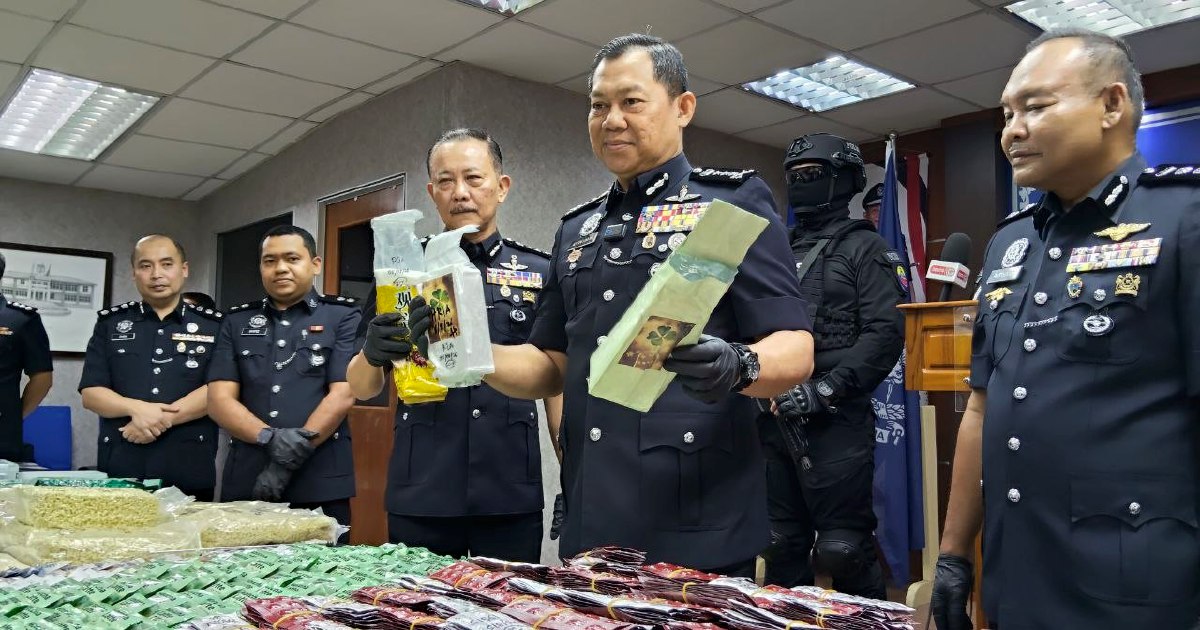
A major blow has been dealt to drug trafficking operations in Johor following a police raid on a residential apartment that was being used as a storage and distribution centre for illicit narcotics. The operation, conducted by Johor Baru police, resulted in the confiscation of 96.76 kilograms of various controlled substances with an estimated street value of RM8.49 million. The discovery at Persiaran Senibong in Masai represents one of the more substantial drug seizures in the state in recent months and underscores the persistent challenge posed by organised narcotics networks operating in the region.
Authorities identified the apartment as a crucial logistical hub within a wider distribution network that had been supplying drugs to consumers across Johor and potentially beyond state borders. The strategic use of a residential property for storage purposes is a common tactic employed by organised crime syndicates, allowing them to maintain a low profile while consolidating their inventory before distribution to street-level dealers. The landlords of such properties often remain unaware that their units are being exploited for illicit purposes, presenting a significant enforcement challenge for law enforcement agencies attempting to dismantle supply chains at their source.
Two individuals were apprehended during the operation and are currently assisting police with their investigations. While details regarding their specific roles within the alleged syndicate remain under investigation, law enforcement sources suggest that the operation represents a significant step in disrupting the supply chain that feeds consumer demand throughout the state. The interrogation of the suspects is expected to yield valuable intelligence regarding the operational mechanics of the distribution network, including supplier contacts, distribution routes, and downstream customers.
The seizure of nearly 97 kilograms of narcotics demonstrates the substantial quantities of drugs circulating through Johor's underground markets. Such large stockpiles typically indicate that the network possessed considerable financial resources and maintained relationships with higher-level suppliers, likely operating across Southeast Asia's permeable borders. The composition of the drug haul, though not immediately detailed in official statements, typically reflects the diverse range of controlled substances in regional circulation, from methamphetamine to heroin and other synthetic drugs.
This operation aligns with broader regional efforts to combat transnational drug trafficking, which remains a critical security concern for Malaysia and its neighbours. Organised drug networks exploit the region's geographic proximity to major production zones in Southeast Asia, including areas notorious for methamphetamine manufacturing and heroin refinement. Law enforcement agencies across the region have intensified their coordination to intercept shipments at borders and dismantle distribution infrastructure before drugs reach end-users.
For Malaysian citizens and residents, the implications of such operations extend beyond immediate public safety. Large-scale drug networks contribute to addiction, crime, and social deterioration in communities where they operate. The successful dismantling of supply infrastructure, even temporarily, can reduce drug availability and help prevent the progression of addiction within vulnerable populations. However, authorities acknowledge that the arrest of individual traffickers and the seizure of discrete shipments represent only incremental progress against networks that operate with considerable sophistication and resources.
The Johor police operation reflects ongoing efforts by state law enforcement to maintain pressure on drug trafficking organisations through targeted investigations and intelligence gathering. The identification of the Masai apartment as a critical hub likely resulted from sustained surveillance, community intelligence, or investigations into previous drug-related offences. Such investigative groundwork is essential for authorities seeking to dismantle networks rather than simply intercepting isolated transactions at street level.
International comparisons suggest that the RM8.49 million valuation reflects regional wholesale pricing rather than retail street value, which would be substantially higher. This pricing reflects the significant profit margins available to traffickers at different levels of the supply chain, creating powerful financial incentives for criminal organisations to maintain operations despite enforcement risks. The economics of drug trafficking explain the persistence of these networks even when individual members face arrest and imprisonment.
Looking forward, the success of this particular operation may catalyse additional investigations into related networks and suppliers. Police typically use arrests and interrogations to map broader criminal structures, identifying relationships between different trafficking groups and their connection points to international supply routes. Such intelligence gathering helps authorities prioritise future operations and potentially prevent the emergence of successor organisations seeking to fill voids left by dismantled networks.
The case also highlights the importance of community awareness and public cooperation in reporting suspicious activities. Residents who notice unusual patterns in apartment building access, deliveries, or occupancy can provide crucial intelligence to law enforcement agencies. Engagement between police and residential communities creates opportunities for early identification of criminal infrastructure before operations reach the scale observed in the Masai case.
Moving forward, authorities will need to address not only the immediate network disruption but also the underlying demand factors that sustain drug markets. Comprehensive approaches combining enforcement with treatment and prevention services offer the most promising pathway toward reducing drug-related harm in Malaysian society. The RM8.49 million seizure represents visible progress, yet structural challenges associated with addiction, poverty, and limited treatment capacity remain significant obstacles to meaningful long-term impact.

