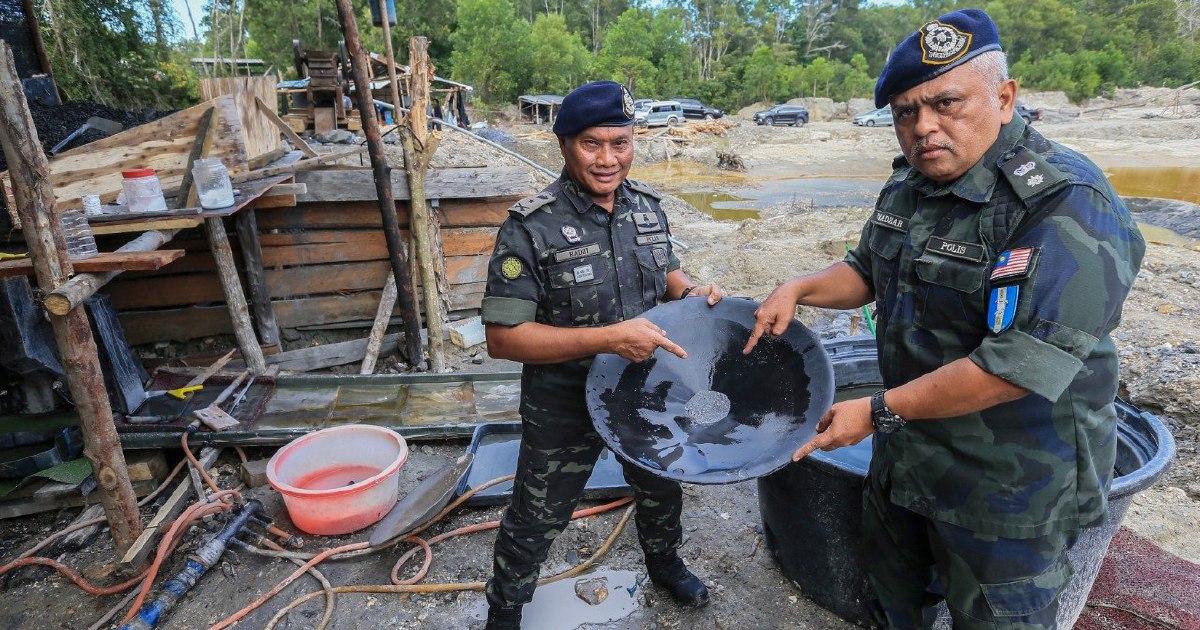
Authorities in Terengganu have successfully dismantled what appears to be one of the more profitable illegal mining operations in the state, arresting 15 individuals connected to an unlicensed gold extraction syndicate at Bukit Kor in the Marang district. The operation, identified by police as the 'Mak Siti' network, was believed to be generating daily revenues of up to RM13,000 through unauthorised precious metal extraction activities, a discovery that underscores the persistent challenge of illegal mining operations throughout Southeast Asia.
The raid represents a significant enforcement action against organised illegal mining, which has become increasingly sophisticated across Malaysia. These operations typically exploit remote or marginally monitored areas with minimal oversight, allowing criminal networks to extract valuable minerals without proper licensing or environmental compliance. The capture of this particular syndicate is notable for the apparent scale of its revenue generation, suggesting substantial infrastructure, equipment investment, and operational coordination among network members.
Illegal gold mining poses multiple serious challenges for Malaysian authorities and neighbouring Southeast Asian nations. Beyond direct economic loss through unlicensed resource extraction, these operations frequently generate environmental degradation, including soil contamination, water pollution, and landscape destruction. Communities situated near mining sites often face health risks from chemical exposure and mercury use, common in small-scale gold extraction processes. The social costs extend to labour exploitation, as illegal operations frequently employ workers under unsafe conditions without proper compensation or protections.
The 'Mak Siti' operation's apparent profitability demonstrates why illegal mining continues to attract criminal entrepreneurs despite enforcement efforts. A daily revenue of RM13,000 translates to substantial monthly and annual returns that can exceed legitimate business ventures in rural areas. This economic incentive structure makes recruitment and operational continuation challenging to combat through enforcement alone, requiring complementary strategies addressing underlying economic drivers in affected communities.
The Bukit Kor site, like many locations targeted for illegal mining, likely offered combination of geological advantage and geographical isolation that reduces detection risk. Criminal networks systematically scout potential extraction sites using geological knowledge, mapping resources not being officially developed or licensed. Once identified, they establish rudimentary processing infrastructure capable of quick deployment and rapid repositioning if enforcement pressure increases, creating a cat-and-mouse dynamic that tests law enforcement resources.
The detention of 15 individuals suggests this operation maintained meaningful organisational structure with differentiated roles. Typical illegal mining networks include site supervisors, equipment operators, security personnel, buyers for extracted materials, and financial handlers. The breadth of arrests indicates police developed substantial intelligence enabling simultaneous apprehension across the operation's hierarchy, rather than merely detaining frontline workers. This approach proves more effective at disrupting network continuity than targeting only visible mining activity.
For Malaysian readers, this case exemplifies broader regulatory challenges facing resource management authorities. While Malaysia possesses legitimate precious metals mining operations subject to government licensing and environmental standards, distinguishing legal from illegal activity requires vigilance, particularly in Peninsular Malaysia's less-developed regions where enforcement presence remains limited. Community awareness and reporting mechanisms have proven valuable in complementing official enforcement efforts.
Terengganu's experience with illegal mining reflects patterns seen throughout Southeast Asia, where gold and other precious metals attract criminal enterprise. Bordering regions in Indonesia and similar areas across the region report comparable operations generating substantial underground economy activity. The transnational nature of precious metals markets means Malaysian illegal mining operations often connect to broader smuggling networks distributing materials through regional trade channels, complicating enforcement efforts.
The consequences of permitting illegal mining to continue unchecked extend beyond individual communities. Systematic unauthorised extraction compromises long-term resource management planning, distorts economic activity, attracts organised crime involvement, and creates environmental liabilities for future remediation. Successful enforcement actions like the Bukit Kor raid demonstrate official capacity to disrupt operations but highlight the need for sustained, resourced commitment to prevent criminal groups from reestablishing elsewhere.
Looking forward, this case provides an opportunity for authorities to examine intelligence networks that enabled the operation to continue undetected generating substantial daily revenue. Understanding how criminal syndicates source equipment, recruit participants, and move extracted materials informs strategy development for preventing similar operations. Enhanced coordination between state-level enforcement agencies and federal authorities strengthens capacity to respond more rapidly to emerging sites.
The human dimension of illegal mining warrants consideration alongside criminal enforcement. Many participants in unlicensed mining operations lack alternative income sources, particularly in peripheral rural areas with limited economic opportunities. Addressing root causes requires complementary development initiatives creating legitimate economic alternatives, particularly for younger workers susceptible to recruitment by criminal networks.
The 'Mak Siti' syndicate's dismantling reflects improved police capability and intelligence operations in resource crime enforcement. However, the operation's apparent longevity and profitability before disruption suggests additional vigilance remains necessary. Community vigilance, strengthened inter-agency coordination, and sustained enforcement commitment will determine whether similar networks can be prevented from establishing or expanding across Malaysia's resource-rich regions.

