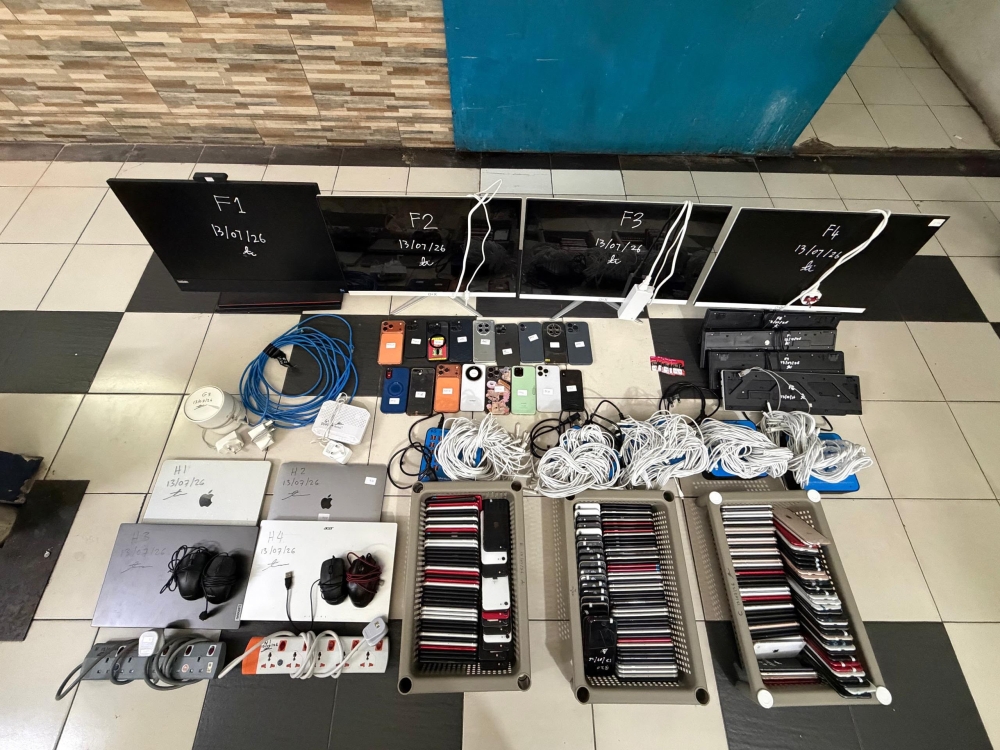
Law enforcement in Perak has moved against what it describes as an organised criminal network engaged in large-scale online fraud, with authorities conducting coordinated raids in the Ipoh area that resulted in the detention of 18 Chinese nationals. The operation represents an intensifying focus by Malaysian police on cross-border cybercrime syndicates that have increasingly targeted citizens throughout Southeast Asia with increasingly sophisticated deception schemes.
The synchronized sweeps, carried out across two separate locations, point to the scale of investigative work required to dismantle operations of this nature. Online scam networks operating from Malaysian soil have become a persistent security concern, particularly when foreign nationals establish infrastructure within the country to perpetrate fraud against targets outside Malaysia's borders. The two-site approach suggests authorities had gathered sufficient intelligence to warrant simultaneous action, minimizing the risk that suspects might flee or destroy evidence during the initial phase of enforcement.
Foreign-based fraud rings have demonstrated particular aptitude at exploiting cross-jurisdictional complexities that traditionally hamper law enforcement coordination. By establishing operations in Malaysia—a country with developed telecommunications infrastructure, relatively accessible rental accommodations, and geographic proximity to major regional markets—these syndicates gain operational flexibility while maintaining distance from their primary victim populations. The recruitment of Chinese nationals to staff these operations indicates organizational sophistication and suggests the network likely maintained connections to larger criminal ecosystems spanning multiple countries.
The prevalence of such operations has triggered growing concern among cybersecurity observers across the region. Victims of these scams often suffer devastating financial losses with limited recourse, particularly when the perpetrators operate from foreign jurisdictions. Malaysian authorities have faced mounting pressure to disrupt these networks, as the country has increasingly become a transit point and operational base for international fraud schemes. The Perak operation demonstrates renewed police capability in identifying and acting against such networks, though experts caution that dismantling individual syndicates addresses symptoms rather than the underlying conditions enabling transnational cybercrime.
Investigators will now focus on establishing the operational scope of the detained individuals. Understanding the network's reach—how many victims it targeted, across which countries, and the financial scale of its activities—will determine how broadly this case resonates throughout regional law enforcement and victim support communities. Malaysian police have previously indicated that many such operations maintain detailed records of communications, financial transactions, and victim databases that can reveal the true extent of criminal activity once properly analyzed by forensic specialists.
The detention of 18 individuals represents significant enforcement action, but observers note that online scam operations typically employ compartmentalized structures that limit what individual arrested members can reveal about higher-level management. This organizational design allows networks to survive the loss of lower-tier operatives, a challenge that has frustrated law enforcement efforts across multiple countries. Malaysian authorities will need to pursue investigative avenues beyond interrogation of the detained suspects, potentially including collaboration with international partners to trace financial flows and identify coordinating elements in other countries.
The operation underscores evolving patterns in transnational crime, where Southeast Asia's position as a regional hub for telecommunications, finance, and logistics makes it an attractive base for criminal enterprises targeting markets globally. The sophistication of modern online fraud—employing psychological manipulation, technical deception, and financial engineering—requires police forces to develop corresponding expertise. Perak's success in this operation suggests capacity building within Malaysian law enforcement, though resource constraints remain a persistent challenge across the region.
For Malaysian citizens, this enforcement action carries limited direct protective value, as the targeted victims appear to have been located outside the country. However, the operation underscores that Malaysian territory is actively exploited by international criminal networks, raising questions about border security, immigration oversight, and the monitoring of premises used for fraudulent purposes. Community awareness campaigns have proven modestly effective in reducing Malaysian vulnerability to online scams, but proactive law enforcement operations remain essential to disrupting the infrastructure these networks require.
The broader implications extend to Malaysia's standing within international law enforcement circles and its credibility as a responsible regional partner committed to combating transnational crime. Countries experiencing significant fraud originating from Malaysian-based operations have periodically raised concerns through diplomatic channels. Successful prosecutions and dismantling of criminal infrastructure demonstrate governmental commitment to addressing these grievances, potentially strengthening bilateral relationships and improving intelligence-sharing arrangements that benefit Malaysia's own security interests.
Moving forward, authorities will navigate the legal and procedural complexities of processing and potentially deporting 18 foreign nationals while simultaneously building prosecutable cases against them. Different jurisdictions may assert investigative interests in the same suspects, requiring careful coordination to serve justice without compromising ongoing investigations elsewhere. The period immediately following such arrests proves crucial for evidence preservation and witness interviewing, activities that consume significant police resources and specialized expertise.

