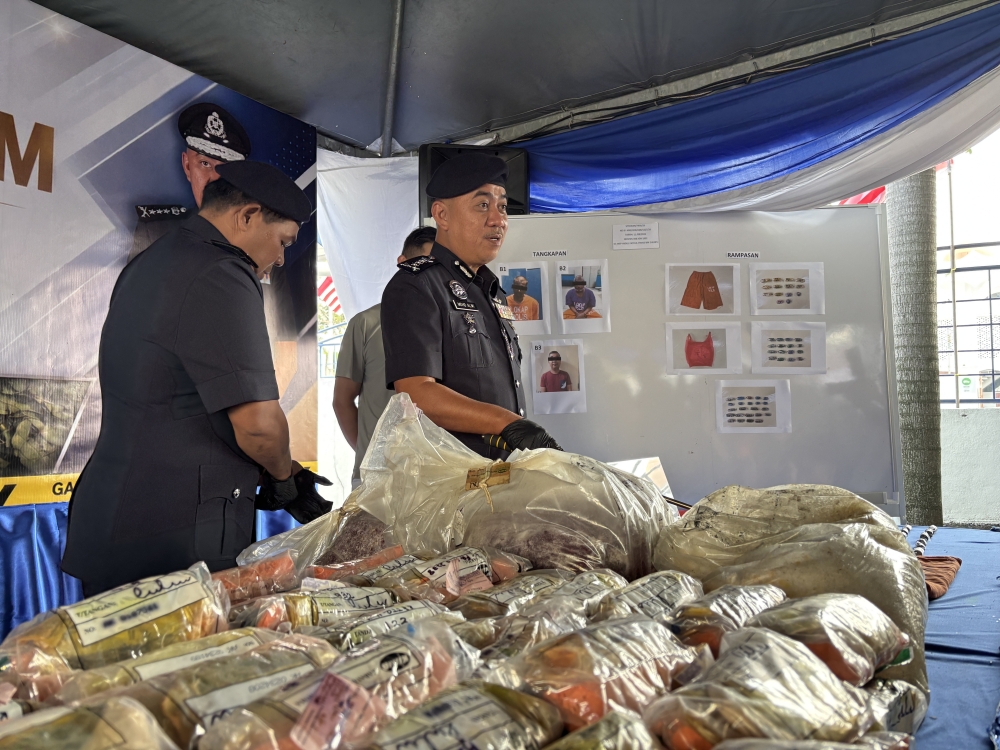
Three individuals, including an officer from the Royal Malaysian Police, have been taken into custody following the discovery of controlled substances hidden within a police cell facility in Lumut, Perak. The contraband, comprising methamphetamine, heroin, and cannabis, carried an estimated street value of RM18,534 when apprehended by authorities during an operation conducted in early August.
The involvement of a police constable in the incident represents a troubling development for the nation's law enforcement agency, which has faced repeated criticism regarding internal discipline and oversight mechanisms. The arrest underscores vulnerabilities within secure facilities that are ostensibly designed to house individuals under police custody while maintaining strict control over prohibited items and substances. Such breaches raise fundamental questions about how controlled drugs penetrated security barriers and who may have facilitated their introduction into the holding area.
The discovery in Lumut, a coastal town in the state of Perak situated along the Strait of Malacca, highlights the persistent problem of drug trafficking and distribution networks that continue to operate with concerning sophistication throughout Malaysia. The three-substance mixture suggests the operation involved diverse supplier relationships or intermediaries capable of sourcing multiple drug types simultaneously, indicating an organised approach rather than opportunistic criminal activity.
The presence of crystal methamphetamine among the seized items reflects broader regional patterns, as this synthetic stimulant remains one of the most commonly trafficked drugs throughout Southeast Asia. Heroin, derived from traditional opium sources in the Golden Triangle region spanning Myanmar, Laos, and Thailand, continues flooding into Malaysia despite enforcement efforts. Cannabis, while increasingly decriminalised in certain jurisdictions globally, remains prohibited under Malaysian law and subject to stringent penalties.
The involvement of a police officer introduces an institutional dimension that extends beyond typical drug possession cases. The constable's participation suggests either complicity in smuggling operations or, at minimum, failure to report suspicious activities occurring within their workplace. Such conduct compromises the integrity of law enforcement institutions and the public trust essential for effective policing. Internal investigations by the police force will need to determine whether the officer acted alone or formed part of a broader network exploiting their access to secure facilities.
The Lumut facility's location near Port Klang, one of Southeast Asia's busiest maritime terminals, may have been strategically selected by trafficking networks. The proximity to major shipping infrastructure creates opportunities for drug smugglers to exploit legitimate cargo movements while utilising corrupt officials to move contraband through policing systems. This geographical advantage positions the region as a critical vulnerability point in the national counter-narcotics architecture.
The RM18,534 valuation reflects typical street-level pricing for these substances in Malaysian markets, where methamphetamine commonly sells at premium rates due to demand among younger demographics and nightlife users. The combination and quantity suggest the cache was prepared for distribution rather than personal consumption, indicating the three arrested individuals may have played roles within a larger trafficking hierarchy. Investigators will likely focus on tracing backward to identify suppliers and forward to locate intended recipients.
This incident arrives amid heightened scrutiny of Malaysia's anti-drug enforcement apparatus following various high-profile cases and criticisms from international monitoring organisations. The nation faces pressure to demonstrate effective governance within its law enforcement institutions, particularly as drug-related crime continues affecting communities nationwide. The discovery that prohibited substances could reach inside police facilities undermines public confidence in the security protocols supposedly protecting society from criminal networks.
The ramifications extend to Malaysia's standing within regional security frameworks. Southeast Asian nations collaborate through organisations like the ASEAN Regional Forum and bilateral agreements to combat transnational drug trafficking. An officer's involvement in facilitating drug movement damages Malaysia's credibility within these partnerships and complicates intelligence-sharing arrangements with neighbouring countries that rely on institutional integrity assurances.
Prosecution under Malaysia's stringent Dangerous Drugs Act will likely proceed swiftly given the clear evidence and quantities involved. The officer faces additional regulatory proceedings through police disciplinary mechanisms, which could result in dismissal and criminal charges depending on investigation findings. Such cases typically result in custodial sentences proportionate to the substances' quantities, with sentencing guidelines reflecting parliamentary intent to deter both trafficking and institutional corruption.
The incident serves as a reminder that Malaysia's drug problem operates across multiple societal layers, from street-level distribution to institutional penetration. Addressing this challenge requires simultaneous enforcement efforts, rehabilitation programmes, and crucially, improved internal controls within security agencies themselves. The case exemplifies how organised crime networks exploit systemic vulnerabilities and corrupt individual officers to maintain supply chains fuelling domestic demand.

