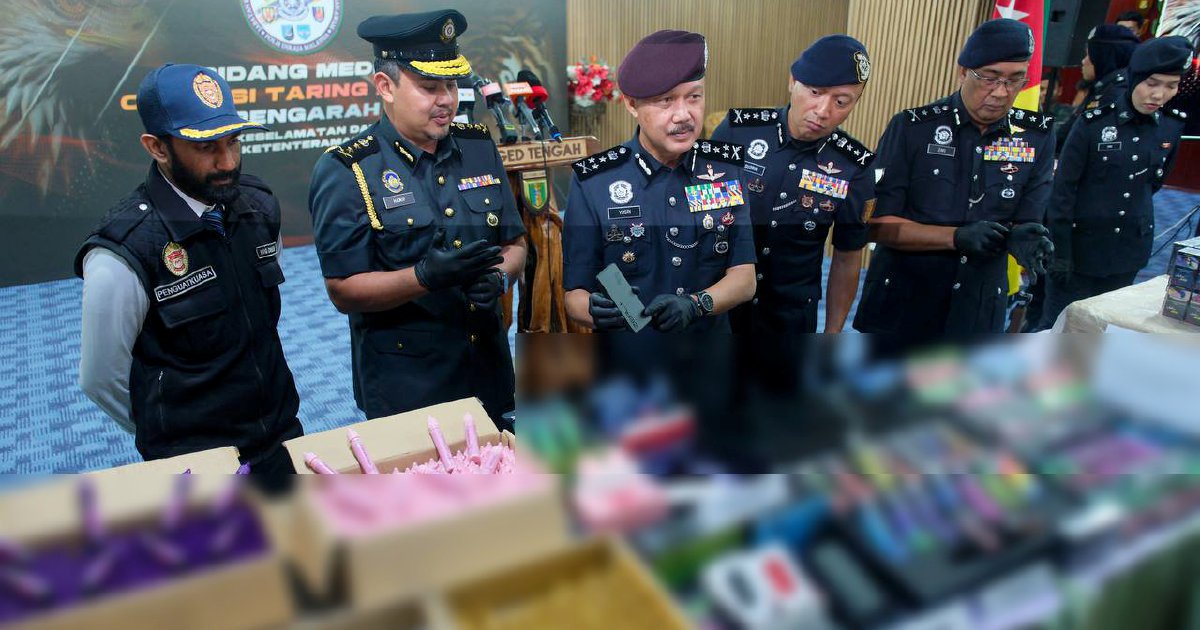
In a significant blow to organised contraband operations, Royal Malaysia Police have dismantled two major smuggling syndicates operating across Selangor, recovering illegal vape products and cigarettes with an estimated street value exceeding RM15.5 million. The enforcement actions, conducted during late-month operations, represent an escalation in police efforts to combat the illicit nicotine products trade that has flourished across Malaysia's wealthiest state and poses ongoing challenges to federal revenue and public health objectives.
The scale of the seizure underscores the magnitude of smuggling networks active within Selangor's sprawling commercial and industrial zones. These operations typically funnel contraband goods through port facilities, land borders, and established distribution hubs before reaching retail outlets and street-level vendors. The two-pronged enforcement action demonstrates that authorities are developing more coordinated intelligence-gathering capabilities to identify and neutralise distribution networks that operate across multiple jurisdictions and administrative boundaries.
Selangor has emerged as a critical nexus for contraband trafficking due to its strategic positioning near Kuala Lumpur, developed port infrastructure at Port Klang, and extensive commercial networks. The state's manufacturing clusters and logistics hubs provide ideal cover for smuggling operations, allowing contraband to be repackaged and dispersed throughout the peninsula with relative ease. The RM15.5 million haul therefore represents only a fraction of the total contraband trade believed to transit through the region monthly, suggesting that enforcement agencies remain engaged in ongoing cat-and-mouse dynamics with increasingly sophisticated smuggling enterprises.
The targeting of vape products alongside traditional cigarettes reflects shifting patterns in Malaysia's illicit nicotine market. While smuggled cigarettes have long dominated contraband operations due to lucrative taxation differentials, electronic nicotine delivery systems represent a newer and rapidly expanding revenue stream for criminal networks. The absence of comprehensive regulatory frameworks governing vape products across Southeast Asia has created significant arbitrage opportunities, allowing smugglers to source inventory from less-regulated jurisdictions and sell into Malaysian markets where demand remains robust despite regulatory constraints.
Royalties and excise revenues represent substantial income streams for the Malaysian government, and large-scale smuggling operations directly undermine state capacity to fund public services. The RM15.5 million in seized products translates to significant lost tax revenue that would otherwise support healthcare, education, and infrastructure programmes. Beyond fiscal implications, the proliferation of unregulated contraband nicotine products creates consumer safety risks, as black-market vapes and cigarettes circumvent quality control standards and may contain hazardous substances or additives unmonitored by health authorities.
The enforcement operations align with broader regional initiatives to combat organised smuggling networks that operate across multiple countries within Southeast Asia. Malaysian authorities increasingly coordinate with counterparts in Thailand, Singapore, and Indonesia to track supply chains and identify transnational trafficking routes. The sophistication of modern smuggling operations demands this type of cross-border intelligence sharing, as syndicates routinely exploit regulatory variations and jurisdictional gaps to move contraband across the region with minimal impediment.
Police investigations into the dismantled syndicates have likely generated valuable intelligence regarding operational structures, supply sources, and distribution networks. Understanding how these organisations function—including their financing mechanisms, corruption networks within government agencies, and retail partnerships—provides authorities with a foundation for pursuing higher-level actors within smuggling enterprises. Past enforcement actions suggest that street-level seizures often enable police to unravel more extensive criminal infrastructure through follow-up investigations and financial forensics.
The human dimension of contraband trafficking merits consideration alongside the financial metrics. Smuggling networks require operational personnel at multiple levels, from port workers and truck drivers to warehouse managers and street-level vendors. These individuals frequently operate under coercion or financial desperation, and enforcement approaches that focus exclusively on asset seizure rather than addressing root causes of participation may prove insufficient for disrupting persistent trafficking patterns. Effective counter-smuggling strategies typically combine enforcement with demand-reduction initiatives and economic interventions addressing illicit trade's underlying drivers.
Looking forward, the seizure activity suggests authorities are dedicating increased resources to contraband interdiction within Selangor. Sustained enforcement operations, intelligence-driven targeting, and coordinated operations across state boundaries appear to be generating measurable results. However, the scale of seized inventory relative to estimated total contraband flows indicates that enforcement agencies continue facing capacity constraints. Persistent investment in surveillance infrastructure, personnel training, and inter-agency coordination mechanisms will likely prove essential for maintaining operational momentum against smuggling networks.
The implications extend beyond criminal justice considerations into broader public health and regulatory domains. Malaysian policymakers increasingly recognise that comprehensive approaches to illicit nicotine products must integrate taxation policy, regulatory frameworks, enforcement capacity, and public education initiatives. The RM15.5 million seizure underscores both the severity of Malaysia's contraband challenge and the potential for coordinated enforcement to disrupt trafficking operations, even as smuggling networks continue adapting their methodologies in response to police actions.

