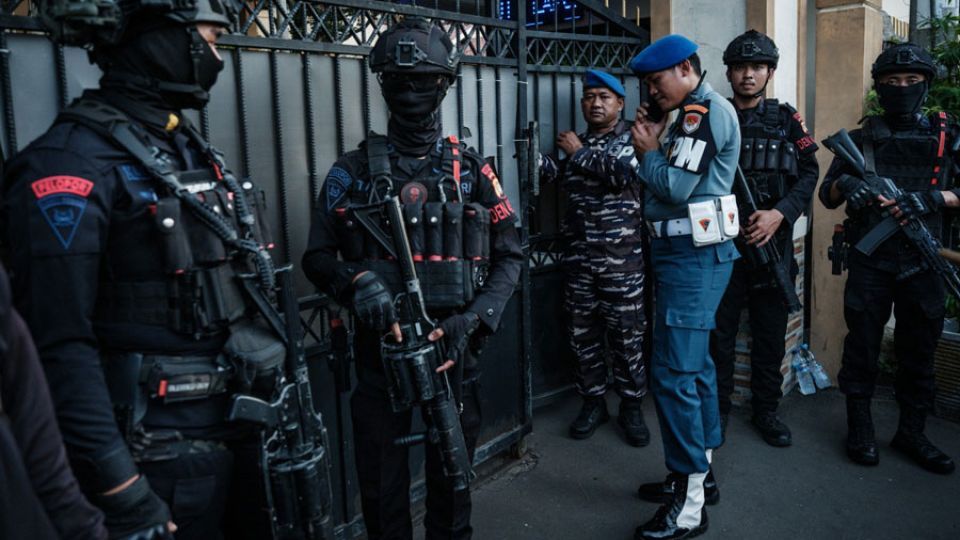
A 34-year-old suspect identified by initials MY has been arrested by Jakarta police following a bomb threat that disrupted the opening day of classes at SD Srengseng Sawah 15 Pagi state elementary school in the Jagakarsa district of South Jakarta on Monday. The man, who resides in the vicinity of the school, was apprehended hours after sending a WhatsApp message to school personnel that claimed explosives had been positioned at eleven separate locations throughout the school premises.
The threatening communication, transmitted to both teaching and administrative staff members at the school, arrived while students were gathered for a flag-raising ceremony that traditionally marks the beginning of the academic day. School officials became aware of the message only after the ceremony concluded, when recipients reviewed their phones and immediately escalated the matter to authorities. The decision to report the threat triggered a rapid sequence of events that transformed what should have been an ordinary school day into a security operation.
Responding to the emergency, police dispatched specialized units to conduct an extensive search of the educational facility. The Gegana bomb disposal squad, Indonesia's dedicated explosive ordnance team, arrived at the school alongside members of Densus 88, the country's elite counterterrorism command. These personnel methodically examined the entire school complex over the course of several hours, focusing on the eleven locations specified in the threatening message. Despite the thoroughness of their investigation, the search yielded no explosives or devices of any kind, indicating that the threat was not substantiated by actual weapons or materials.
Greaham Jakarta Police spokesperson Senior Commissioner Budi Hermanto provided official confirmation of the arrest during a statement to media outlets on Monday. He indicated that investigators at South Jakarta Police headquarters had begun questioning the detainee regarding the circumstances of the threat and his potential motivations. The police statement emphasised that the suspect lived near the school, raising questions about whether the individual harboured grievances related to the institution or was motivated by other factors entirely. Investigators have signalled that establishing the precise reasoning behind the threatening message remains a priority in their ongoing inquiry.
Jakakarsa Police chief Comr. Nurma Dewi outlined the sequence of events that preceded the arrest, noting that the WhatsApp message had been deliberately directed at school personnel rather than broadcast more widely. This targeting suggests that the perpetrator possessed knowledge of how to reach staff members, though authorities have not yet publicly disclosed whether the suspect had any prior connection to the school or its employees. The timing of the threat, arriving during the flag ceremony when students were assembled in a concentrated area, underscores the potential for significant harm had any explosive device actually been present.
The incident highlights ongoing security vulnerabilities in Indonesian schools, where digital communication platforms can be weaponized to trigger panic and disrupt educational operations. The ease with which a threatening message can be transmitted via WhatsApp—a messaging application used extensively throughout Indonesia for personal and professional communication—means that schools must remain vigilant about unverified threats while simultaneously protecting students from unnecessary alarm. The response by Jakarta authorities, deploying specialized teams rather than dismissing the threat, reflects a precautionary approach that prioritizes student safety even when the probability of an actual threat may be low.
For many Malaysian readers familiar with similar security challenges in Southeast Asia, this incident echoes broader regional concerns about school safety and the exploitation of social media for malicious purposes. The incident occurred as Indonesian schools resumed normal operations following periodic disruptions over recent years, and the swift police response demonstrates institutional capacity to mobilize resources quickly when educational facilities are targeted. The arrest within hours of the threat being reported indicates effective coordination between law enforcement agencies and school administrators in the capital city.
The psychological impact of such threats extends beyond the immediate disruption of classes and should not be underestimated. Students who experience bomb threats, even when ultimately unfounded, may develop heightened anxiety about returning to school. Parents must reconcile their expectations that educational institutions provide both academic instruction and physical security. The incident raises questions about whether Indonesian schools have adequate protocols for handling digital threats, staff training in recognizing potential security risks, and communication strategies for informing parents about threats without causing panic.
Authorities have not yet disclosed specific details about how investigators identified and located the suspect so rapidly following the message's distribution. The quick apprehension suggests either sophisticated digital forensics that traced the WhatsApp message to its sender, or information provided by the school community regarding individuals with suspected grievances. As the investigation continues, prosecutors will need to determine whether the suspect's actions constitute a criminal offense under Indonesian law, which contains provisions addressing false bomb threats and misuse of communication technology to incite fear or disrupt public order.
The case underscores the contemporary security landscape facing educational institutions throughout Southeast Asia, where the convergence of digital connectivity and potential malicious actors creates novel challenges for administrators and law enforcement. While the specific motivations driving the 34-year-old suspect remain under investigation, the incident has prompted broader reflection within Jakarta's education sector about protective measures and emergency response protocols. Schools throughout the capital and beyond are likely to review their procedures for receiving, verifying, and responding to threats transmitted through digital channels, recognizing that such incidents, while hopefully rare, require systematic and well-coordinated institutional responses.

